
FRP rebar is often described as a simple replacement for steel reinforcement, but in industrial reality, the manufacturing system behind it is far more complex. It is not a single process, but a continuous interaction between materials, temperature control, fiber tension, and curing kinetics inside a pultrusion line.
The most important misunderstanding in FRP rebar production is assuming that strength comes from materials alone. In reality, strength is the final result of process stability. Even high-grade glass fiber and premium resin systems can fail to deliver expected performance if the pultrusion parameters fluctuate during production.
And this is the core truth:
FRP rebar is not manufactured. It is “formed under control.”
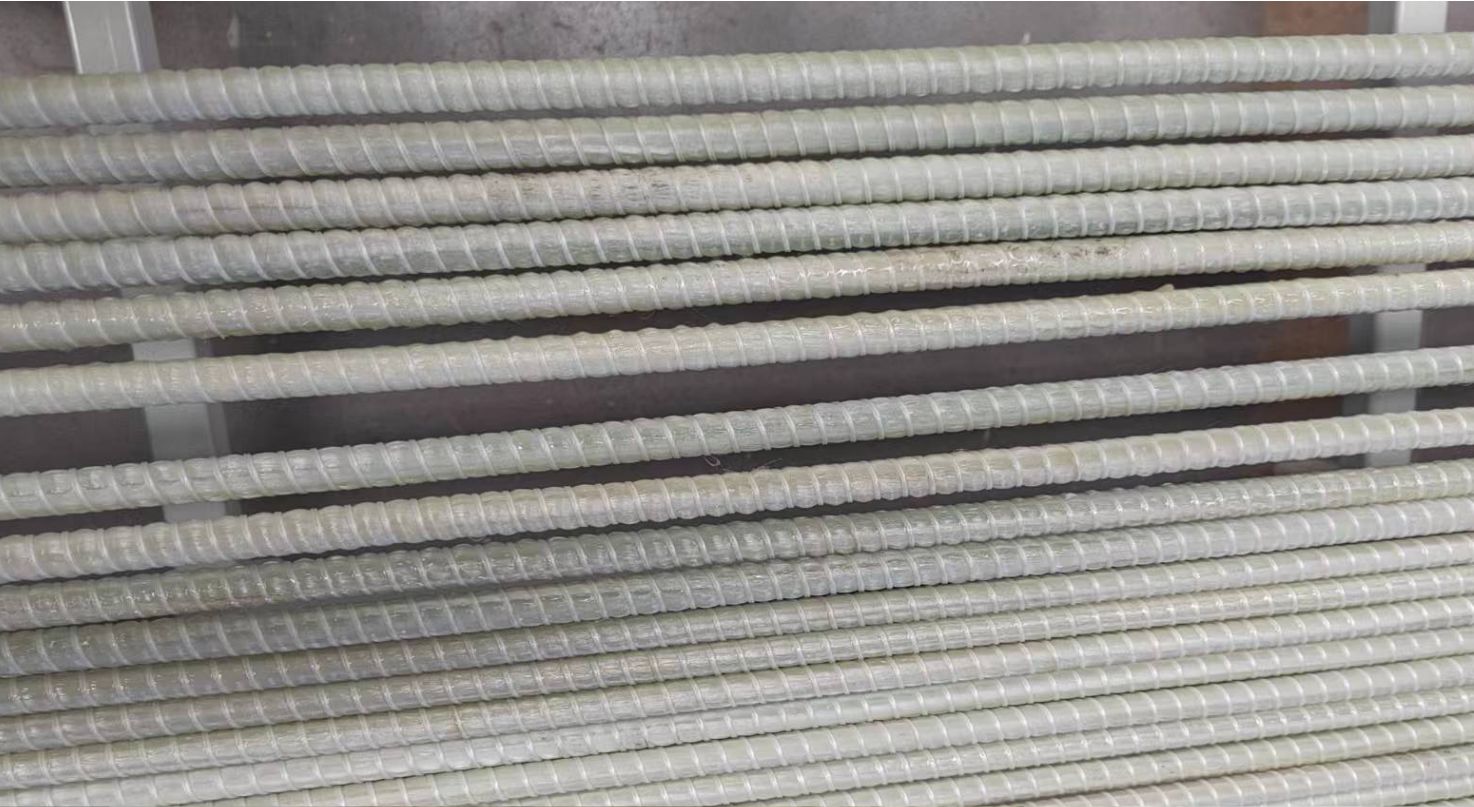
The structure of FRP rebar is built from two essential components: continuous reinforcement fibers and a polymer resin matrix. Each plays a completely different role, and neither can function alone.
Glass fiber roving is the most commonly used reinforcement because it provides high tensile strength at relatively low cost. It is also compatible with most resin systems and stable under continuous processing conditions. Carbon fiber and basalt fiber exist as alternatives, but they are generally used only in specialized engineering environments where cost is not the main constraint.
Resin systems define environmental resistance and long-term durability. Vinyl ester resin is widely adopted in infrastructure applications because it offers a strong balance between corrosion resistance, mechanical stability, and cost efficiency. Epoxy resin provides higher bonding strength and improved fatigue resistance, but it requires stricter temperature control and increases production complexity.
Additives are often underestimated in FRP rebar manufacturing, but they directly influence long-term behavior. UV stabilizers, curing agents, viscosity modifiers, and coupling agents adjust how resin interacts with fiber surfaces and how the final composite behaves under environmental exposure.
In real production environments, raw materials are never perfectly stable. Resin viscosity changes with temperature. Fiber tension varies slightly between batches. Additives may behave differently depending on mixing conditions. These variations may seem small individually, but they accumulate during continuous production.
That is why material selection alone does not define quality. It only defines potential.
Pultrusion is the central technology behind FRP rebar production, but it is often misunderstood as a simple “pull-and-cure” method. In reality, it is a continuous controlled transformation system where fibers are converted into structural composites under precise thermal and mechanical conditions.
The process begins with fiber feeding from creels. Glass fiber rovings are pulled under controlled tension into the production line. This step looks simple, but it determines internal alignment. If tension is unstable, fiber waviness will appear inside the final bar, even if the surface looks perfect.
After fiber feeding, the material enters the resin impregnation stage. Fibers pass through a resin bath where complete wet-out must be achieved. This stage is extremely sensitive. Resin viscosity, bath temperature, and fiber speed must remain balanced. If impregnation is incomplete, dry spots form inside the bar. If excessive resin accumulates, brittle zones appear after curing.
Then the impregnated fibers enter a heated steel die. This is the transformation zone where shape and structure are defined simultaneously. Heat triggers polymerization, pressure defines geometry, and pulling force ensures continuity. All three forces interact at the same time inside a confined space.
There is no interruption in this system. No pause. No correction step.
Once the line starts, stability becomes the only variable that matters.
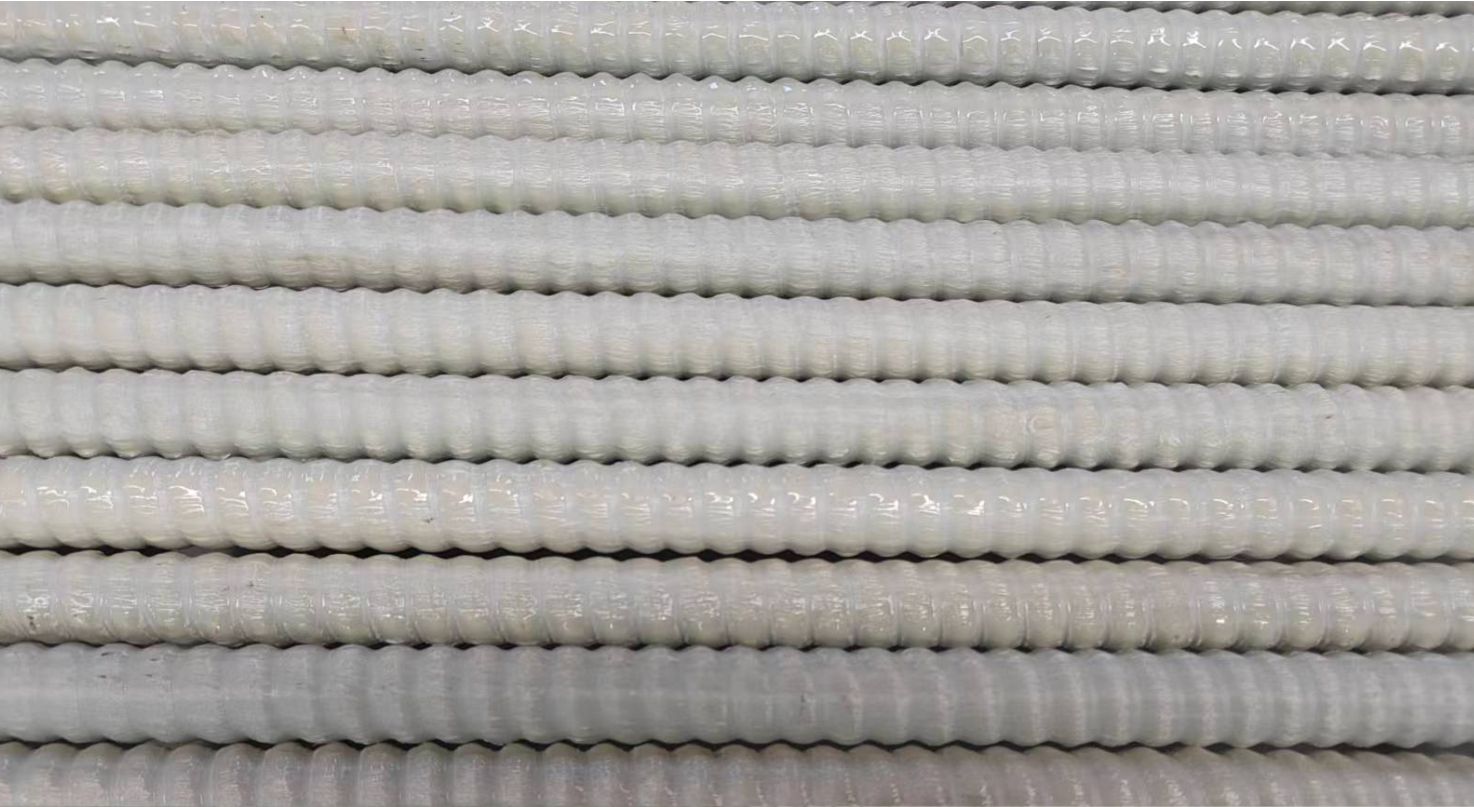
The production of FRP rebar follows a continuous sequence, but each stage behaves differently under real industrial conditions. The process begins with fiber preparation, where glass fiber rovings are aligned and guided into the system under controlled tension.
At first glance, this step appears purely mechanical. In reality, it determines the internal architecture of the composite. Uneven tension at this stage creates structural imbalance that cannot be corrected later.
After fiber alignment comes resin impregnation. Fibers pass through a controlled resin bath and are fully saturated. This stage determines bonding quality between fiber and matrix. It is also one of the most unstable points in the entire production line because resin viscosity changes continuously with temperature and working time.
Once impregnation is complete, fibers enter the heated die. This is the most critical transformation stage in FRP rebar manufacturing. The die temperature profile controls curing speed. Pulling speed determines residence time. Die geometry defines final shape and dimensional accuracy.
A small deviation in any parameter does not immediately cause failure. Instead, it introduces internal inconsistency that may only appear under load testing or long-term structural use.
After curing, the continuous bar is pulled forward and cut into required lengths. Cutting is purely a separation step. It does not improve quality. It only finalizes production.
At this point, the mechanical properties of the bar are already fully determined upstream.
One of the most important principles in FRP rebar production is that material quality and process quality are not interchangeable.
Material quality defines the theoretical upper limit of performance. Process stability determines how much of that potential is actually achieved.
A high-grade resin system cannot compensate for unstable pulling speed. Similarly, perfect fiber quality cannot correct poor impregnation control or uneven curing conditions.
This is why two factories using identical materials can produce completely different results. One line achieves consistent tensile strength and smooth surface finish. Another produces variability in diameter, strength, and durability.
The difference is not chemical.
It is mechanical discipline inside the process.
Pultrusion improves FRP rebar efficiency because it eliminates batch-based interruptions and allows continuous production. Once stabilized, the system can run for long periods with consistent output and predictable mechanical properties.
However, efficiency in pultrusion is not simply about increasing speed. In fact, higher speed often reduces impregnation quality because fibers have less time to fully absorb resin.
Lower temperature improves safety but slows curing reaction. Higher temperature improves curing speed but increases risk of internal stress formation. Every adjustment introduces trade-offs.
Therefore, efficiency must be defined as controlled repeatability rather than maximum output.
In industrial terms, a stable production line operating at moderate speed is far more valuable than a fast line with unstable quality.
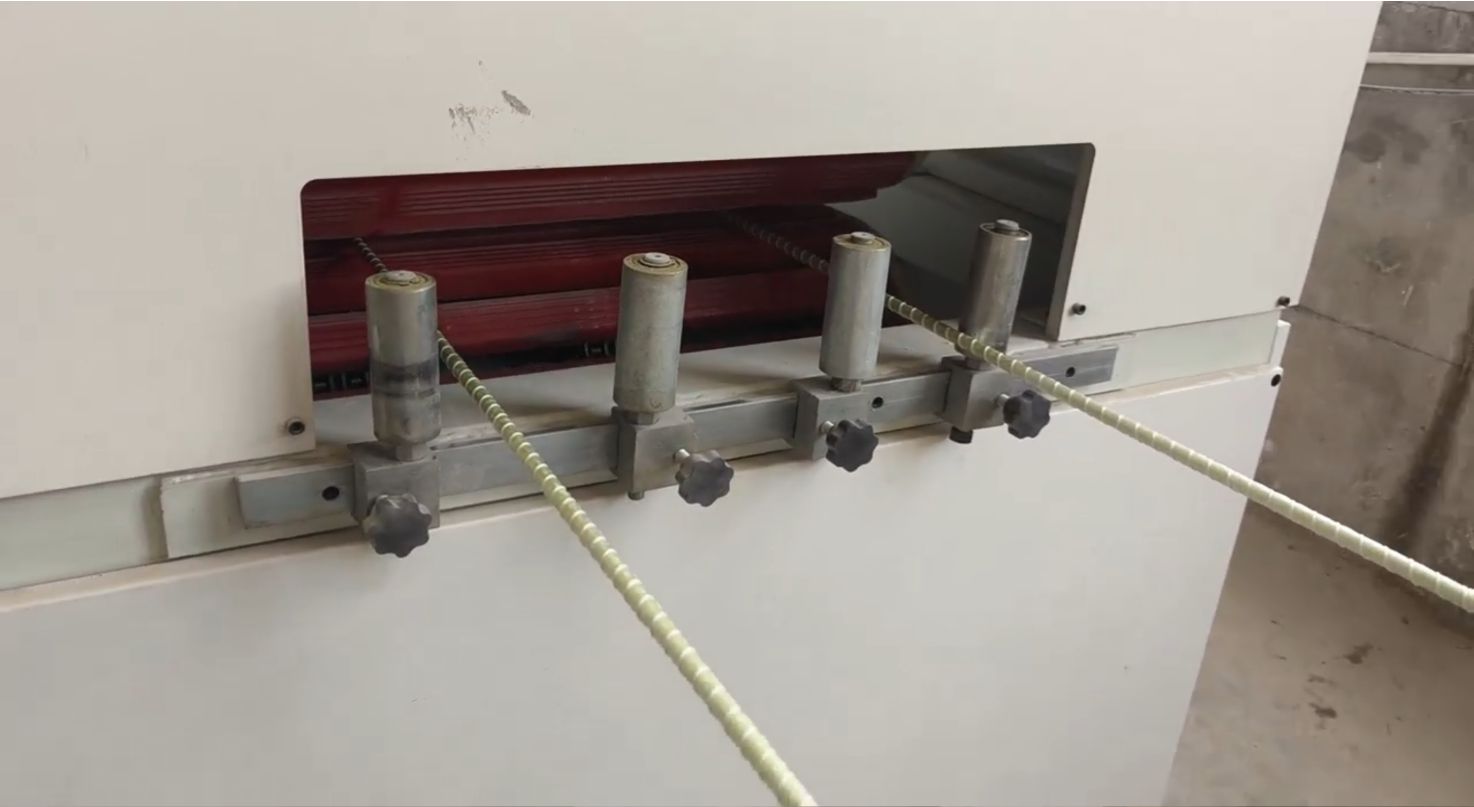
Quality issues in FRP rebar manufacturing usually do not appear immediately. They develop gradually through small deviations in process parameters.
Fiber misalignment is one of the most common defects. It reduces load transfer efficiency and creates uneven stress distribution within the composite structure. The root cause is usually unstable tension control rather than material failure.
Another common issue is resin-rich or resin-poor zones. These occur when impregnation is uneven or resin viscosity is not properly controlled. The result is inconsistent internal density, which affects mechanical performance under load.
Incomplete curing is more dangerous because it is not always visible. It reduces effective structural capacity and can lead to deformation under long-term stress conditions. This type of defect often appears only after installation, making it difficult to detect during production.
In many cases, quality problems are not isolated events. They are cumulative results of small instabilities across the production line.
FRP rebar is widely used in infrastructure projects where corrosion resistance is critical. Typical applications include bridge decks, marine structures, tunnels, wastewater treatment plants, and chemical facilities.
In these environments, traditional steel reinforcement is prone to corrosion due to moisture, chloride exposure, or chemical attack. FRP rebar provides a stable alternative that maintains structural integrity over long service periods.
However, its real value is not only corrosion resistance. It is lifecycle stability. Reduced maintenance cycles, fewer replacements, and longer structural service life all contribute to its growing adoption in modern engineering projects.
The manufacturing of FRP rebar is a continuous process system where materials and pultrusion technology interact in real time. Glass fiber provides structural strength, resin provides environmental resistance, and pultrusion defines how both are transformed into a usable composite product.
When the system is stable, production becomes predictable and consistent. When instability appears, even small fluctuations can lead to long-term structural differences.
That is the fundamental reality behind modern FRP rebar production: quality is not created in one step—it is built continuously through controlled processing.
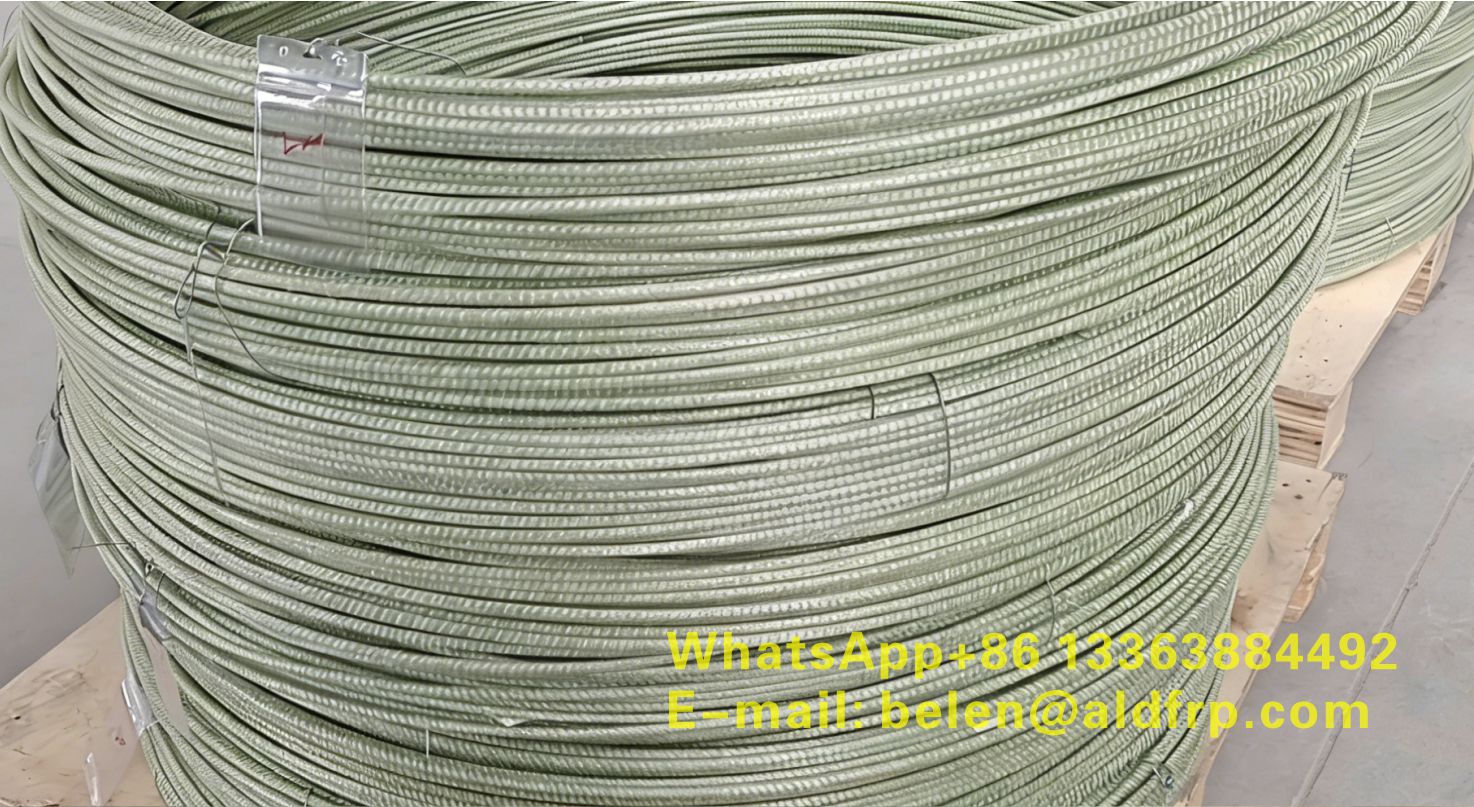
What is FRP rebar made of?
FRP rebar is made from continuous glass fibers embedded in polymer resin systems such as vinyl ester or epoxy.
What is pultrusion in FRP rebar production?
It is a continuous manufacturing process where fibers are pulled through resin and a heated die to form composite reinforcement bars.
Why is FRP rebar used instead of steel?
Because it offers corrosion resistance, especially in marine, chemical, and high-moisture environments.
What are the main factors affecting FRP rebar quality?
Fiber alignment, resin impregnation quality, and curing stability are the most critical factors.