
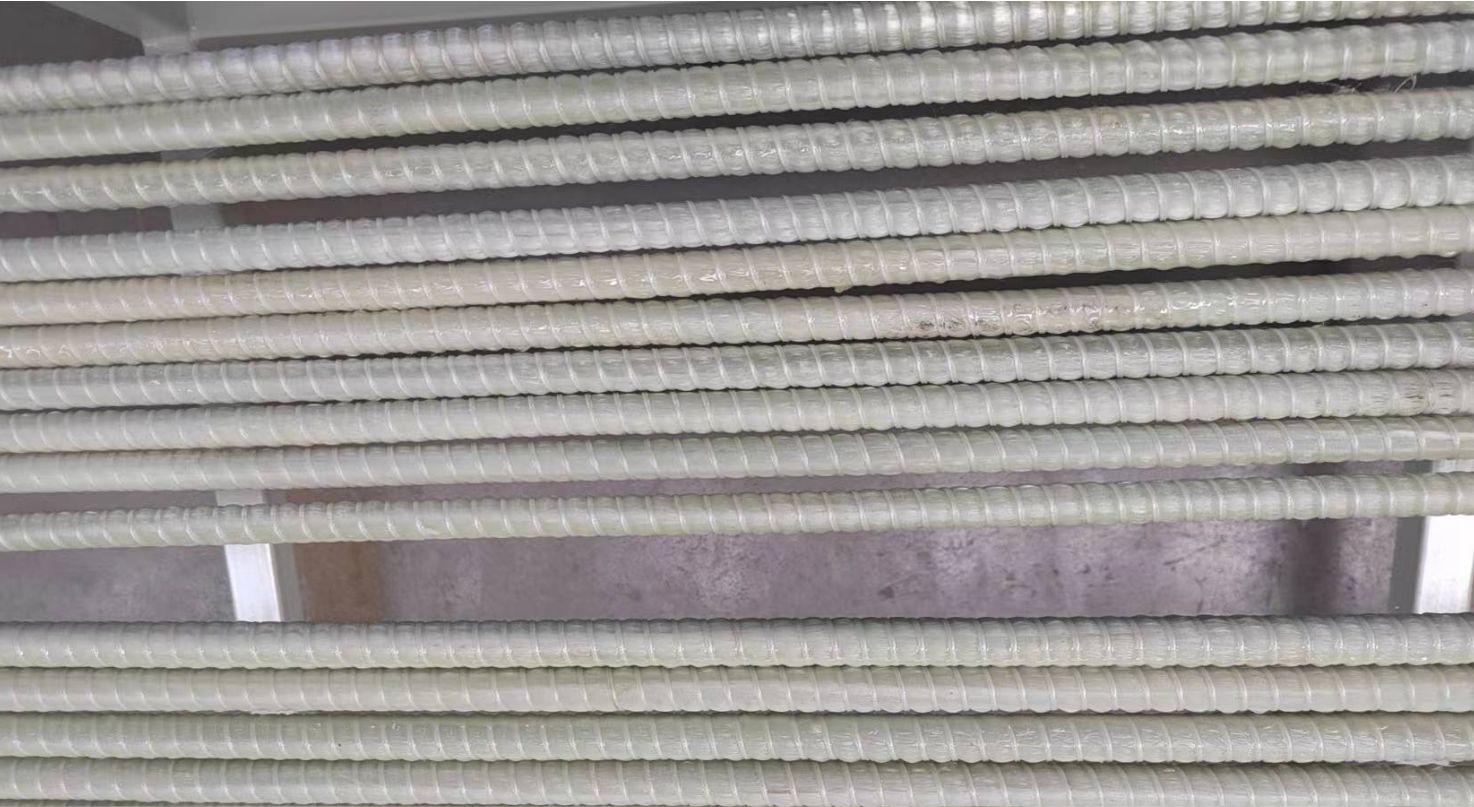
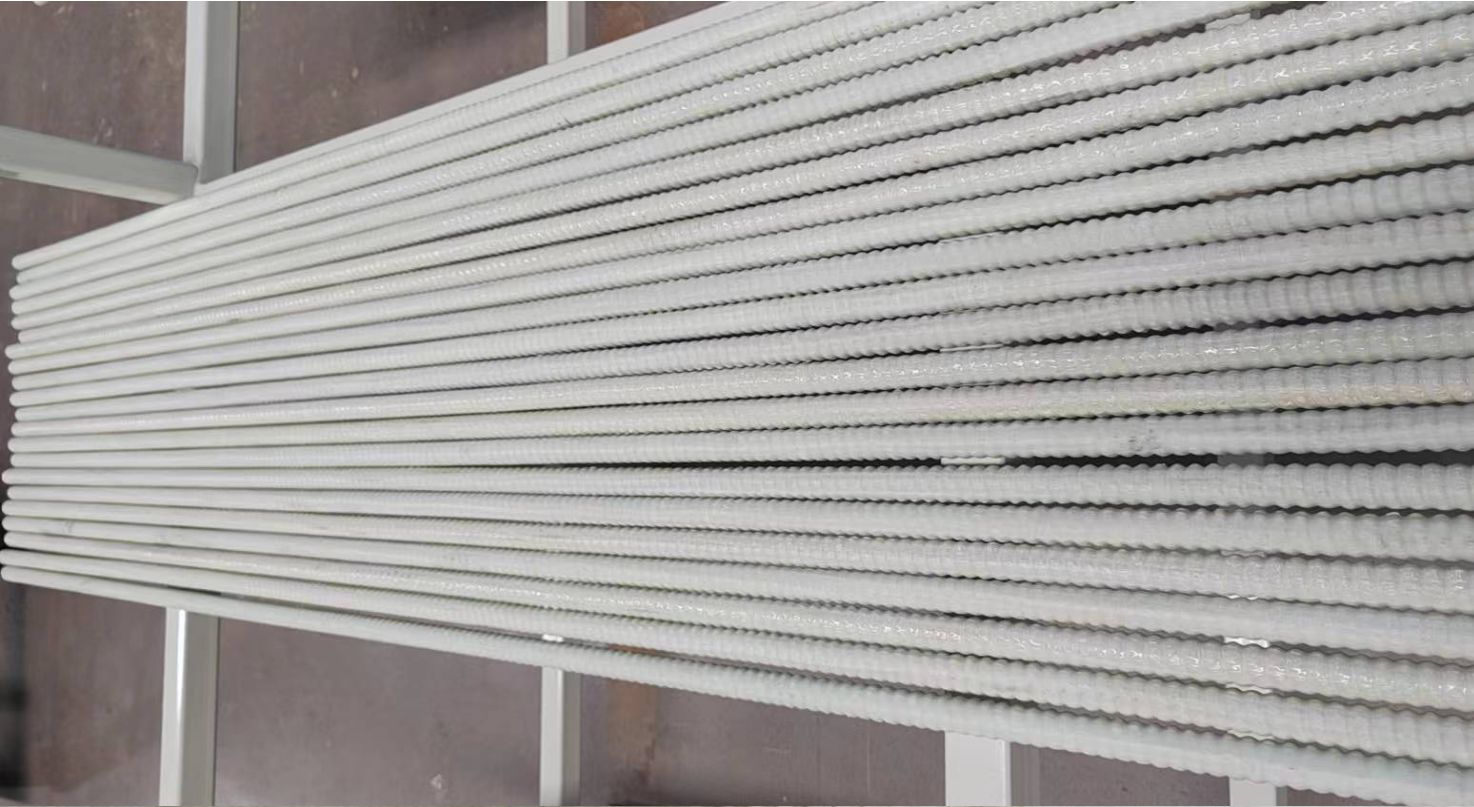
In modern infrastructure materials, FRP rebar production has become an important process for manufacturing corrosion-resistant reinforcement used in bridges, marine structures, tunnels, and chemical plants. Compared with traditional steel, FRP rebar offers high tensile strength, lightweight characteristics, and excellent resistance to chemical corrosion.
However, in real industrial operation, stable quality is not easy to achieve. Many production lines experience repeated defects caused by unstable resin systems, inconsistent pultrusion speed, and improper curing control. These issues directly affect structural strength and long-term durability in engineering applications.
In most factories, quality problems do not come from one single point. They are usually the result of accumulated deviations across multiple process stages.
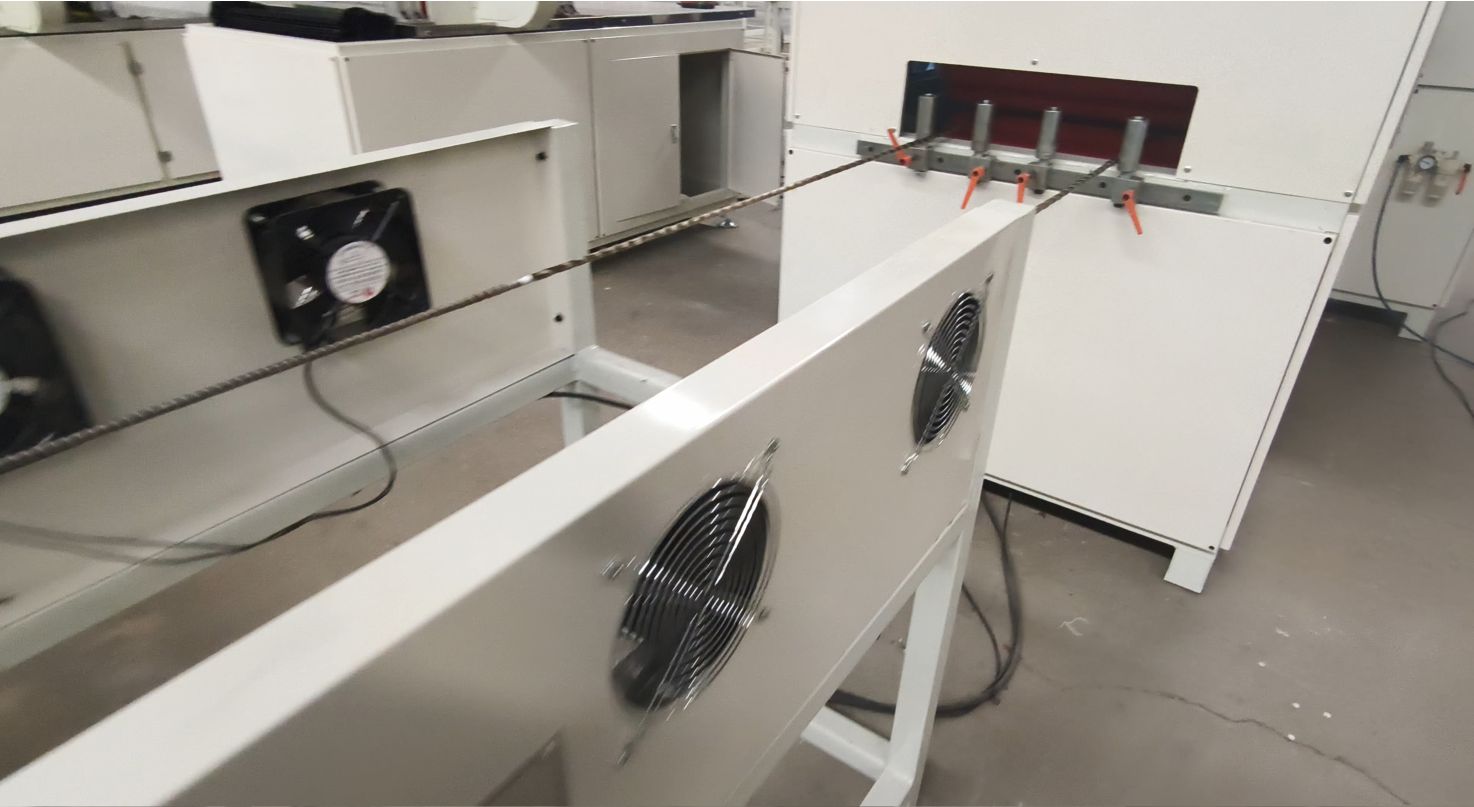
A standard FRP rebar production line includes several continuous stages:
Glass fiber roving feeding
Resin impregnation system
Fiber guiding and alignment
Pultrusion forming die
Heating and curing system
Cooling section
Cutting and winding system
Each stage is directly connected to the next. Once one parameter becomes unstable, the defect is transferred downstream and becomes part of the final product structure.
The pultrusion process is continuous, which means there is no buffer stage for correction. Stability must be maintained in real time.
In FRP systems, glass fibers carry the tensile load while resin distributes stress and protects fibers from environmental damage. If resin distribution is uneven or fiber alignment is disturbed, internal stress concentration will form inside the bar.
This leads to reduced structural efficiency under load conditions. Over time, these weak points become failure origins under fatigue or environmental exposure.
No process stability = no structural reliability.
One of the most common defects in FRP rebar manufacturing is insufficient resin penetration into glass fiber bundles. This creates dry fiber zones inside the bar that are difficult to detect visually.
Resin viscosity not properly controlled
Uneven fiber spreading before impregnation
Inconsistent pulling speed
Resin bath contamination or aging
Poor impregnation means fibers are not fully bonded with resin matrix. This reduces stress transfer efficiency and creates internal voids inside the composite structure. Under tensile load, these voids become crack initiation points.
In engineering applications, this type of defect is dangerous because it is not always visible on the surface.
To stabilize impregnation quality, the process must maintain consistent resin viscosity and fiber distribution. Temperature control is critical because resin flow behavior changes significantly with temperature variation.
Filtration and circulation systems should also be used to maintain resin cleanliness. Finally, pulling speed must be matched with impregnation capacity to avoid fiber starvation.
Uneven curing leads to inconsistent hardness and mechanical properties across different sections of the same production batch in FRP rebar production lines.
Unstable temperature distribution in heating zone
Incorrect curing time relative to line speed
Poor insulation of curing furnace
Resin formulation mismatch with curing curve
Curing is a chemical transformation process. If the temperature profile is not stable, different sections of the same bar will experience different curing degrees. This creates internal stress gradients that weaken structural integrity.
Over time, these weak zones may develop micro-cracks under repeated loading conditions, especially in bridges and marine environments where fatigue stress is common.
Multi-zone heating systems should be used to ensure stable temperature distribution along the curing section. Each resin system requires a calibrated curing curve, and production speed must be matched accordingly.
Real-time monitoring of temperature and curing behavior is essential to avoid hidden structural defects.
Fiber misalignment occurs when glass fibers deviate from the designed axial direction during pultrusion.
Unstable tension control system
Poor fiber guiding design
Mechanical vibration in production line
Manual adjustment errors
Fiber orientation directly determines load-bearing efficiency. When fibers are misaligned, tensile load is no longer carried along the designed axis. Instead, stress is redistributed unevenly inside the structure.
This significantly reduces mechanical performance and leads to early failure under high-load conditions.
Stable tension control systems must be installed to ensure consistent fiber force during feeding. Fiber guiding components should be optimized to maintain alignment before entering the die.
Mechanical vibration must also be minimized because even small oscillations can affect fiber trajectory.
Surface cracks reduce both aesthetic quality and long-term durability of FRP rebar in outdoor and corrosive environments.
Excessive resin shrinkage during curing
Rapid cooling after die exit
Poor resin formulation balance
Worn or rough die surface
Surface defects often become pathways for moisture and chemical penetration. Once aggressive media enters the composite structure, internal fiber degradation accelerates.
This reduces service life significantly in marine, chemical, and high-humidity environments.
Resin shrinkage must be controlled through formulation adjustment. Cooling speed should be gradual to avoid thermal stress.
Die surface quality must be maintained at high smoothness to prevent mechanical marking on the product surface.
Diameter inconsistency is a frequent issue in continuous FRP rebar production, especially during long production runs.
Unstable pulling speed
Die wear or deformation
Resin accumulation inside forming die
Temperature fluctuations in curing zone
Dimensional inconsistency creates installation problems in construction projects. It also affects bonding performance between rebar and concrete, leading to uneven stress distribution in reinforced structures.
In large engineering projects, this often leads to batch rejection.
Automatic speed control systems should be used to maintain stable pulling force. Dies must be inspected and cleaned regularly to avoid resin buildup.
Real-time diameter monitoring helps detect deviations early and prevent batch-level defects.
Most quality issues in FRP rebar production are not independent problems. They come from three systemic sources:
Unstable pultrusion equipment leads to:
Speed fluctuation
Temperature inconsistency
Weak tension control
These directly affect product uniformity.
Glass fiber and resin quality determine:
Tensile strength level
Curing behavior stability
Surface quality consistency
Even small variations can amplify defects during continuous production.
Without automation:
Operator dependence increases
Temperature control becomes unstable
Production repeatability decreases
Process control determines long-term stability.
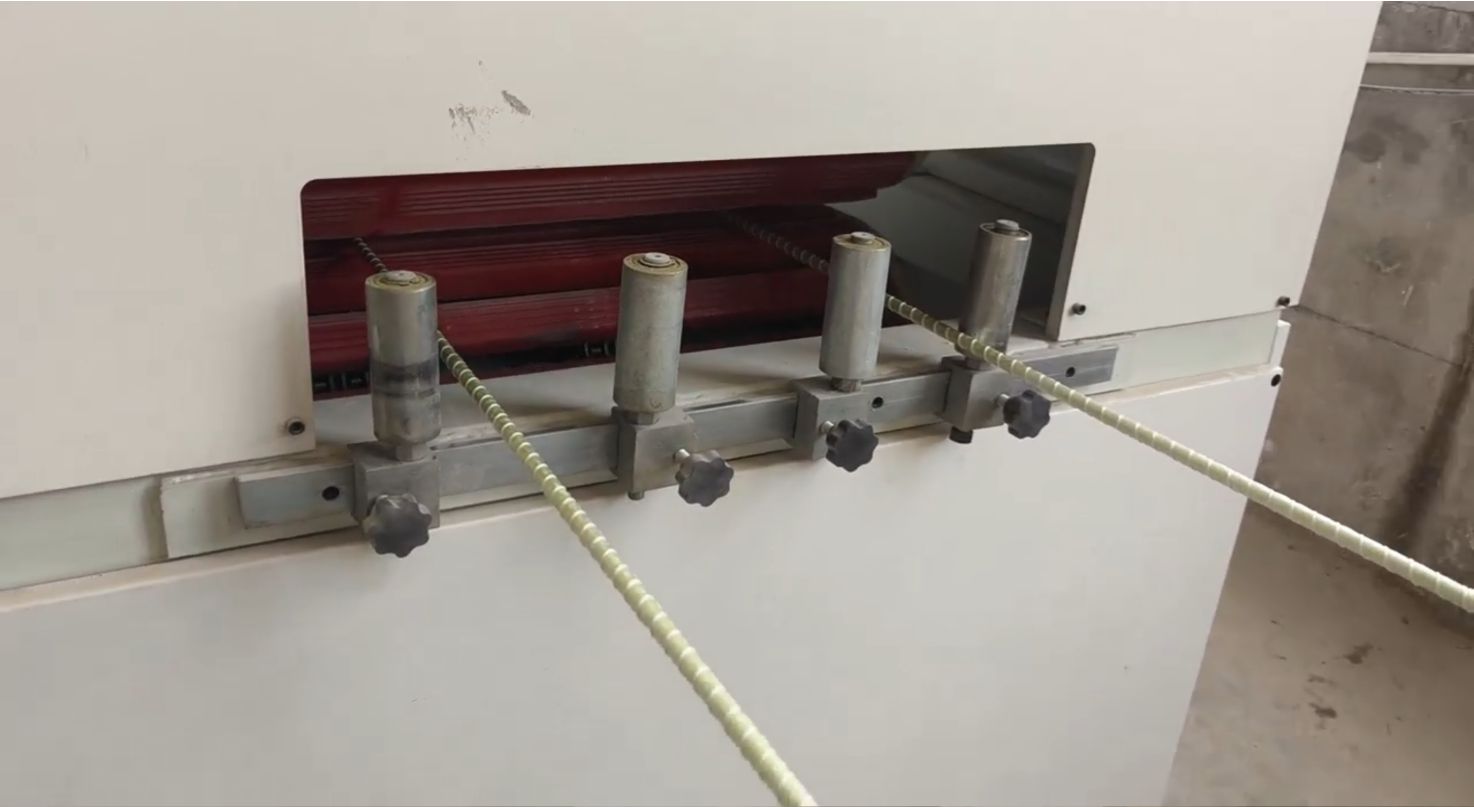
Modern production lines should include:
PLC-based temperature control systems
Automatic tension regulation
Real-time production monitoring
Automation reduces human error and stabilizes output consistency across long production cycles.
Different applications require different resin systems:
Vinyl ester resin → high corrosion resistance
Epoxy resin → high mechanical strength
Polyester resin → cost-sensitive applications
Correct resin selection improves both durability and production stability.
A complete inspection system should include:
Tensile strength testing
Diameter measurement
Surface defect inspection
Fiber distribution analysis
Quality control must be integrated into production, not only at the final stage.
When selecting a FRP rebar production line, buyers should evaluate:
Pulling system stability
Curing temperature accuracy
Fiber alignment control
Automation level
Long-term maintenance cost
A stable machine defines the upper limit of product quality.
Equipment defines quality ceiling. Process defines consistency.
Quality problems in FRP rebar production mainly originate from instability in resin impregnation, curing control, fiber alignment, and dimensional consistency.
These issues are interconnected rather than isolated. Therefore, solving them requires a full-system approach involving equipment stability, process control, and material optimization.
Only when all subsystems operate in balance can FRP rebar achieve reliable performance in real engineering applications.

Poor resin impregnation and fiber misalignment are the most common defects in FRP rebar manufacturing.
It is usually caused by uneven curing, poor fiber alignment, or insufficient resin penetration.
By stabilizing curing temperature, improving impregnation systems, and upgrading automation control.
The pultrusion system and curing unit are the core components.
Yes. Automation improves consistency in speed, temperature, and tension control, reducing defects significantly.