
In modern composite manufacturing, FRP rebar production process optimization has become one of the most critical factors determining product quality, production stability, and long-term factory profitability. Unlike traditional metal processing, fiberglass rebar production lines rely on a continuous pultrusion system where every parameter is interconnected.
That means a small instability in fiber tension, resin viscosity, or curing temperature does not remain isolated. It spreads through the entire system and eventually affects tensile strength, dimensional accuracy, surface bonding performance, and even long-term durability in infrastructure applications.
Many factories invest heavily in equipment upgrades, but still struggle with unstable output. The reason is simple: FRP manufacturing is not a machine-driven process, it is a system-controlled engineering process. True efficiency improvement comes from optimizing the interaction between materials, equipment, and process parameters—not from speed alone.
This article summarizes 7 practical optimization tips used in industrial FRP rebar production lines to improve both quality and efficiency in real manufacturing environments.
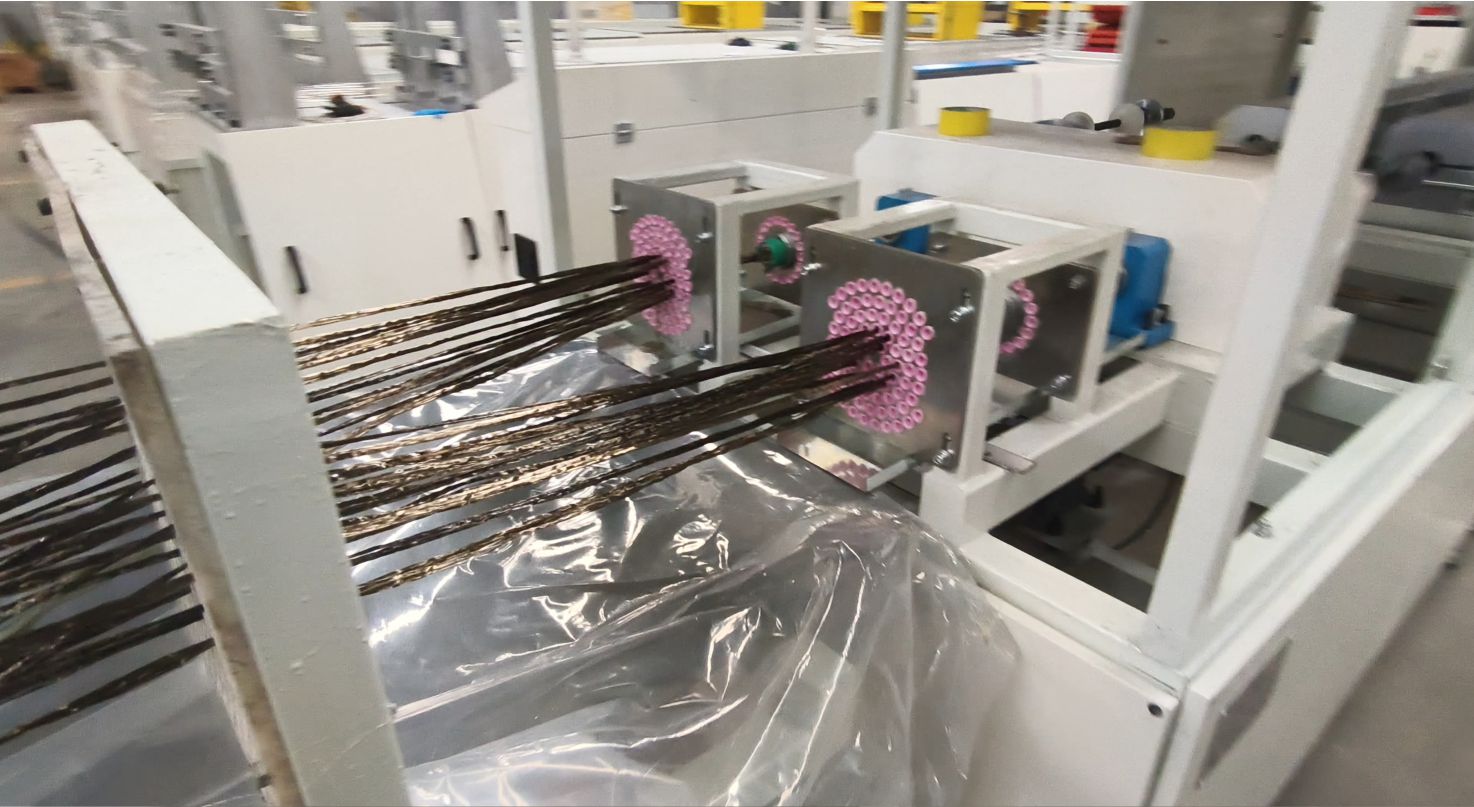
In any FRP rebar production system, fiber tension stability is the foundation of all downstream quality. Fiberglass rovings must enter the impregnation system under consistent tension; otherwise, fiber misalignment and uneven resin distribution will occur immediately.
A long and stable fiber tension system is often underestimated in early factory design. However, in real production, tension fluctuations are one of the main causes of:
delamination inside the composite structure, inconsistent tensile strength across batches, and surface irregularity that cannot be corrected later in the process.
Once fiber alignment is damaged at the feeding stage, no downstream adjustment—whether in curing or pulling—can fully recover structural uniformity. This is why high-performance factories always prioritize synchronized multi-spool feeding systems with real-time tension control rather than simple manual creel setups.
In practice, stable fiber feeding is not a supporting system—it is a core quality determinant.
The resin impregnation system directly determines whether fiberglass bundles can be fully wetted during production. Many quality issues in FRP rebar originate here, even though they are often detected later in tensile testing or field performance.
Resin that is too viscous cannot penetrate deep fiber bundles, while resin that is too thin may fail to maintain structural stability during curing. Both conditions lead to internal voids, weak bonding zones, and reduced mechanical performance.
A properly optimized FRP rebar resin system must maintain stable viscosity across long production cycles, especially in continuous 24-hour operation environments. This requires temperature-controlled mixing, automated catalyst dosing, and real-time monitoring of resin flow behavior.
In industrial practice, factories that achieve stable resin control typically show:
lower defect rates, more consistent tensile strength, and significantly reduced product rework costs.
Resin stability is not a chemical detail—it is a production reliability system.
One of the most common mistakes in FRP rebar production line optimization is focusing on speed increase instead of impregnation efficiency. While higher pulling speed may improve output on paper, it often reduces resin penetration time, leading to dry fiber zones and internal structural defects.
In reality, impregnation is a balance between residence time and resin mobility. If fibers move too quickly through the resin bath, wet-out becomes incomplete. If speed is too low, production efficiency drops and resin curing may begin prematurely inside the system.
A mature production line focuses on optimizing:
fiber spread geometry, resin bath design, and flow path length inside the impregnation unit.
These structural improvements often deliver better results than simply adjusting machine speed.
Efficiency comes from impregnation quality, not speed escalation.
The curing stage is where FRP rebar mechanical properties are finalized. In modern systems, multi-zone heating dies are used instead of single-temperature curing because resin polymerization requires gradual and controlled energy input.
If curing temperature rises too quickly, internal stress accumulates inside the composite. If temperature is too low, incomplete curing occurs, resulting in reduced structural strength and poor long-term durability.
A well-designed FRP pultrusion curing system maintains a progressive temperature gradient that allows resin to fully crosslink without damaging fiber integrity.
Industrial experience shows that stable multi-zone control significantly improves:
dimensional consistency, surface finish quality, and long-term mechanical stability under load conditions.
Curing is not heating—it is controlled chemical transformation.
The pulling system in an FRP rebar manufacturing line is not only responsible for movement—it is responsible for system synchronization. Any fluctuation in pulling speed affects resin flow, curing time, and final dimensional accuracy.
When pulling speed is unstable, the entire production chain becomes unstable. This leads to inconsistent diameter, uneven fiber distribution, and unpredictable mechanical performance.
Modern factories use servo-controlled or hydraulic synchronized pulling systems to maintain constant traction force across long production cycles. This ensures that fiber alignment and curing conditions remain stable from start to finish.
Pulling stability is the “hidden controller” of the entire production line.
Surface treatment is often underestimated in FRP rebar production optimization, but it directly affects how well the final product bonds with concrete in structural applications.
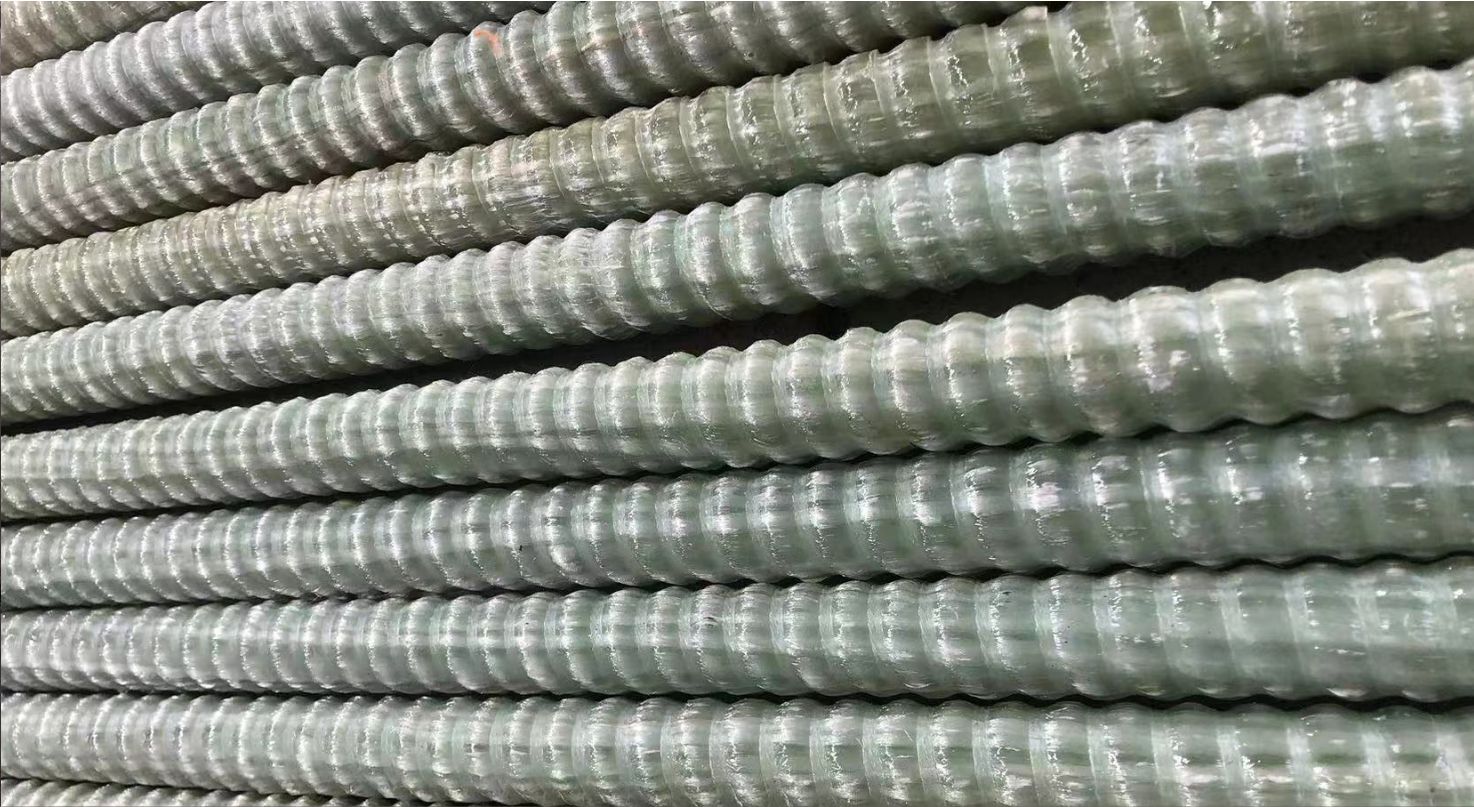
Smooth composite rods have poor adhesion with cementitious materials. To solve this, manufacturers apply sand coating, rib formation, or helical wrapping structures to enhance mechanical interlock.
However, over-coating can increase dimensional inconsistency, while under-coating reduces pullout resistance. Therefore, surface design must be balanced between mechanical bonding strength and geometric stability.
In infrastructure applications such as bridges and marine structures, bond performance is as important as tensile strength itself.
Surface structure determines real engineering performance, not just lab test results.
Traditional FRP rebar production relied heavily on operator experience. However, modern industrial systems increasingly depend on automated process monitoring and control systems.
Real-time monitoring of temperature, resin flow, fiber tension, and pulling speed allows factories to detect instability before defects are produced.
A well-integrated PLC-based FRP production control system reduces human error and ensures repeatable production conditions across long operational cycles.
Factories that adopt full process monitoring typically achieve:
lower rejection rates, higher batch consistency, and more stable long-term output performance.
Process control replaces experience with data-driven stability.
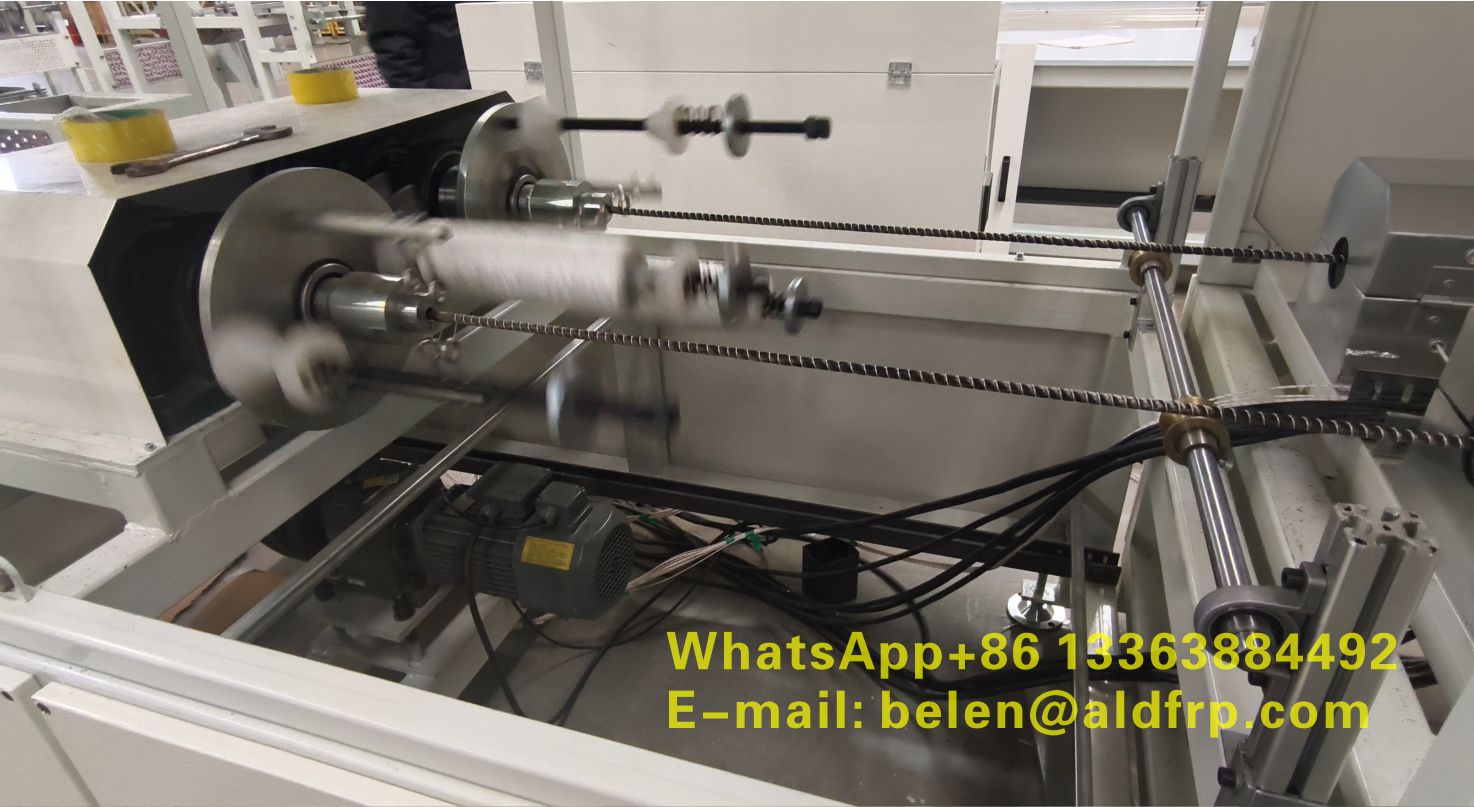
FRP rebar production process optimization is not achieved through a single machine upgrade or parameter adjustment. It is the result of systematic control across fiber feeding, resin formulation, impregnation efficiency, curing temperature management, pulling synchronization, surface treatment, and process monitoring.
Each stage in a fiberglass rebar production line is interconnected. Improving one parameter without considering system interaction often leads to new instability elsewhere.
In modern composite manufacturing, the most competitive factories are not those with the fastest machines, but those with the most stable and well-balanced production systems.
True efficiency in FRP rebar manufacturing comes from process stability, not production speed.