
The use of fiberglass reinforced polymer reinforcement has expanded rapidly in modern infrastructure engineering, especially in projects where durability is more important than initial material cost. Traditional steel reinforcement still dominates global construction, but its vulnerability to corrosion under chloride, moisture, and chemical exposure has created long-term performance challenges in many structural environments.
Fiberglass rebar provides a fundamentally different performance profile. It does not corrode, it has a high tensile strength-to-weight ratio, and it performs consistently in environments where steel gradually loses structural capacity over time. These characteristics are reshaping how engineers evaluate material selection, especially in infrastructure designed for long service lifespans.
The shift is not driven by material novelty. It is driven by lifecycle economics and structural reliability.
In many infrastructure systems, steel failure does not occur suddenly but develops gradually through corrosion-driven deterioration. Once chloride ions penetrate concrete, electrochemical reactions begin at the steel surface, forming rust that expands and creates internal pressure. This leads to cracking, spalling, and accelerated moisture intrusion, which further speeds up structural degradation.
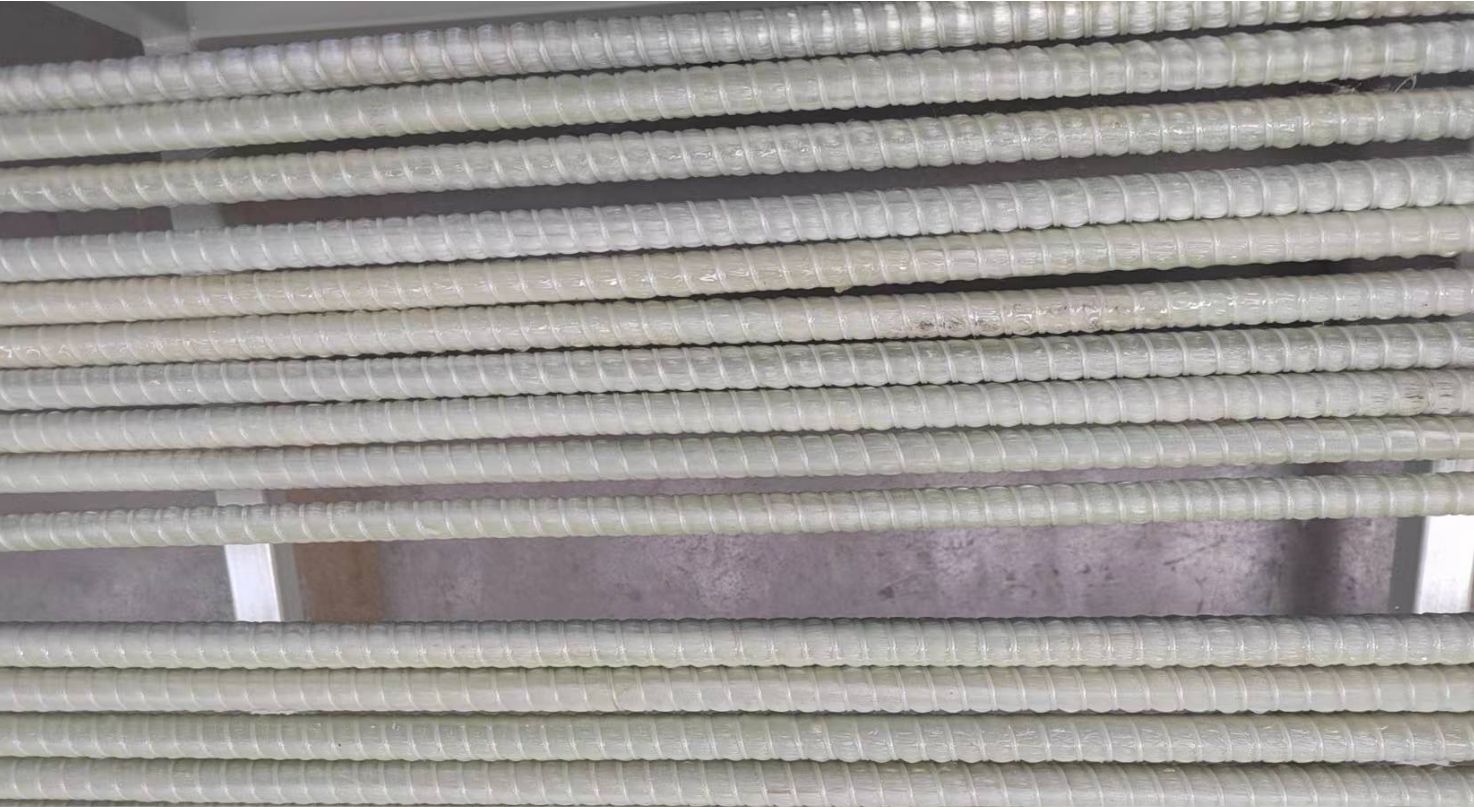
Fiberglass rebar eliminates this failure mechanism entirely because it contains no metallic components. The composite structure of glass fibers and polymer resin remains stable under chloride exposure, moisture penetration, and most chemical environments commonly found in civil engineering applications.
This difference changes maintenance planning at a system level. Instead of designing for repair cycles every 15–25 years, engineers can design for multi-decade stability with minimal intervention. That shift directly affects lifecycle cost modeling, capital investment planning, and infrastructure reliability expectations.
In long-term infrastructure planning, corrosion is no longer treated as a maintenance issue.
It is treated as a design constraint.
Bridge decks represent one of the most widely adopted applications of fiberglass rebar due to their constant exposure to de-icing salts, rainwater, and freeze-thaw cycles. These environmental conditions accelerate chloride penetration into concrete, which leads to rapid corrosion of steel reinforcement and progressive structural deterioration.
Fiberglass rebar is used in bridge decks because it eliminates chloride-induced corrosion at the reinforcement level. This allows the concrete structure to maintain its integrity for significantly longer periods without requiring frequent patch repairs or deck replacements. Transportation agencies benefit from reduced lane closures and lower long-term maintenance budgets.
However, design adaptation is necessary because fiberglass rebar has a lower modulus of elasticity than steel. This means deflection control and crack width management must be addressed through reinforcement layout optimization rather than relying on material stiffness alone. Engineers typically compensate by adjusting reinforcement spacing or slab thickness to maintain performance requirements.
The key advantage is not just durability.
It is predictable durability.
Marine environments represent one of the most aggressive exposure conditions for reinforced concrete structures. Saltwater, tidal action, airborne chlorides, and continuous moisture exposure create a constant corrosion environment for steel reinforcement.
In structures such as piers, seawalls, breakwaters, docks, and offshore platforms, corrosion often begins shortly after construction and progresses continuously throughout service life. Maintenance in these environments is also difficult and expensive due to limited access and operational constraints.
Fiberglass rebar performs effectively in these conditions because it does not undergo electrochemical corrosion. The polymer matrix isolates glass fibers from environmental exposure, maintaining structural performance even under long-term saltwater contact.
In many coastal engineering projects, material selection is no longer based only on strength requirements but on corrosion resistance under permanent exposure conditions. This shifts design priorities from repair planning to durability assurance.
Wastewater treatment plants contain some of the most chemically aggressive environments in civil engineering. Structures are exposed to hydrogen sulfide gases, acidic compounds, alkalis, and biologically active wastewater streams that continuously interact with concrete and reinforcement materials.
Steel reinforcement in these environments is particularly vulnerable because chemical reactions can occur both externally and internally once concrete permeability increases. Over time, this leads to reinforcement corrosion, cracking, and structural weakening, often requiring costly shutdowns for repair.
Fiberglass rebar provides a chemically inert reinforcement solution that significantly reduces this risk. It is commonly used in clarifiers, aeration tanks, sedimentation basins, and underground wastewater structures where maintenance access is limited and operational continuity is critical.
The value of fiberglass reinforcement in this application is not only durability.
It is operational stability.
Chemical processing environments expose reinforced concrete to acids, solvents, salts, and reactive gases that can accelerate material degradation. Even when protective coatings are applied, long-term exposure can eventually compromise steel reinforcement.
Fiberglass rebar is increasingly used in chemical plant infrastructure because it does not react with most industrial chemicals and maintains performance in corrosive environments. It is commonly applied in foundations, containment systems, processing buildings, and equipment support structures.
In these facilities, downtime caused by structural repair can have significant production and financial consequences. As a result, long-term reliability often outweighs initial construction cost considerations.
Material selection in chemical infrastructure is therefore a risk management decision.
Not just a structural one.
Tunnel environments present a combination of moisture exposure, groundwater pressure, limited ventilation, and chloride infiltration from vehicles carrying de-icing salts. These factors create a long-term corrosion risk for steel reinforcement embedded in tunnel linings and underground structures.
Fiberglass rebar is used in tunnel segments and underground structures to reduce maintenance requirements and extend service life. Since tunnels are difficult to access after commissioning, any reinforcement corrosion can result in expensive and disruptive repair operations.
Designing with fiberglass reinforcement allows engineers to prioritize durability during the initial construction phase, reducing long-term intervention needs. However, careful structural design is required due to material differences in stiffness and failure behavior.
Underground infrastructure does not forgive design mistakes.
Parking structures are continuously exposed to vehicles carrying moisture, chlorides, and road salts. These contaminants penetrate concrete surfaces and gradually reach steel reinforcement, initiating corrosion that leads to cracking, spalling, and structural deterioration.
Fiberglass rebar is increasingly specified in parking decks and ramps because it eliminates the corrosion mechanism entirely. This significantly reduces maintenance frequency and extends service life, especially in regions with heavy snowfall and de-icing salt usage.
For building owners, the main advantage is not construction efficiency but lifecycle cost stability. Repair work in parking structures often requires partial closure, which directly impacts revenue or operational capacity.
Long-term maintenance avoidance becomes a financial advantage.
Industrial facilities often operate under conditions involving heavy loads, chemical exposure, vibration, and temperature variation. Steel reinforcement in these environments can be affected by moisture ingress and chemical attack, especially in processing or manufacturing plants.
Fiberglass rebar provides a stable
Seawalls, levees, and flood protection systems must maintain performance under continuous environmental exposure. These structures are often designed for extreme events rather than daily loads, meaning long-term durability is critical.
Steel reinforcement in flood protection structures is vulnerable to corrosion due to constant water contact and soil moisture exposure. Fiberglass rebar is used to improve structural resilience and reduce long-term maintenance needs in coastal and riverine protection systems.
These structures are expected to perform during emergencies, which makes reliability more important than repairability.
Airport runways, taxiways, and aprons are subjected to heavy aircraft loads, fuel exposure, and de-icing chemicals. These conditions create both mechanical and chemical stress on reinforced concrete systems.
Fiberglass rebar helps improve long-term pavement performance by eliminating corrosion-related deterioration in reinforced layers. This reduces the frequency of runway repairs and minimizes operational disruptions, which are extremely costly in aviation environments.
Airport infrastructure prioritizes uptime, safety, and durability over short-term construction savings.
Every hour of downtime has a measurable financial impact.
Certain infrastructure projects require non-conductive and non-magnetic reinforcement materials. Fiberglass rebar is used in facilities such as hospitals, MRI rooms, research laboratories, and specialized military or communication installations.
Steel reinforcement can interfere with sensitive equipment or magnetic fields, which limits its use in these environments. Fiberglass rebar provides structural reinforcement without electromagnetic interference.
This application highlights that material selection is not always driven by strength or cost alone.
Sometimes compatibility defines feasibility.
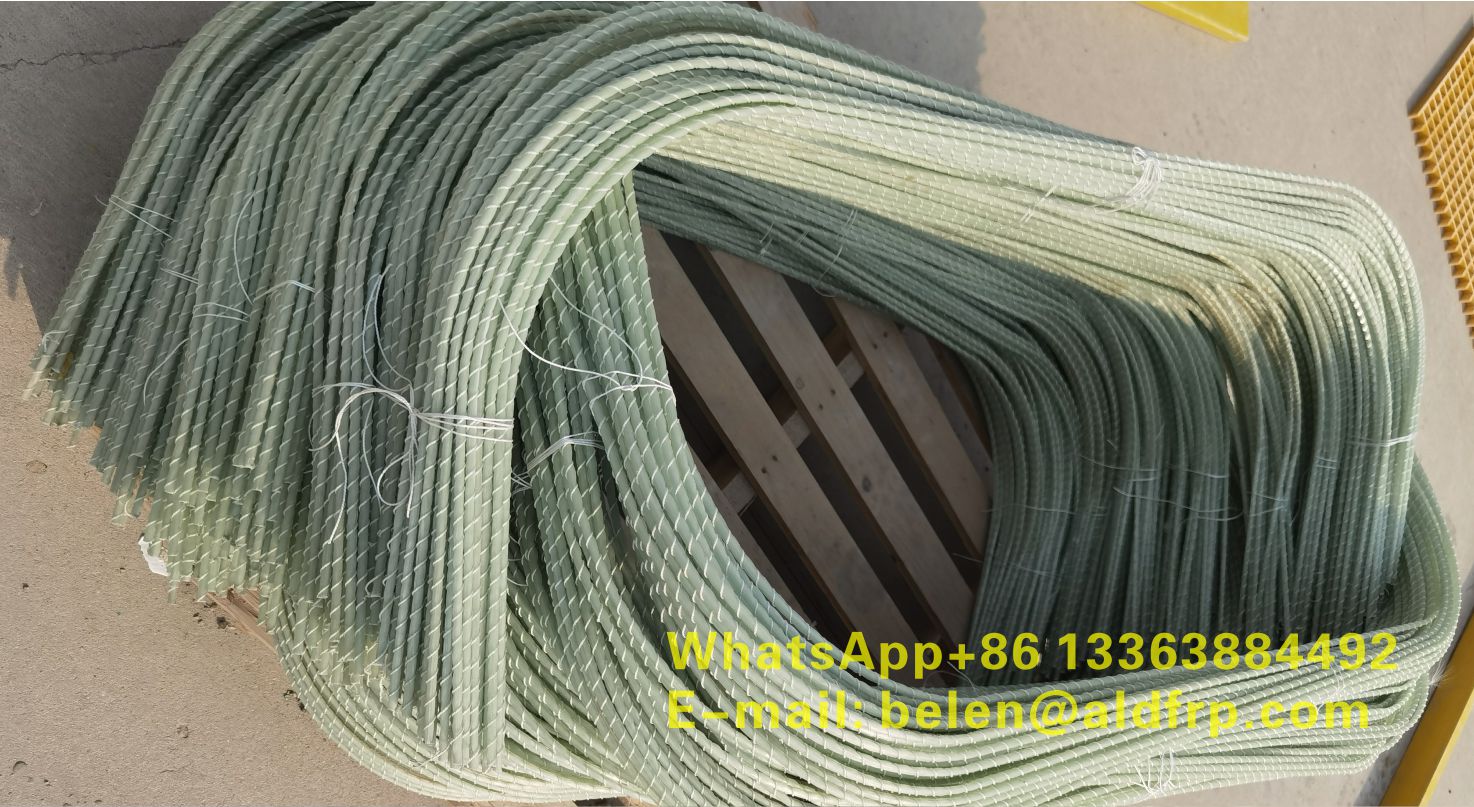
Fiberglass rebar is increasingly used across a wide range of infrastructure applications where corrosion resistance, durability, and lifecycle cost optimization are critical factors. These include bridges, marine structures, wastewater plants, chemical facilities, tunnels, parking structures, industrial flooring, flood protection systems, airport infrastructure, and electromagnetic-sensitive buildings.
The key takeaway is that fiberglass rebar is not replacing steel in all applications.
It is replacing steel where corrosion risk determines structural life.
As infrastructure demands continue to shift toward longer service life and lower maintenance requirements, fiberglass rebar will continue expanding across global construction markets as a strategic reinforcement solution rather than a niche material alternative.