
The performance of FRP rebar (Fiber Reinforced Polymer rebar) is fundamentally determined by its raw material system rather than the manufacturing equipment itself. In pultrusion-based continuous production, mechanical properties such as tensile strength, corrosion resistance, fatigue durability, and dimensional stability are not “mechanically manufactured” but “materially formed” through coupled interactions between fibers, resins, additives, and surface engineering systems.
Unlike steel reinforcement, which relies on metallurgical uniformity and phase control, FRP rebar behaves as a multi-phase composite structure. This means that even small fluctuations in fiber quality, resin viscosity, or curing behavior can propagate through the entire production line and affect long continuous lengths of finished product.
In real industrial environments, raw material selection is therefore not a procurement activity. It is a core engineering decision that directly determines production stability, failure rate, and lifecycle cost performance.
The manufacturing of fiberglass rebar is based on a continuous composite architecture in which each material is not an isolated input, but a functional component within an integrated structural system. During pultrusion, glass fiber roving forms the directional reinforcement skeleton that defines the fundamental tensile capacity of the material. Surrounding this fiber structure, thermosetting resin systems act as the matrix phase, ensuring complete encapsulation of fibers and enabling uniform stress transfer under external loading conditions.
At the same time, curing agents and catalysts regulate the chemical reaction kinetics inside the heated die, controlling gel time, curing depth, and internal stress development during continuous production. Fillers and functional modifiers are introduced to adjust viscosity, stabilize processing behavior, and balance cost-performance ratios without compromising structural integrity. Finally, surface treatment materials function as the interface layer between FRP rebar and concrete, enabling mechanical interlock and load transfer since no natural chemical bonding exists between polymer composites and cementitious materials.
From an engineering perspective, these components do not operate independently. They form a coupled process system where fiber wet-out, resin penetration, and thermal curing occur simultaneously, meaning instability in one component directly affects all downstream mechanical outcomes.
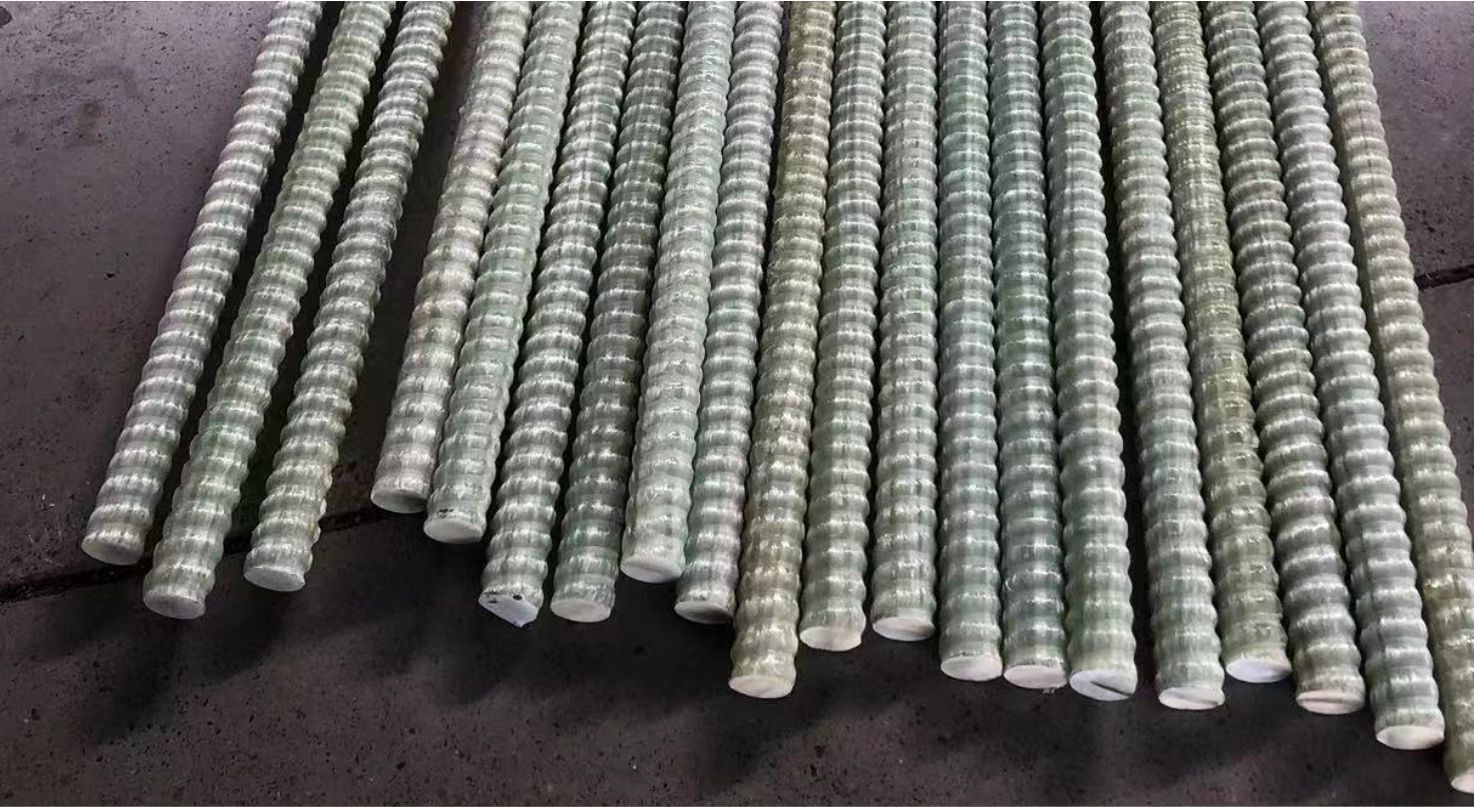
Among all materials used in FRP rebar manufacturing, glass fiber roving is the primary load-bearing phase and defines the upper mechanical limit of the composite system. It contributes the majority of tensile strength and ensures directional reinforcement behavior along the longitudinal axis of the bar.
High-quality glass fiber must maintain strict control over filament diameter uniformity, surface sizing chemistry, and tensile modulus consistency. These parameters directly influence resin adhesion efficiency and interfacial shear strength, which ultimately determine fatigue resistance and long-term durability.
In continuous production environments, fiber consistency is more important than peak mechanical strength. A stable fiber system ensures predictable processing behavior, while inconsistent fiber batches can introduce variability in resin wet-out, internal void formation, and tensile strength distribution across production runs.
From a cost structure perspective, glass fiber typically accounts for 30–45% of total raw material cost, making it the most significant cost driver in FRP rebar manufacturing. Any variation in fiber quality directly translates into production instability regardless of equipment precision.
The resin system functions as both a structural matrix and an environmental protection barrier in FRP rebar systems. It determines how fibers interact under mechanical load and how the composite behaves under long-term exposure to moisture, chemicals, and temperature variation.
Common resin systems include polyester resin, vinyl ester resin, and epoxy resin, each representing a different balance between cost, processing stability, and performance. Vinyl ester resins are widely used in infrastructure applications due to their corrosion resistance and balanced curing characteristics. Epoxy systems offer higher bonding strength and fatigue resistance but require tighter process control and increase overall production cost. Polyester resins are more cost-effective but are generally limited to less demanding environments.
In pultrusion processes, resin is not simply a binding agent but a stress transfer medium that governs load distribution between fiber bundles. If resin viscosity or curing kinetics are not properly controlled, incomplete wet-out, resin-rich zones, or premature gelation can occur, all of which significantly reduce structural performance.
Resin systems typically account for 25–40% of total material cost, but their influence on failure rate and structural reliability is disproportionately higher than their cost share.
Although additives represent a relatively small proportion of total raw material input, they play a critical role in stabilizing FRP rebar manufacturing processes. These include curing agents, catalysts, UV stabilizers, coupling agents, and fillers designed to adjust both chemical and physical behavior during production.
Curing agents regulate reaction speed within the heated die, directly affecting production efficiency and internal structural uniformity. UV stabilizers enhance long-term outdoor durability, particularly in bridge and coastal infrastructure applications where continuous environmental exposure is unavoidable. Fillers are commonly used to optimize cost and processing behavior, but excessive filler content can disrupt fiber-resin bonding continuity and reduce mechanical performance.
In industrial practice, additive imbalance is one of the most common hidden causes of long-term quality inconsistency. Unlike fiber or resin defects, additive-related issues often remain undetected until field performance reveals structural deviations.
Therefore, additive design should be considered a process stability system rather than a cost optimization tool.
Unlike steel reinforcement, FRP rebar does not naturally bond with concrete due to its non-metallic and chemically inert surface. As a result, surface engineering becomes a critical performance determinant in structural applications.
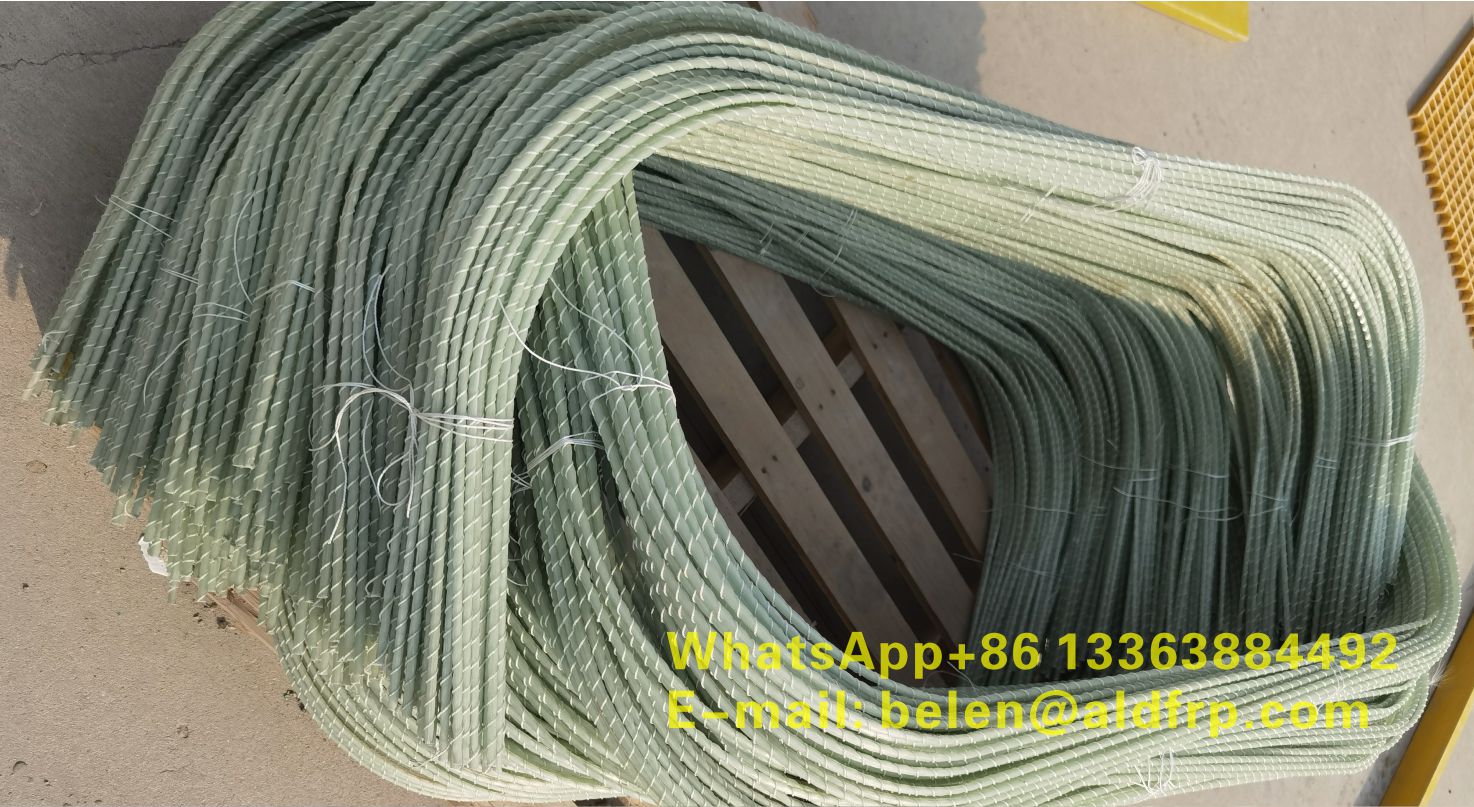
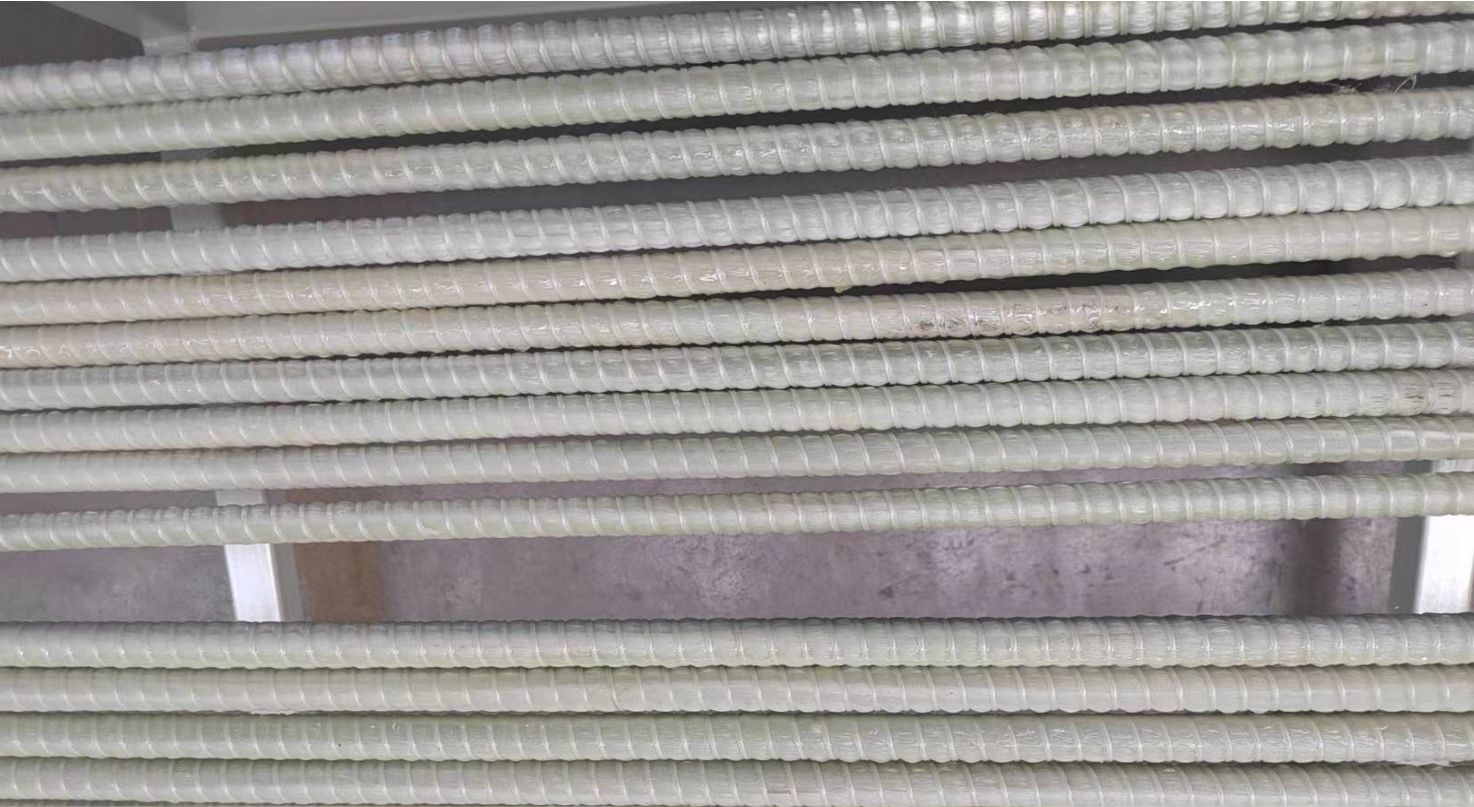
Common surface treatment methods include sand coating, helical fiber wrapping, and molded surface profiling. These treatments create mechanical interlock mechanisms that enable efficient load transfer between FRP rebar and surrounding concrete matrix.
Sand coating is widely used due to its cost efficiency and strong bonding performance. Helical wrapping provides enhanced anchorage but increases manufacturing complexity. Integrated surface profiling, formed directly during pultrusion die design, offers the highest consistency in geometry control and bonding stability.
From a structural perspective, surface treatment does not increase tensile strength, but it directly determines bond performance, pull-out resistance, and load transfer efficiency, which are critical for real engineering applications.
The cost structure of FRP rebar manufacturing is primarily material-driven rather than energy-driven, unlike steel production systems. A typical cost distribution includes glass fiber (30–45%), resin systems (25–40%), additives (5–10%), surface treatment materials (5–10%), and process loss or waste (5–15%).
This structure indicates that more than 70% of total production cost is controlled by fiber and resin selection alone. As a result, procurement decisions directly influence not only cost efficiency but also long-term production stability and product reliability.
However, aggressive cost reduction strategies often introduce hidden risks, including increased rejection rates, unstable curing behavior, reduced mechanical consistency, and higher long-term warranty exposure. In industrial production, stable cost structure is generally more valuable than minimum unit cost.
Material selection in FRP rebar systems always involves balancing mechanical performance, process stability, and economic efficiency. High-strength fibers improve tensile performance but increase sensitivity to supply variation. Advanced resin systems enhance durability but require tighter control over curing conditions. Lower-cost formulations reduce initial investment but increase process variability across continuous production.
In pultrusion systems, small instabilities are amplified over long production cycles. A minor resin fluctuation can propagate across meters of product before detection, affecting structural uniformity and quality consistency.
For this reason, the optimal material system is not necessarily the highest-performance combination, but the most stable system under continuous industrial production conditions.
The performance of FRP rebar is fundamentally determined by its raw material system rather than manufacturing equipment. Glass fiber defines structural strength, resin systems govern durability and stress transfer, additives stabilize process behavior, and surface treatments ensure effective bonding with concrete.
In real industrial production, the key challenge is not selecting the most advanced materials, but building a balanced system that maintains consistent performance under continuous pultrusion conditions.
Ultimately, raw material selection is not a procurement decision—it is a long-term engineering strategy that defines production stability, structural reliability, and lifecycle cost efficiency.