
Choosing the right frp rebar machine manufacturer is not simply a purchasing decision. It is a long-term industrial engineering investment that directly determines production stability, product quality consistency, and overall factory profitability. In FRP rebar manufacturing, the machine is only one part of a complete system—the real performance depends on how well the supplier understands pultrusion technology, resin chemistry, and continuous production control logic.
In real industrial projects, many investors discover too late that two machines with similar specifications can produce completely different results. One line may run smoothly for years with stable output, while another constantly suffers from quality fluctuations, fiber misalignment, and curing instability. The difference is rarely visible on paper. It comes from engineering depth, system integration capability, and process design experience behind the fiberglass rebar machine manufacturer.
This is why selecting a frp machine supplier should always be treated as a technical evaluation rather than a simple equipment purchase decision.
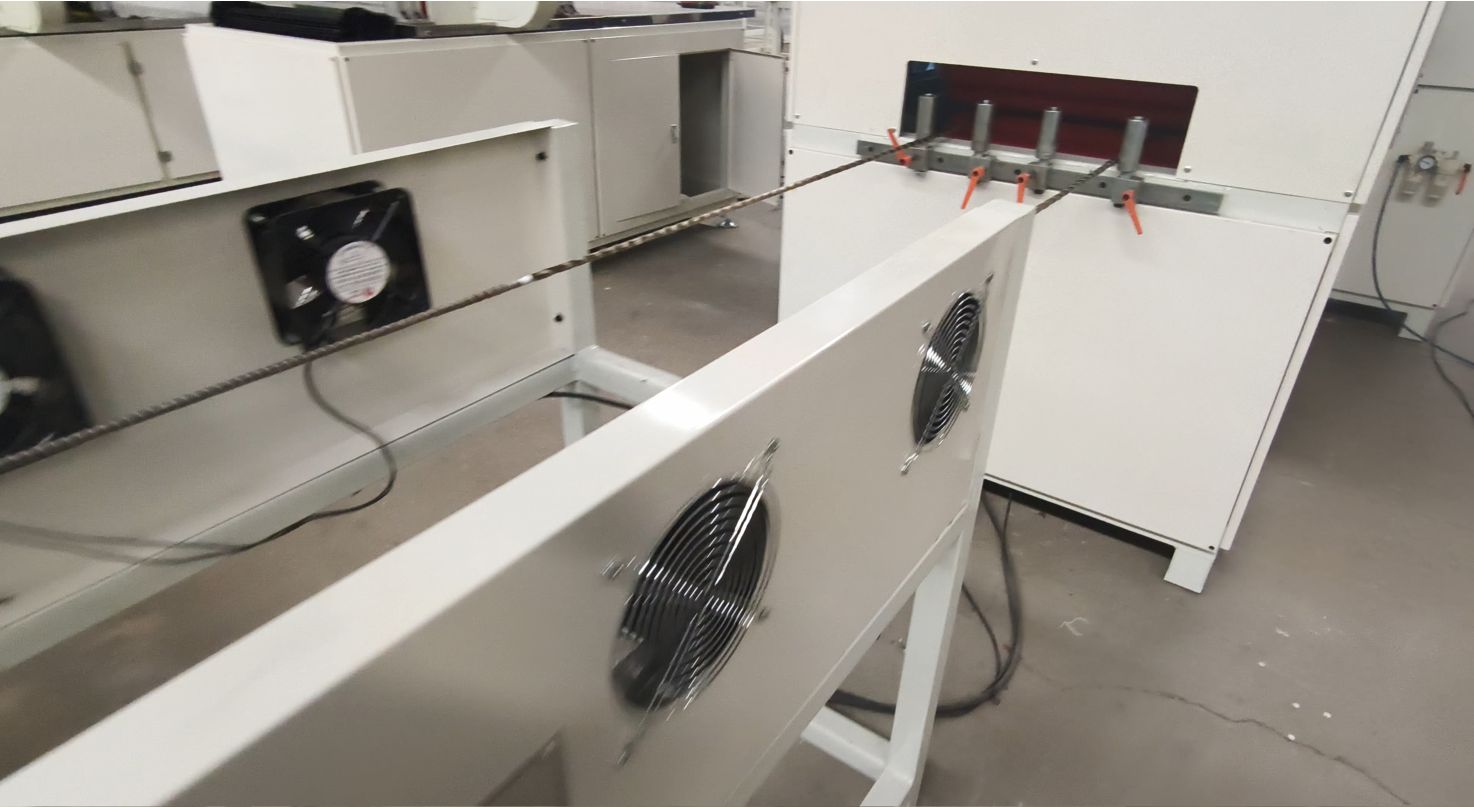
A complete FRP rebar production line is a continuous pultrusion system rather than a standalone machine. It integrates fiber feeding, resin impregnation, tension control, heated die curing, pulling traction, and automatic cutting into one synchronized production flow. Each section is directly connected, meaning that any instability in one stage will immediately propagate to the next stage.
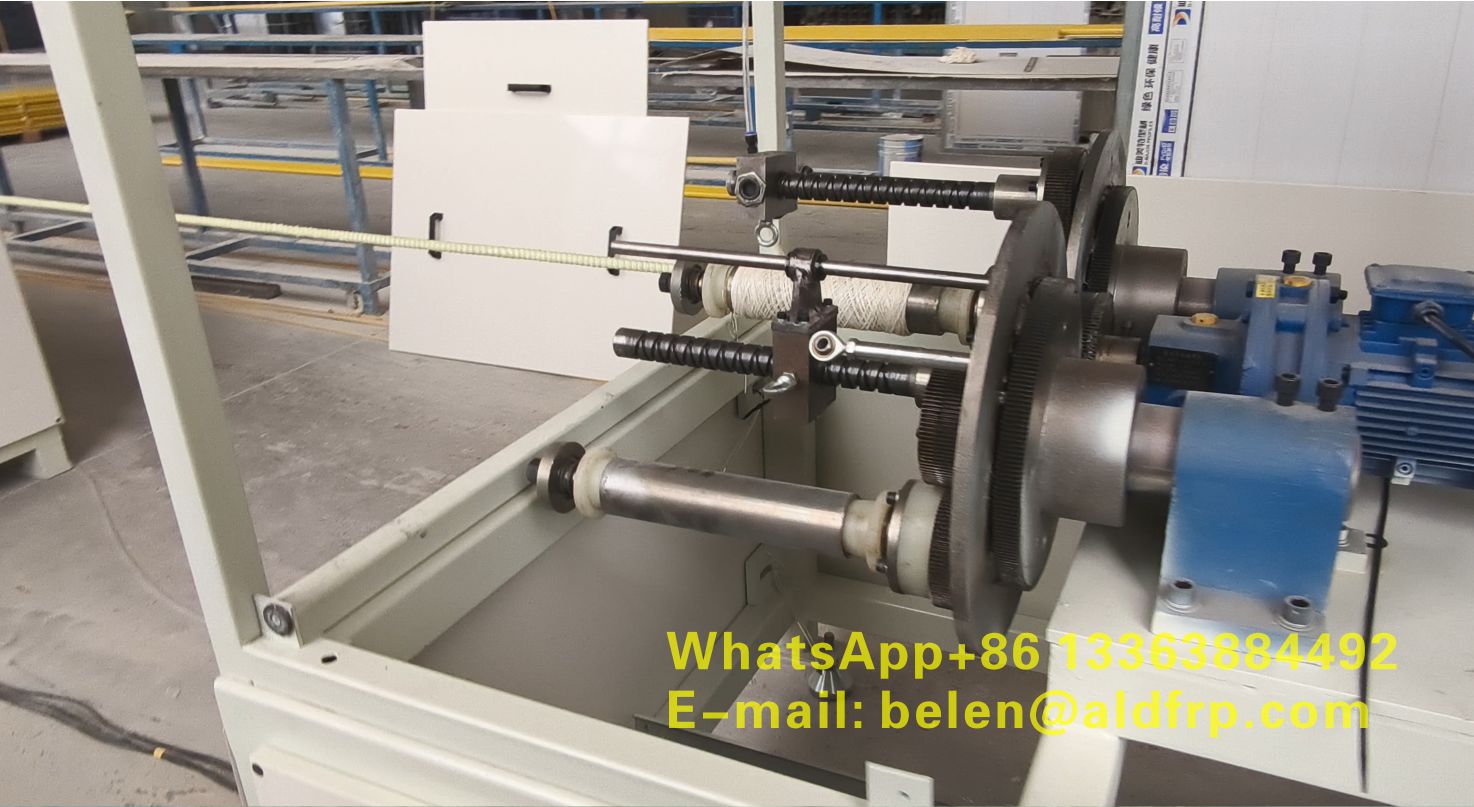
In this system, the fiber creel determines reinforcement stability, the resin impregnation unit controls wet-out quality, and the heated die defines curing behavior and final structural formation. The pulling system ensures dimensional consistency, while the cutting system finalizes product accuracy. These subsystems do not operate independently—they function as a continuous transformation chain from raw fiber to finished composite bar.
In practical production environments, most quality issues are not caused by mechanical failure but by system mismatch. For example, unstable resin viscosity can create dry fiber zones inside the bar, while inconsistent tension control may lead to uneven fiber distribution and reduced tensile strength. Even if all machines are high quality individually, poor system integration can still result in unstable production.
A professional frp machine supplier must therefore design the entire production line as a unified engineering system rather than separate mechanical modules.
The choice of a fiberglass rebar machine manufacturer has a direct influence on long-term production stability because FRP pultrusion is extremely sensitive to process balance. Small variations in pulling speed, curing temperature, or resin flow rate can create structural inconsistencies that are not immediately visible but appear later during mechanical testing or field application.
In infrastructure-grade FRP rebar applications such as bridges, marine structures, and chemical plants, stability is more important than maximum output speed. A stable production line operating at moderate speed often produces higher overall yield and lower scrap rates than a high-speed line with frequent parameter fluctuations.
Over time, instability does not only affect product quality but also increases operational costs through rework, material waste, and downtime. This is why experienced investors prioritize engineering reliability over nominal production capacity when selecting a frp rebar machine manufacturer.
When evaluating a frp rebar machine manufacturer, technical performance indicators are far more important than price or appearance. One of the most critical factors is continuous production stability under variable raw material conditions. A reliable system must tolerate slight fluctuations in fiber quality, resin viscosity, and environmental temperature without affecting final product consistency.
Another key factor is synchronization accuracy between pulling system, heating curve, and resin impregnation stage. If these parameters are not tightly coordinated, internal voids, surface whitening, or uneven mechanical strength distribution may occur during long-term operation. These issues are often not visible immediately but become evident during structural testing or on-site installation.
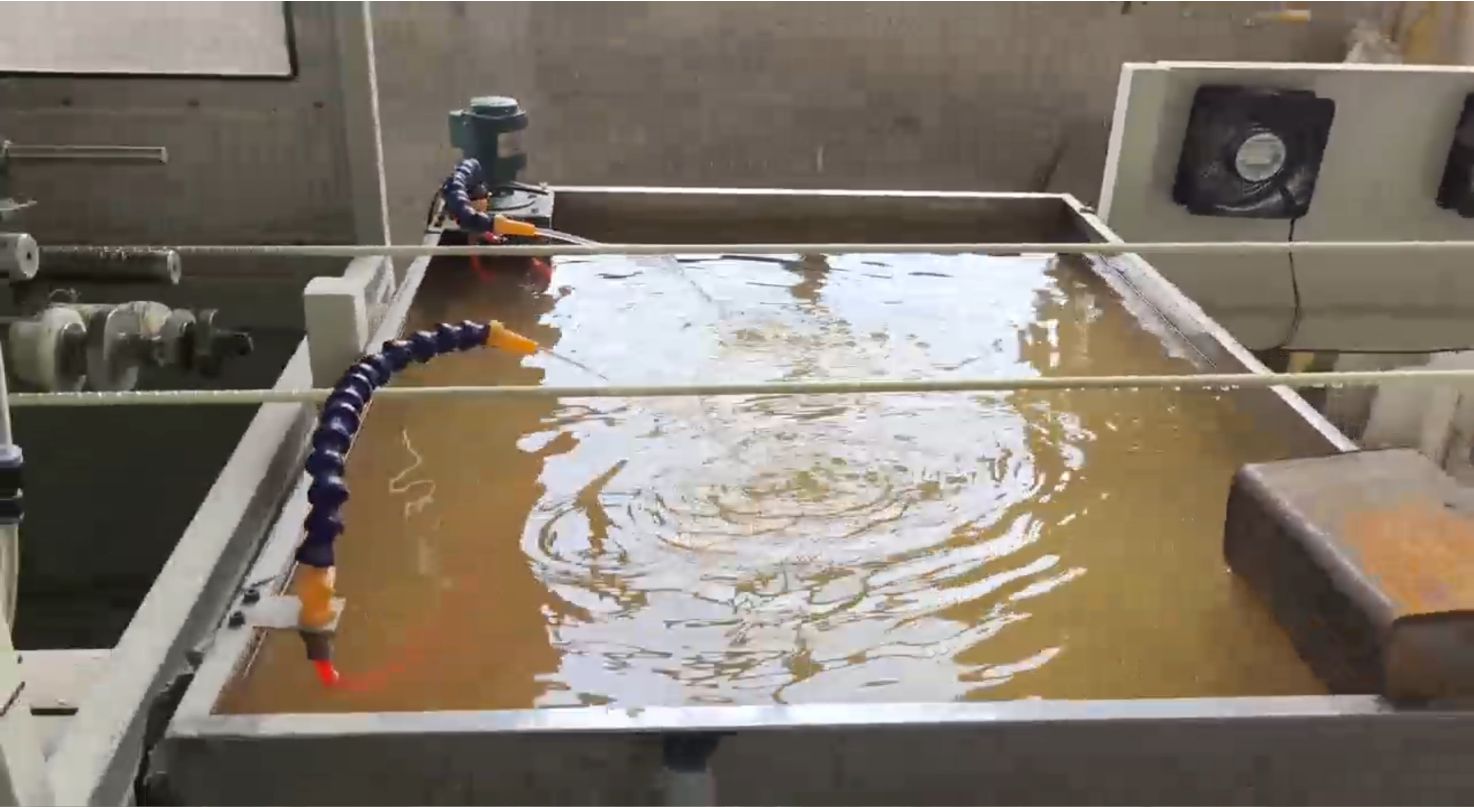
Cooling system precision and cutting accuracy also play an important role. Minor dimensional deviations may not seem significant during production but can lead to installation misalignment and reduced structural performance in engineering applications.
A high-performance FRP system is not defined by how fast it runs—it is defined by how consistently it performs under real industrial conditions.
A professional frp machine supplier must have deep knowledge not only of machinery design but also of composite material behavior under continuous thermal and mechanical stress. FRP pultrusion is a coupled engineering system involving mechanics, thermodynamics, and polymer chemistry operating simultaneously.
For example, die temperature zoning directly affects resin curing speed and structural formation, while fiber tension distribution determines internal load transfer efficiency. Resin bath design controls impregnation quality, which directly influences final tensile strength and bonding performance with concrete structures.
If these parameters are not properly engineered as a unified system, increasing production speed may lead to incomplete curing, internal stress accumulation, or resin-rich zones that weaken the composite structure. This is why experienced manufacturers do not design machines as isolated components but as integrated engineering platforms where every subsystem interacts with the others.
Selecting the wrong fiberglass rebar machine manufacturer often results in operational problems that only appear after commissioning. The most common issue is unstable product quality, where tensile strength, fiber distribution, and dimensional accuracy vary between batches even when raw materials remain unchanged.
Another major risk is frequent maintenance downtime caused by poor system integration. Overheating dies, unstable traction systems, and resin contamination in impregnation units can significantly reduce production efficiency and increase long-term operating costs.
In many cases, low initial equipment cost leads to higher overall lifecycle cost due to scrap loss, repeated calibration, and production interruptions. This makes equipment price a misleading indicator of true investment value.
The real cost of equipment is not the purchase price—it is long-term production stability.
A reliable frp rebar machine manufacturer is defined by three core capabilities: process engineering knowledge, system integration capability, and long-term technical support.
Process engineering knowledge ensures the system can be adapted to different resin formulations, fiber grades, and production requirements. System integration capability ensures all subsystems operate in synchronized continuous flow without instability or mismatch. Long-term technical support ensures that production remains stable even after years of equipment wear and operational changes.
In modern FRP manufacturing, suppliers are no longer just equipment vendors. They are long-term technical partners responsible for factory efficiency, product consistency, and production scalability.
A strong supplier does not simply deliver machines—it delivers stable industrial output capability.
Choosing a fiberglass rebar machine manufacturer is ultimately a decision about long-term production stability rather than short-term investment cost. The true value of an FRP production system lies not in individual machine specifications, but in how well the entire pultrusion process is engineered, synchronized, and controlled.
A professional frp machine supplier provides more than equipment—it provides a complete, stable, and scalable production system designed for continuous industrial operation.
In FRP manufacturing, stability is not a feature. It is the foundation of profitability.