

When designing an FRP tank, one of the first questions I get from clients is: “How thick should the tank walls be?” This is not a trivial question—choosing the wrong thickness can lead to structural failure, leaks, or even catastrophic accidents.
The FRP tank thickness calculation is essential for ensuring durability, corrosion resistance, and safety. It’s a mix of material science, engineering standards, and practical experience.
Wall thickness in FRP tanks is more than just a number. It determines:
Structural strength
Resistance to internal pressure
Load-bearing capacity during installation
Longevity under chemical exposure
For example, a chemical storage tank storing acids needs thicker walls than a water storage tank of the same size because the stress and potential corrosion are higher.
Several variables influence the FRP tank thickness calculation:
The larger the tank, the more stress the walls experience. Bigger tanks require thicker walls to handle internal pressure and prevent deformation.
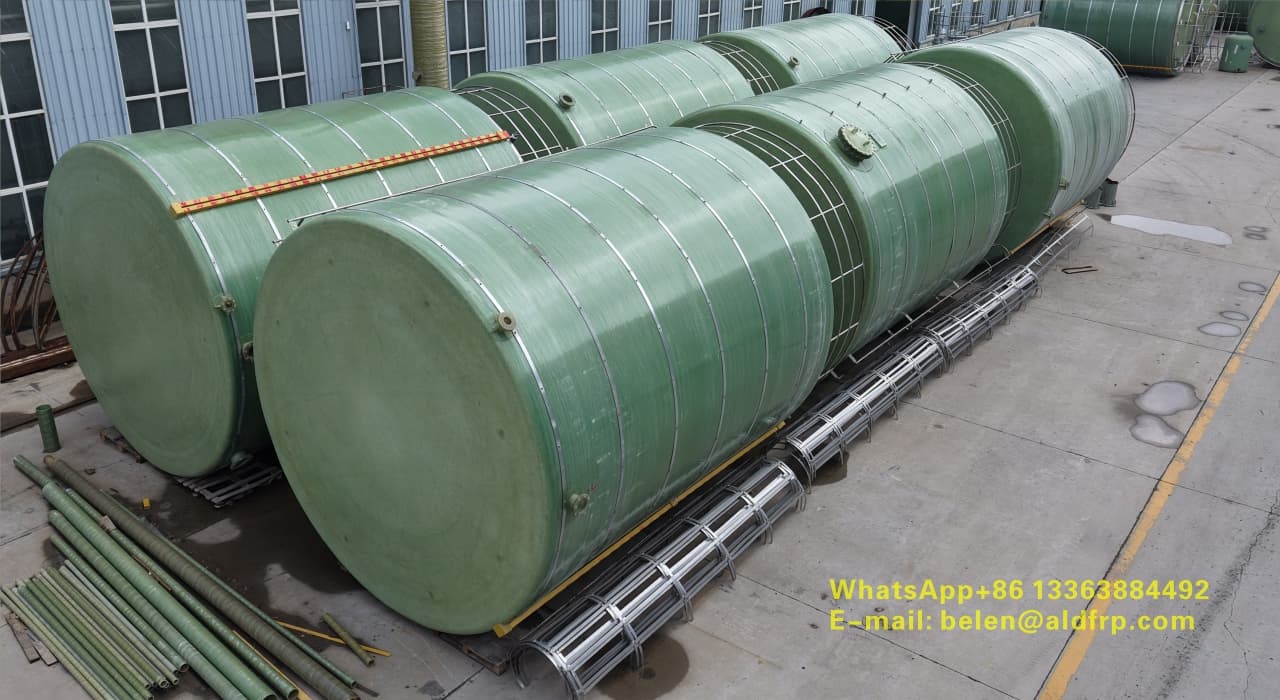
Chemicals, acids, or alkaline solutions require stronger, corrosion-resistant walls. Water or mild solutions can be stored in relatively thinner tanks.
Pressurized tanks naturally need thicker walls than atmospheric tanks. Even low-pressure variations can impact long-term performance if wall thickness is underestimated.
High or fluctuating temperatures affect resin performance. Some resins soften at elevated temperatures, which may require compensating with thicker fiberglass layers.
Engineering standards always include a safety factor. For FRP tanks, this ensures the tank can handle unexpected loads or chemical variations without failure.
There are several approaches to calculating wall thickness. The most common include:
This method treats the FRP tank wall as a composite laminate. By calculating the stress on each fiber layer and resin contribution, engineers can determine the necessary thickness to meet strength requirements.
It requires understanding:
Fiber orientation
Resin type
Tank geometry
Applied loads
For cylindrical tanks, the hoop stress equation is often used:
t=P⋅Rσ⋅Eft = \frac{P \cdot R}{\sigma \cdot E_f}t=σ⋅EfP⋅R
Where:
ttt = wall thickness
PPP = internal pressure
RRR = tank radius
σ\sigmaσ = allowable stress of the composite
EfE_fEf = modulus of elasticity of fiberglass
This gives a quick and effective estimate for wall thickness.
Modern FRP tank manufacturers use finite element analysis (FEA) software. By simulating stress, pressure, and chemical effects, software can optimize wall thickness for both safety and material efficiency.
This approach is particularly useful for large tanks or complex shapes where traditional formulas may not fully capture stress distribution.
While it varies by application, here’s a general guide:
Small water storage tanks (1–5 m³): 5–10 mm
Medium chemical tanks (10–50 m³): 10–20 mm
Large industrial tanks (>100 m³): 20–40 mm
Remember, this depends on fiber type, resin, and operating conditions. The FRP tank thickness calculation must always be verified by a qualified engineer.
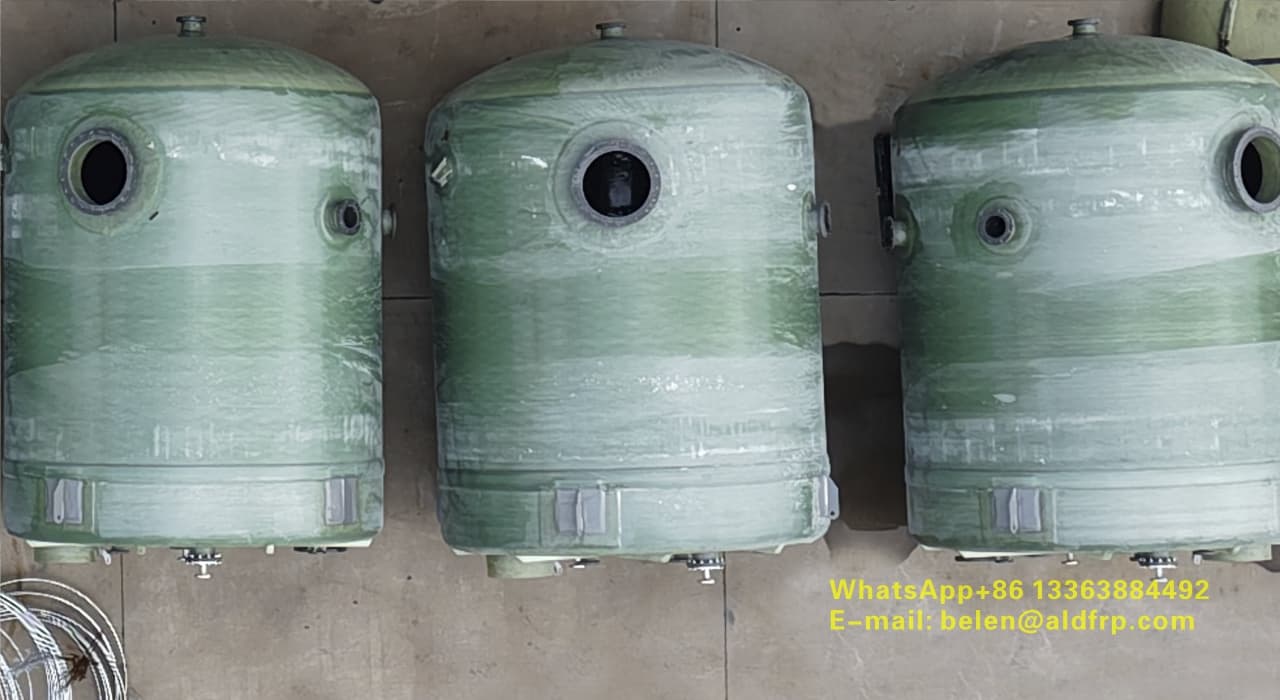
In practice, FRP tanks often use extra reinforcement layers to handle critical areas:
Filament winding layers for circumferential strength
Helical layers for longitudinal strength
Chopped strand mat in corners or nozzle areas
These reinforcements help distribute stress evenly and allow the wall to maintain integrity under load.
In one industrial chemical storage project, a 50 m³ tank needed to store hydrochloric acid. Initial wall thickness calculations suggested 15 mm.
After simulation with FEA, engineers added a 3 mm reinforcement at high-stress areas around nozzles and manholes. The result was a tank that met safety standards, handled chemical stress, and had a 20+ year expected lifespan.
This example shows why proper FRP tank thickness calculation is crucial.
Using a “one-size-fits-all” thickness
Ignoring operating pressure variations
Overlooking temperature effects on resin
Skipping reinforcement in high-stress areas
Any of these mistakes can shorten the tank’s lifespan or cause failure.
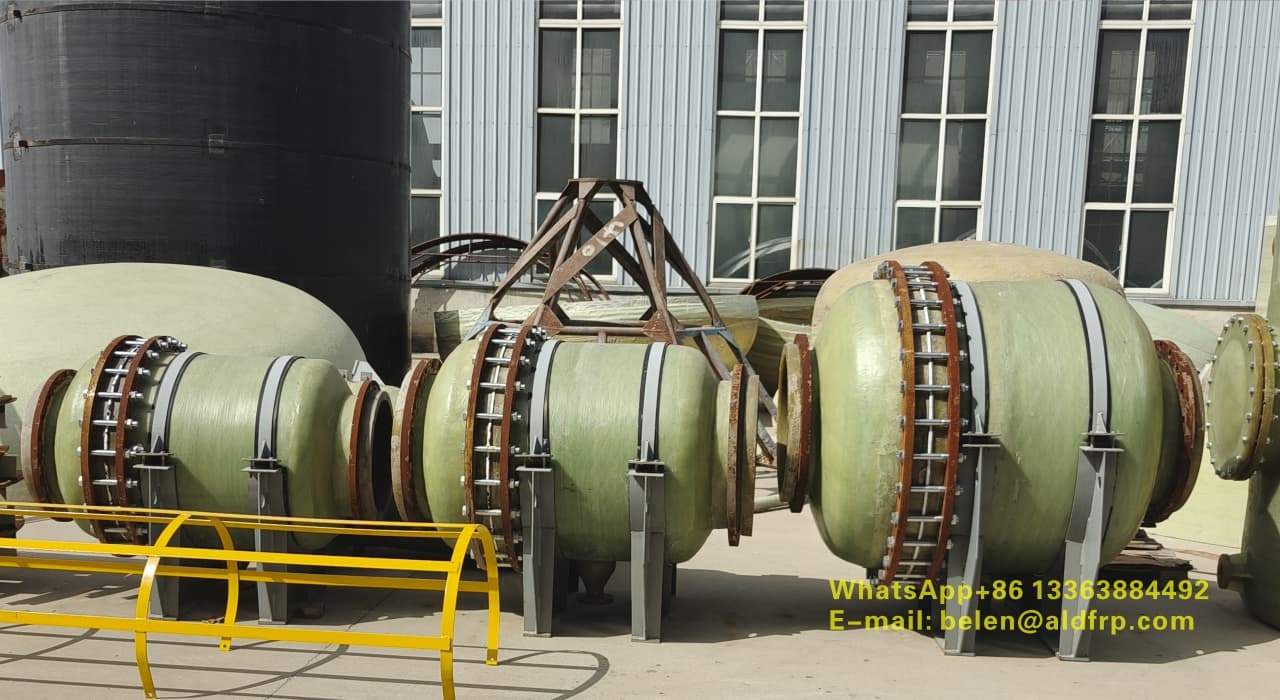
By calculating the correct wall thickness:
Tanks resist chemical attack and mechanical stress
Maintenance costs are reduced
Safety is ensured for personnel and property
Material usage is optimized, preventing overdesign
Choosing the right thickness is an investment in reliability and cost-effectiveness.
The FRP tank thickness calculation is a fundamental step in tank design. It combines material properties, tank geometry, chemical compatibility, and safety factors.
Whether using classical formulas, FEA simulation, or a combination, accurate calculation ensures tanks:
Are structurally sound
Resist corrosion
Last for decades without major maintenance
For industrial applications, taking this step seriously is critical. Investing in properly designed tanks reduces risks, improves performance, and saves money over the long term.