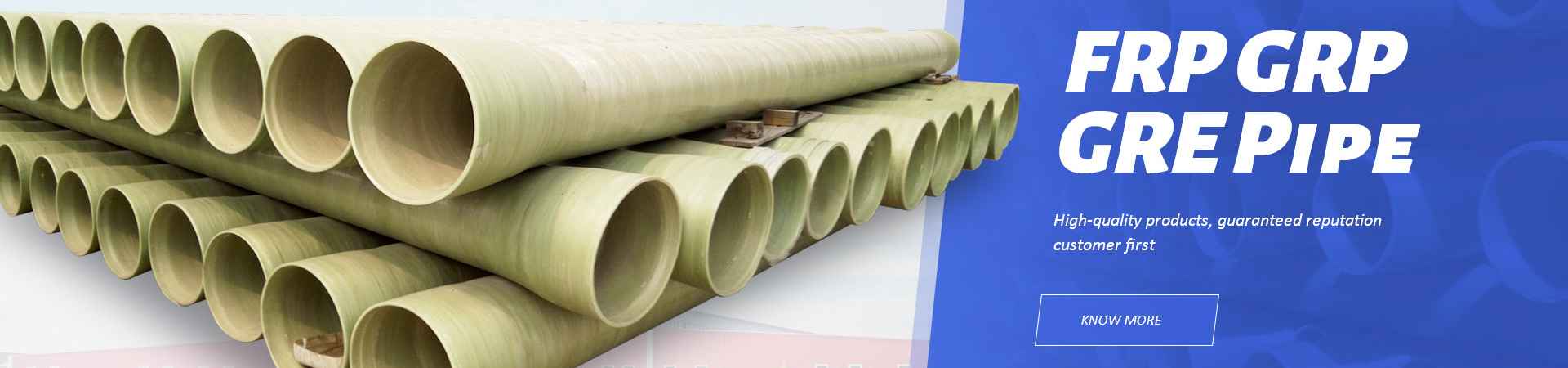

Storing corrosive chemicals safely is a major concern for industrial and chemical facilities. Traditional steel or concrete tanks are prone to corrosion, leaks, and frequent maintenance when exposed to strong acids, alkalis, or reactive chemicals. That’s why many industries are turning to an FRP chemical storage tank as a reliable, long-lasting solution.
Fiberglass reinforced plastic (FRP) tanks combine mechanical strength, corrosion resistance, and flexible design options. They are widely used in chemical plants, water treatment facilities, fertilizer production, and industrial manufacturing. This article will explore the benefits, manufacturing process, applications, and selection criteria for FRP chemical storage tanks.
The primary advantage of an FRP chemical storage tank is its high resistance to chemical corrosion. By using the appropriate resin system—such as vinyl ester, polyester, or epoxy—FRP tanks can safely store:
Sulfuric acid
Hydrochloric acid
Nitric acid
Alkalis and industrial chemical solutions
This ensures long-term safety and reduces the risk of leaks or environmental contamination.
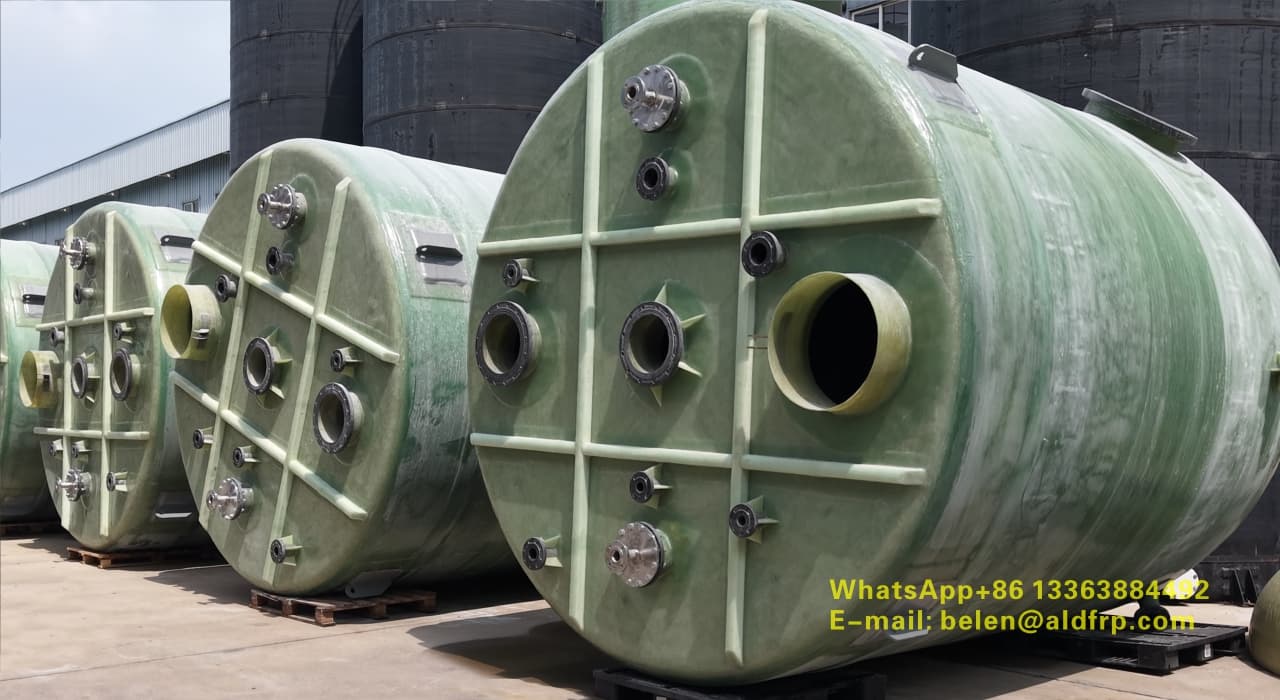
FRP chemical storage tanks have an extended service life, often 20–30 years or more. Unlike steel tanks that require frequent coatings or concrete tanks that may crack, FRP maintains structural integrity under harsh chemical exposure, reducing replacement costs and operational interruptions.
FRP tanks are much lighter than steel or concrete alternatives. This feature simplifies transportation, handling, and installation, especially for large-capacity tanks or installations in remote areas.
FRP tanks require minimal maintenance. They do not need painting, lining, or anti-corrosion treatments. Routine inspections are sufficient to ensure safe operation, which reduces long-term operational costs.
A custom FRP chemical storage tank can be designed to meet project-specific requirements, including:
Tank volume and dimensions
Wall thickness for pressure and environmental resistance
Placement of manholes, flanges, and nozzles
Above-ground or underground installation
This level of customization ensures safe and efficient storage tailored to the facility’s operational needs.
Filament winding is a widely used method for producing FRP chemical tanks. Fiberglass fibers are coated with resin and wound precisely around a rotating mold. This produces:
Uniform wall thickness
Strong load-bearing capacity
High chemical resistance
Filament winding is ideal for large-capacity industrial tanks that must withstand harsh conditions.
For unique or small-batch tanks, the hand lay-up method is preferred. Fiberglass mats are manually applied and saturated with resin, allowing flexibility in shape and design while maintaining strength and durability.
After construction, tanks undergo curing to solidify the resin. Rigorous testing ensures reliability:
Hydrostatic and leak testing
Laminate thickness verification
Chemical resistance checks
These quality assurance steps guarantee that each FRP chemical storage tank meets industrial and safety standards.
FRP chemical storage tanks safely store strong acids, alkalis, and other reactive chemicals, preventing corrosion-related damage and ensuring operational continuity.
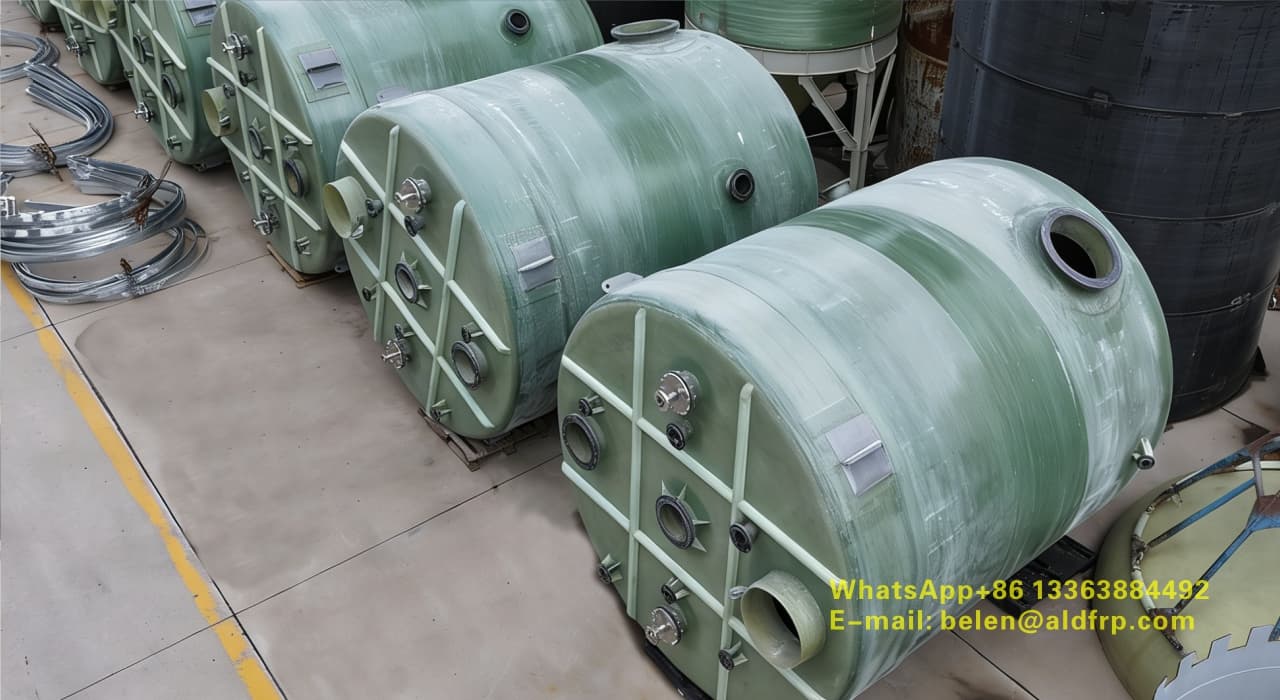
They are used to store treatment chemicals like chlorine, hydrochloric acid, and other additives, offering long-term chemical resistance and compliance with environmental regulations.
FRP tanks store liquid fertilizers, acids, and other chemical additives, protecting both stored chemicals and the surrounding environment.
These tanks can safely handle wastewater, sludge, and other industrial byproducts, ensuring environmental compliance and operational efficiency.
Select a resin system compatible with the stored chemicals. Vinyl ester resin is recommended for strong acids, while polyester or epoxy resins are suitable for general chemical storage.
Determine tank size and volume according to operational needs. Decide between above-ground or underground placement based on site conditions.
Take into account:
UV exposure for outdoor tanks
Soil conditions and pressure for underground tanks
Temperature fluctuations
Seismic activity
These factors affect wall thickness and reinforcement requirements.
A reliable FRP chemical storage tank manufacturer provides:
Engineering design and consultation
High-quality manufacturing processes
Installation guidance and technical support
Compliance with ASTM, ISO, and CE standards
Working with an experienced manufacturer ensures safe, durable, and regulation-compliant storage solutions.
corrosion-resistant FRP chemical storage tank
custom fiberglass tank for industrial chemicals
FRP tank for acid and alkali storage
industrial FRP chemical storage solutions
durable fiberglass chemical storage tank
An FRP chemical storage tank is a durable, corrosion-resistant, and low-maintenance solution for industrial, chemical, and wastewater storage applications. Its customizable design, lightweight structure, and long service life make it superior to steel or concrete tanks.
Partnering with a professional custom fiberglass storage tank manufacturer ensures tanks meet chemical compatibility, structural requirements, and safety standards, providing reliable and long-term chemical storage solutions for decades.