
When planning a storage solution for industrial liquids, water, or chemicals, one of the first questions buyers ask is about frp tank cost. However, unlike standardized products, FRP tanks are engineered systems, which means their pricing can vary significantly depending on multiple factors.
If you are sourcing tanks for a project, understanding what drives the frp tank cost will help you avoid overpaying, prevent quality risks, and make better long-term decisions. In this guide, we will break down the real cost structure, explain key pricing factors, and provide practical advice for buyers.
The most important factor affecting frp tank cost is the size of the tank. Larger tanks require more raw materials, longer production time, and more complex manufacturing processes.
For example, a small water tank used in a residential or light industrial setting will cost significantly less than a large industrial chemical storage tank. As capacity increases, the cost rises not only due to material usage but also because of structural design requirements.
FRP tanks are made using different resin systems, and the choice of resin plays a major role in determining the frp tank cost.
Polyester resin is commonly used for water storage and offers the lowest cost
Vinyl ester resin provides better chemical resistance and comes at a moderate price
Epoxy resin is used for highly aggressive chemicals and is the most expensive option
Choosing a higher-grade resin increases initial cost but ensures longer service life and better performance in harsh environments.
Another key factor in frp tank cost is wall thickness. Tanks designed for higher pressure or underground installation require thicker walls and additional reinforcement layers.
For example, a tank used for underground installation must withstand soil pressure and groundwater forces. This requires extra structural reinforcement, which increases material usage and manufacturing complexity.
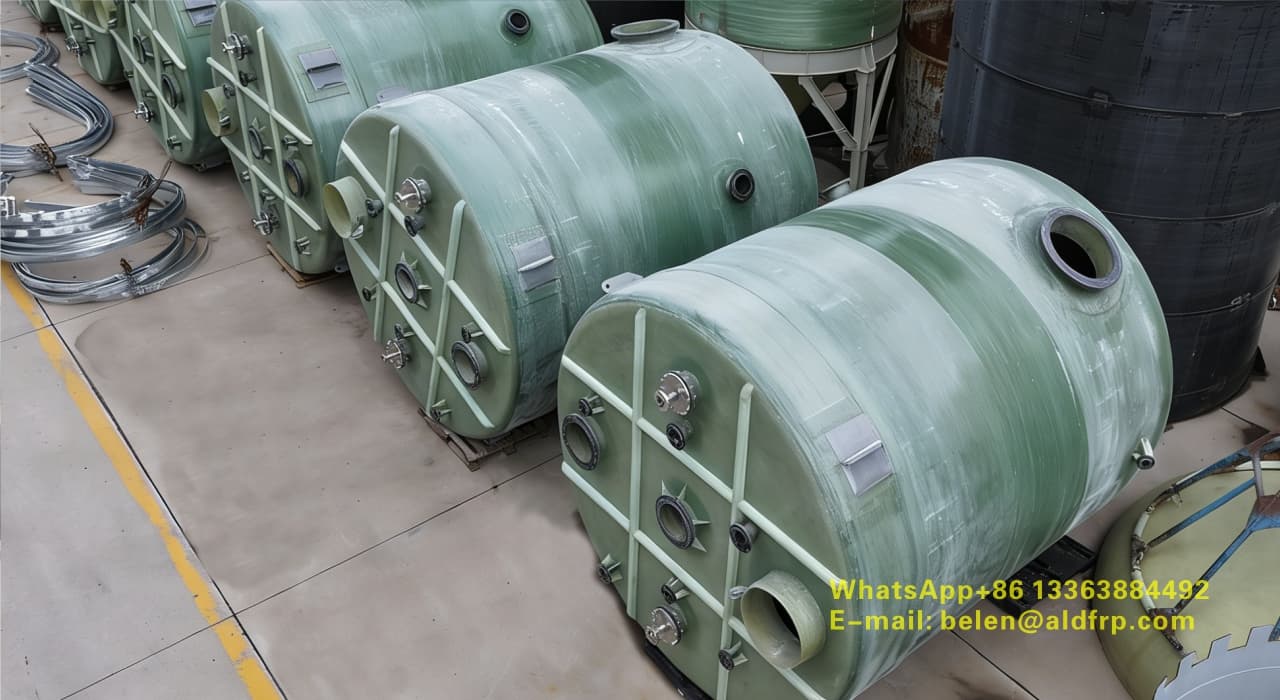
The method used to produce the tank also affects the final frp tank cost.
Filament winding is commonly used for large tanks and provides high strength and uniform quality
Hand lay-up is more flexible and often used for smaller or custom tanks
Filament winding generally results in higher cost due to equipment and precision control, but it offers better consistency and durability.
Customization plays a major role in pricing. Standard tanks are more affordable, while customized tanks increase the frp tank cost.
Customization may include:
Special dimensions or shapes
Additional nozzles and flanges
Internal structures such as baffles
Specific lining requirements
The more complex the design, the higher the cost.
Water storage tanks are typically the most cost-effective option because they require less specialized materials.
They are widely used in irrigation systems, municipal water storage, and general industrial applications. The frp tank cost in this category is relatively moderate due to simpler design requirements.
Chemical storage tanks require higher-quality materials and more advanced design. This significantly increases the frp tank cost.
For example, storing acids or corrosive chemicals requires specialized resin systems and thicker walls, ensuring safety and long-term performance.
Wastewater tanks often fall between water and chemical tanks in terms of cost. They must handle corrosive environments and sometimes include internal components, which adds complexity to the design.
Underground tanks are generally more expensive because they must withstand external pressure. This increases both design requirements and material usage, leading to a higher frp tank cost.
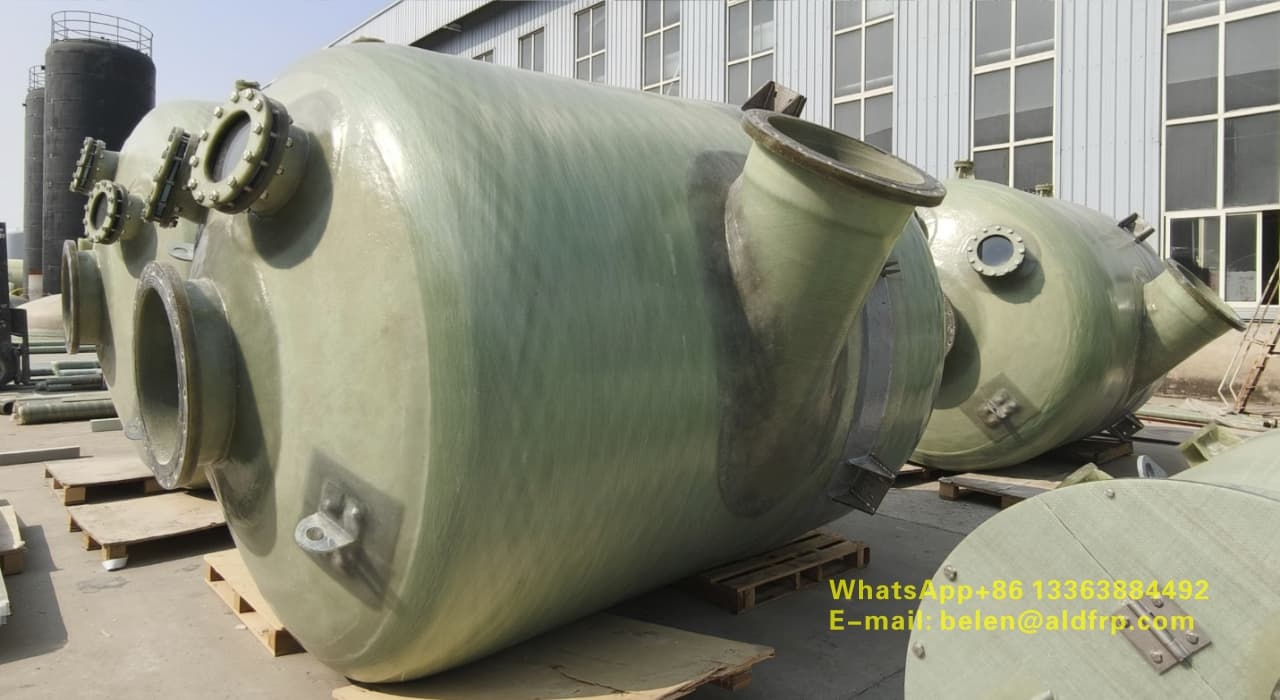
When evaluating frp tank cost, it is important to consider additional expenses that may not be included in the initial quote.
Large tanks require special handling and transportation. Costs can increase depending on size and distance.
Installation may involve foundation work, lifting equipment, and labor. These costs vary depending on the project site and tank size.
Additional components such as valves, ladders, platforms, and piping connections can add to the overall project cost.
Some suppliers provide engineering drawings and technical guidance, which may be included or charged separately.
When comparing frp tank cost with other materials, it is important to consider total value rather than just the initial price.
Moderate upfront cost
Low maintenance
Long lifespan (20–30 years)
Higher initial cost
Prone to corrosion
Requires regular maintenance
Lower initial cost
Limited strength and durability
Shorter lifespan
In many cases, FRP tanks offer the best balance between cost, performance, and longevity.
To receive a precise quotation, buyers should provide detailed project information, including:
Type of liquid to be stored
Tank capacity
Installation method
Environmental conditions
Required fittings and accessories
Providing complete information helps suppliers calculate an accurate frp tank cost and avoid unexpected changes later.
If you are looking to optimize your budget, consider the following strategies:
Choose standard tank sizes whenever possible
Avoid unnecessary customization
Select the appropriate resin based on actual requirements
Work with experienced manufacturers to reduce design errors
Plan installation carefully to minimize additional costs
These steps can significantly reduce the overall frp tank cost without compromising quality.
frp tank cost per gallon
industrial frp tank price breakdown
fiberglass tank cost for chemical storage
underground frp tank cost estimate
custom frp tank pricing guide
The cost can vary widely depending on size and application, typically ranging from a few hundred to several thousand dollars.
Because each tank is engineered based on capacity, material, and application, pricing is not standardized.
Yes, in most cases FRP tanks have lower upfront and maintenance costs compared to stainless steel tanks.
Yes, by choosing standard designs, avoiding over-specification, and selecting the right materials for your application.
Tank size and resin type are usually the most significant cost drivers.
Understanding frp tank cost is not just about comparing prices. It is about evaluating performance, durability, and long-term value.
A well-designed FRP tank may require a higher initial investment, but it will deliver reliable performance, lower maintenance costs, and a longer service life.
For industrial buyers, the best decision is not the cheapest option, but the one that offers the best balance between cost and performance.