
Building an FRP rebar plant has become a realistic industrial investment for companies targeting infrastructure, marine engineering, and chemical-resistant construction markets. Compared with traditional steel bar production, FRP rebar manufacturing requires lighter equipment, lower melting energy consumption, and a more controlled composite forming process based on pultrusion technology rather than metallurgy.
However, the real complexity is not in understanding the product, but in understanding the full factory system behind it. A stable production line depends on fiber handling, resin chemistry, temperature control, pulling stability, and continuous curing balance. If any of these elements is misaligned, production stability drops immediately. That is why investment planning must start from process logic, not machine price.
In most cases, investors underestimate how many subsystems are involved in a complete FRP rebar production plant, and this misunderstanding directly affects budget accuracy.
A factory is not a machine. It is a continuous system.
The total investment of an FRP rebar plant is not a single equipment purchase but a combination of process infrastructure, production systems, utilities, and operational support. Equipment often appears as the most visible cost, but in real projects it usually represents only part of the total capital requirement. Factory construction, raw material preparation, and working capital often determine whether the plant can actually operate continuously after installation.
A typical investment structure includes production equipment, workshop construction, raw material inventory, electrical and utility systems, installation services, and initial operational capital. Each part is interconnected. For example, increasing production capacity is not only about adding a faster pultrusion line, but also requires larger curing sections, stronger pulling systems, and higher material feeding stability.
If the workshop layout is not aligned with production flow, material handling becomes inefficient, energy consumption rises, and maintenance access becomes difficult. These hidden inefficiencies usually appear after commissioning, not during installation.
Cost planning must therefore follow process logic, not procurement logic.
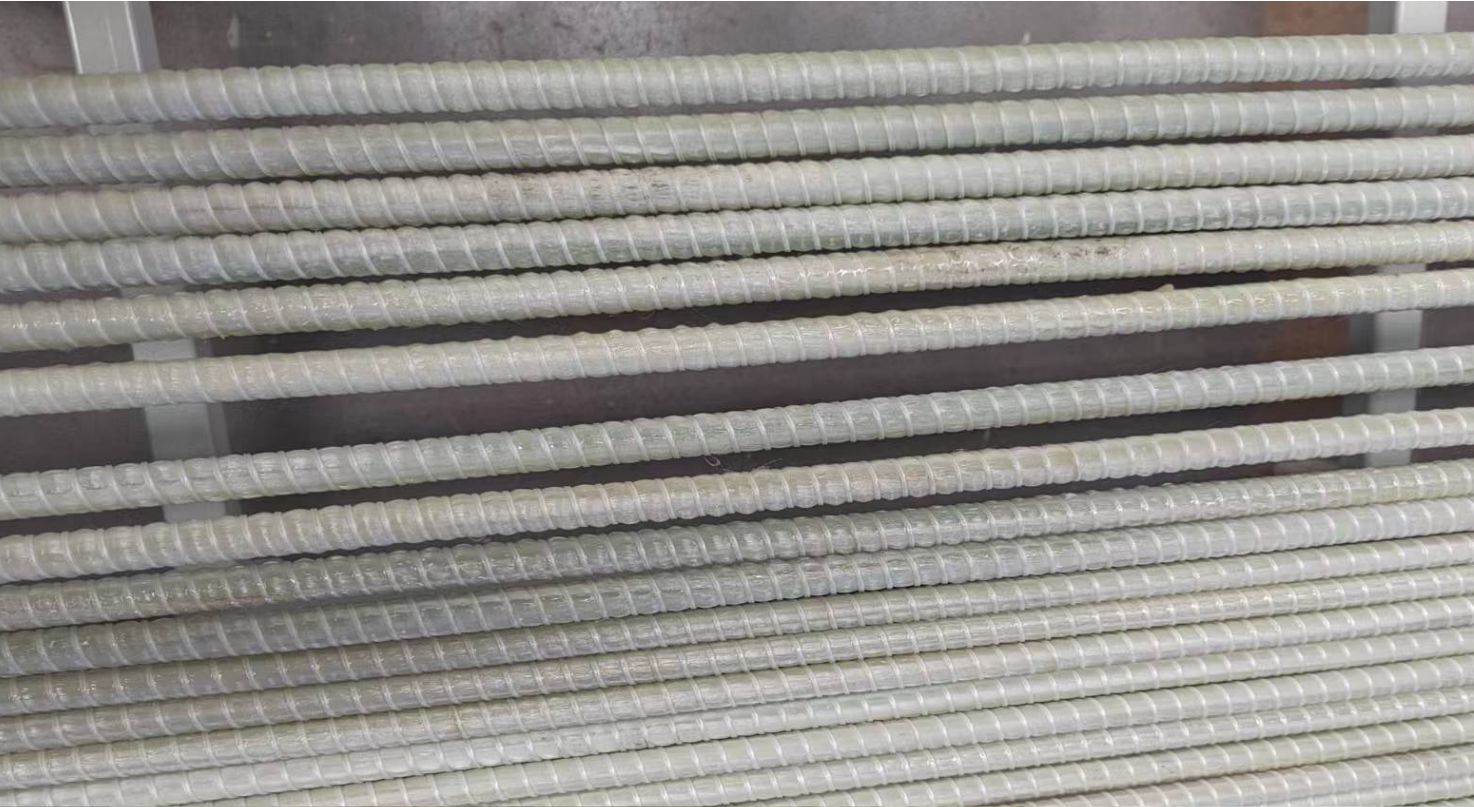
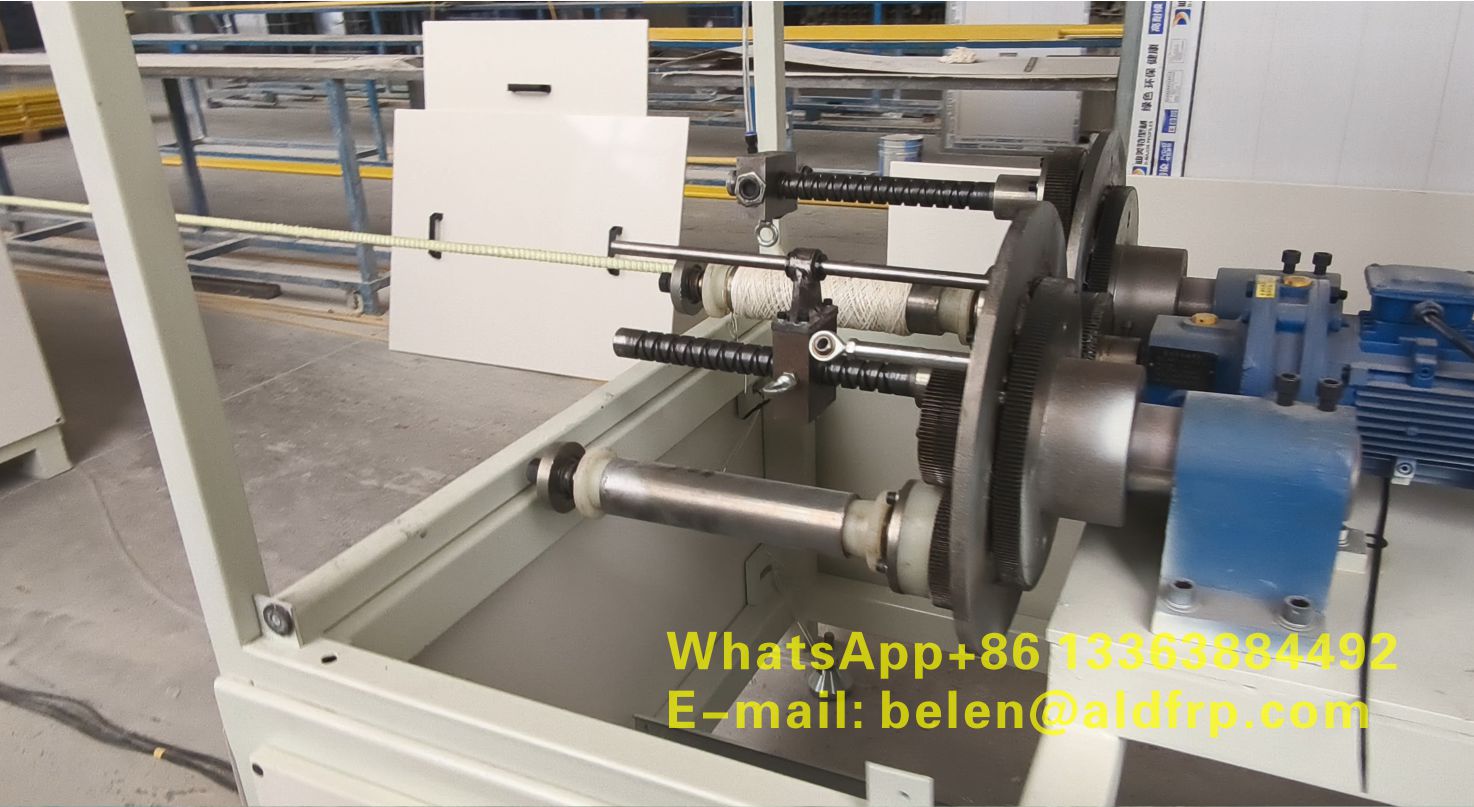
The core investment in an FRP rebar production line is the pultrusion system, but this system itself contains multiple integrated subsystems. A complete line typically includes fiber creels, resin impregnation units, pre-forming guides, heated dies, pulling machines, cutting systems, and automatic control panels. Each unit affects final product quality in a different way, and removing or simplifying any section may reduce initial cost but increase long-term operational instability.
For example, the pulling system determines tension stability, which directly influences fiber alignment inside the rebar. The curing die determines how resin solidifies under heat, which affects both mechanical strength and surface quality. Even small deviations in temperature control can lead to internal voids or incomplete curing, which are not always visible immediately but appear during tensile testing or field installation.
Investors often focus on production speed when evaluating equipment. However, speed alone is not a reliable indicator of efficiency. In FRP manufacturing, stability always comes before output. A slightly slower but stable line often produces lower total cost per ton than a high-speed but unstable system with frequent scrap.
Equipment selection is therefore a balance between capacity, stability, and control precision.
A FRP rebar plant requires a linear production layout because pultrusion is a continuous process. Raw fiber feeding, resin impregnation, curing, cooling, cutting, and stacking must follow a logical flow direction. If the workshop design forces material to move backward or sideways frequently, production efficiency decreases and labor cost increases.
The building itself is not just a shelter for machines. It is part of the production system. Ceiling height affects crane operation for mold handling. Floor length determines maximum production line configuration. Ventilation affects resin curing stability. Even temperature variation inside the workshop can influence resin viscosity and curing behavior, especially in large-scale continuous production.
Many factories underestimate the importance of expansion space. When initial demand is small, a compact layout seems cost-efficient. But once orders increase, lack of expansion space forces either relocation or inefficient parallel production lines. Both options significantly increase long-term investment cost.
A well-designed workshop is not the cheapest structure. It is the most flexible one.
In an FRP rebar manufacturing plant, raw materials represent a continuous operational cost rather than a one-time investment. The main materials include glass fiber roving, resin systems, curing agents, fillers, and surface treatment chemicals. Among these, fiberglass and resin dominate total production cost and directly determine both performance and profitability.
Material selection has a direct impact on long-term operational stability. High-strength glass fiber improves tensile performance, while resin chemistry determines corrosion resistance and bonding behavior. If material quality fluctuates, production stability becomes unpredictable, even if the equipment remains unchanged.
Working capital is often underestimated during project planning. Even if the production line is fully installed, the plant cannot operate without sufficient raw material inventory. Resin supply delays or fiber shortages can stop production immediately, creating hidden downtime costs that are rarely included in initial investment calculations.
In practice, material stability is more important than material price.
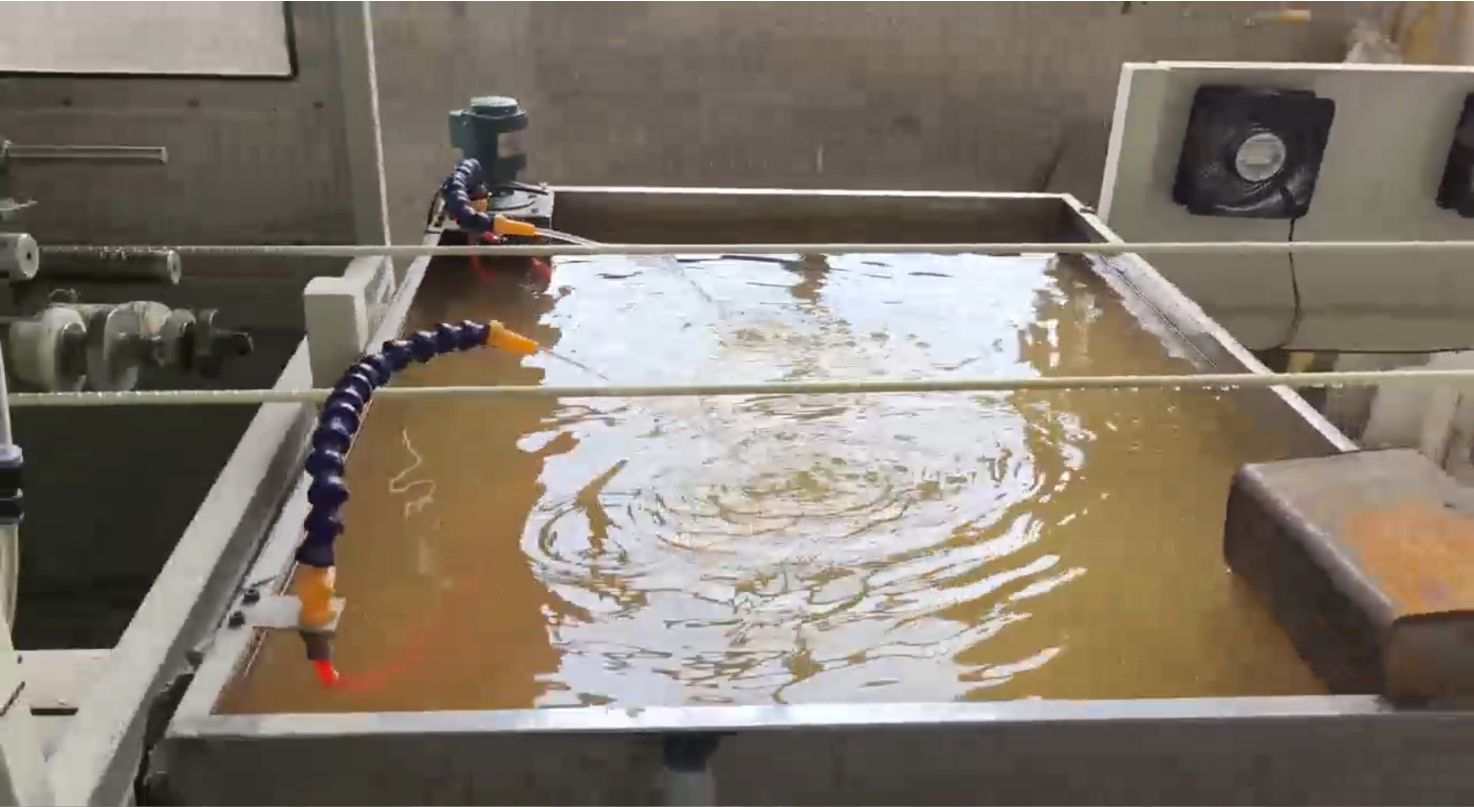
A stable FRP rebar plant depends heavily on utilities such as electricity, compressed air, heating systems, and ventilation. Among these, electrical energy is the primary operating cost driver because curing dies require continuous temperature control during production. Unlike batch processes, pultrusion runs continuously, meaning energy demand remains stable throughout the production cycle.
If heating systems are inefficient or poorly insulated, energy loss increases significantly. Similarly, unstable voltage or weak power supply can cause fluctuations in curing temperature, which directly affects resin polymerization quality. Even minor temperature instability can result in inconsistent mechanical properties along the length of the rebar.
Compressed air systems are often used for control mechanisms and auxiliary functions. If air pressure is unstable, pulling and cutting precision may be affected. This creates dimensional inconsistency, which leads to rejection during quality inspection.
Energy efficiency is therefore not a secondary concern. It is a direct quality factor.
Labor cost in an FRP rebar production plant depends strongly on automation level. Semi-automatic lines require more operators for fiber feeding, resin monitoring, and cutting control. Fully automated systems reduce labor demand but increase initial investment cost.
However, automation is not only about reducing manpower. It is also about stabilizing process control. Human operation introduces variability in resin mixing, fiber tension adjustment, and cutting timing. Over time, this variability accumulates into quality inconsistency. Automated systems reduce this variability by maintaining fixed process parameters.
Experienced manufacturers often choose partial automation rather than full automation. This approach balances investment cost and operational flexibility, especially in plants producing multiple diameters or customized specifications.
Efficiency is not just speed. It is repeatability.
Return on investment in an FRP rebar plant depends on production stability, market demand, and cost control efficiency. High equipment cost does not automatically reduce ROI if the system maintains stable output and low scrap rates. In contrast, low-cost systems often generate higher long-term losses due to maintenance, downtime, and quality variation.
Market demand also plays a key role. FRP rebar is widely used in corrosive environments such as coastal infrastructure and chemical plants, but demand cycles may vary depending on infrastructure investment policies. Plants with flexible production capability can adjust output specifications more easily, improving market adaptability.
Risk factors include raw material price fluctuation, equipment downtime, inconsistent resin quality, and operator skill level. These risks cannot be eliminated completely, but they can be controlled through proper system design and supplier selection.
Investment success depends more on system design than initial cost.
Building an FRP rebar manufacturing plant is a system engineering decision rather than a simple equipment purchase. Real investment includes production equipment, factory layout, raw materials, utilities, labor structure, and long-term operational stability.
The most important principle is simple: stability creates profitability. A well-balanced FRP rebar production line does not always have the lowest initial cost, but it consistently delivers predictable output, lower scrap rates, and higher long-term return on investment.
For investors, the goal is not to build the cheapest factory. The goal is to build the most stable one.
Production equipment and raw materials usually represent the largest share of total investment.
Yes, if the plant maintains stable quality and efficient pultrusion operation with controlled scrap rates.
Material stability, equipment reliability, production efficiency, and market demand are the key factors.
Yes, if they focus on niche markets and maintain flexible production capability.