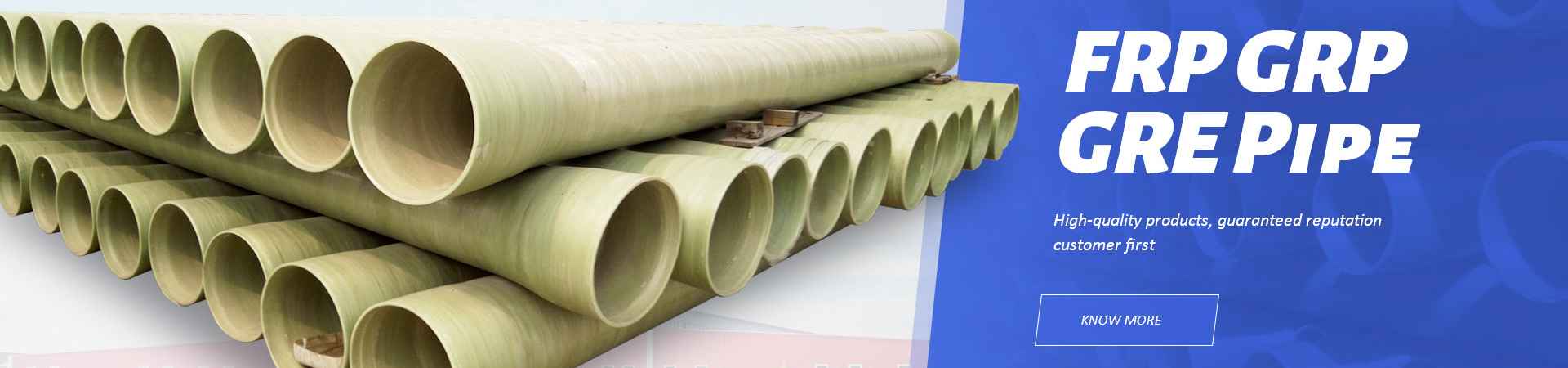

Pultrusion is a continuous manufacturing process used to produce fiber-reinforced polymer (FRP profiles) with constant cross-sections. It combines continuous fibers—such as glass fiber, carbon fiber, or basalt fiber—with thermosetting resins to create high-strength, lightweight, and corrosion-resistant composite products.
Unlike traditional molding methods, pultrusion is a highly automated and efficient process where materials are pulled (rather than pushed) through a heated mold. This ensures consistent product quality, high mechanical performance, and minimal material waste.
Today, pultrusion technology is widely used in industries such as construction, infrastructure, chemical processing, and energy. Common products include FRP beams, gratings, pipes, ladders, and FRP rebar, all of which benefit from excellent durability and long service life.
The key advantages of pultrusion manufacturing include:
Continuous production for high efficiency
Excellent strength-to-weight ratio
Corrosion and chemical resistance
Low maintenance and long lifespan
High dimensional accuracy and consistency
A complete pultrusion production line consists of several continuous and interdependent steps. Each stage plays a critical role in determining the final product quality.
The process begins with fiber creels, where continuous reinforcements such as glass fiber rovings are unwound. Proper fiber alignment and tension control are essential to ensure uniform strength distribution in the final product.
Fibers are then guided into a resin bath or injection system, where they are fully saturated with resin. Common resin systems include:
Polyester resin
Vinyl ester resin
Epoxy resin
The resin impregnation process directly affects bonding performance, durability, and mechanical strength.
After impregnation, fibers pass through pre-forming guides that shape them into the approximate profile. This step improves fiber distribution and reduces internal stress before entering the mold.
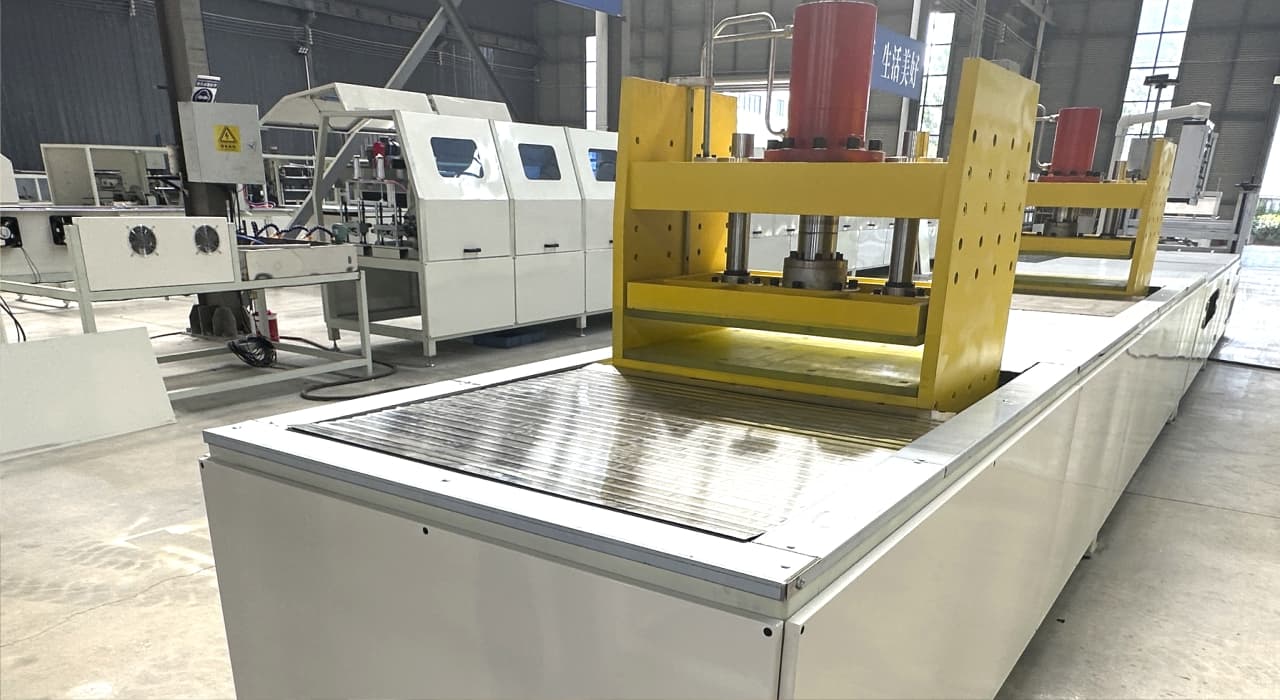
The material enters a heated steel mold, where it is shaped and cured at controlled temperatures (typically 120–180°C).
This is the most critical stage in the pultrusion process, as it determines:
Final product shape
Surface finish quality
Mechanical strength
Accurate temperature control ensures complete curing and prevents defects.
A pulling unit continuously draws the cured profile out of the mold. The stability of the pulling force is crucial for maintaining dimensional accuracy and preventing deformation.
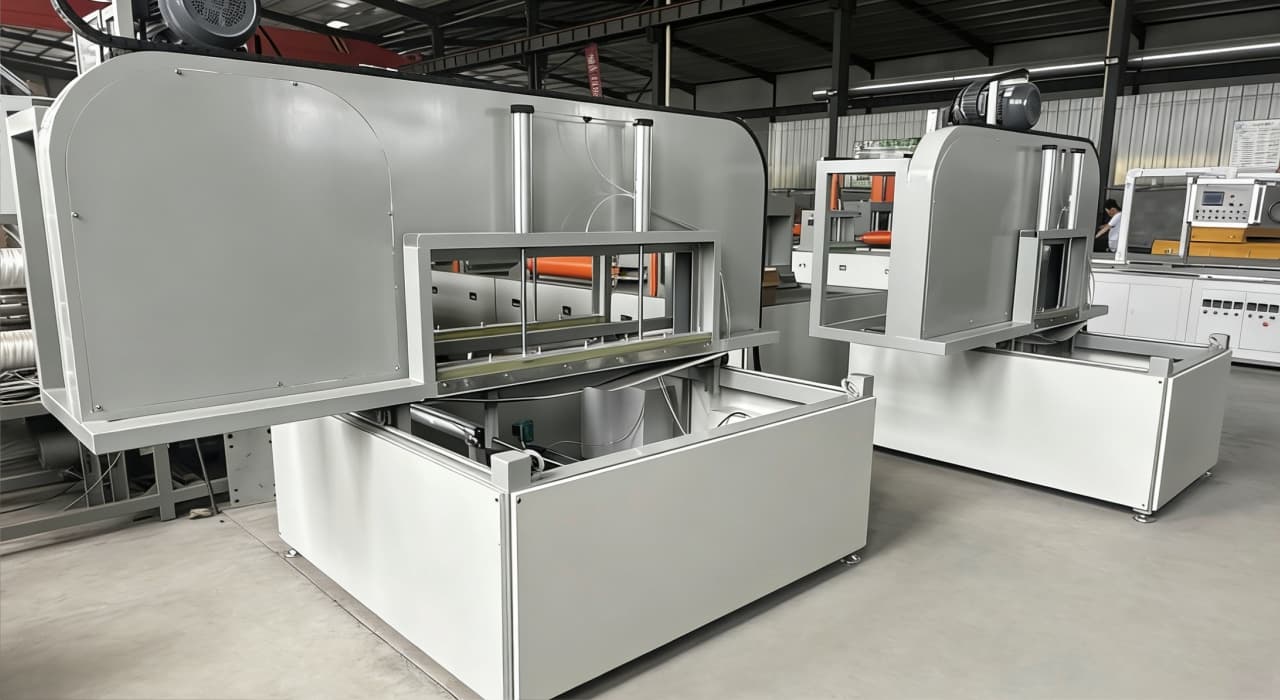
Finally, the product is cut to the required length using an automatic cutting system. Additional surface treatments, such as coating or sand coating (for FRP rebar), can also be applied.
A high-performance FRP pultrusion production line is composed of several integrated systems. Choosing the right configuration directly impacts productivity and product quality.
This system provides continuous fiber supply with adjustable tension control. It ensures stable feeding and prevents fiber entanglement or uneven distribution.
The resin system includes resin tanks, impregnation baths, or injection chambers. Advanced systems improve resin utilization, reduce waste, and ensure complete fiber wet-out.
This system consists of precision molds and multi-zone heating units. It ensures uniform curing, smooth surface finish, and accurate profile dimensions.
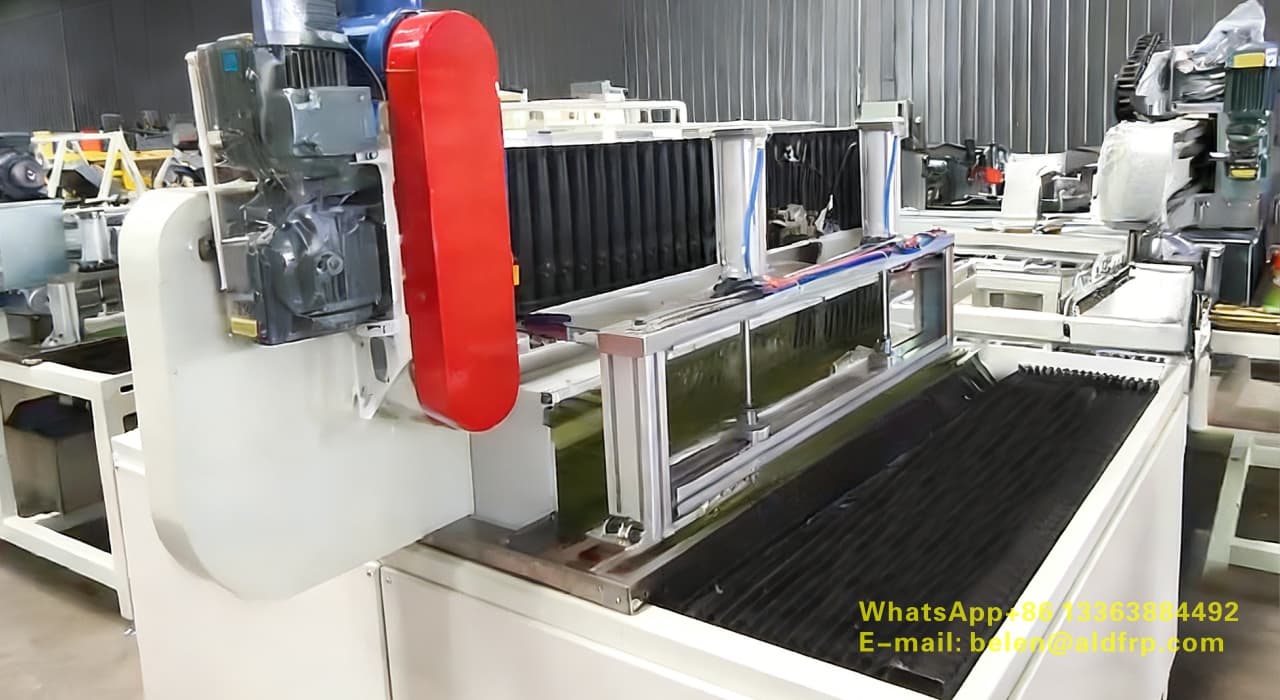
The pultrusion machine pulling system is one of the most critical components. There are two main types:
Hydraulic pultrusion machine (reciprocating type)
Continuous pultrusion machine (caterpillar type)
Continuous systems provide more stable pulling force and are ideal for high-volume production.
Automatic cutting machines ensure precise length control and improve production efficiency.
Modern production lines use PLC or servo control systems for real-time monitoring of temperature, pulling speed, and tension, ensuring stable and automated operation.
Even with advanced equipment, manufacturers may encounter common production issues. Understanding these problems is essential for improving efficiency and reducing defects.
Problems: Bubbles, cracks, delamination
Causes:
Improper curing temperature
Poor resin impregnation
Excessive pulling speed
Solutions:
Adjust mold temperature (typically reduce by 10–15°C if overheating occurs)
Optimize resin formulation
Control production speed
Problems: Irregular size, deformation
Causes:
Unstable pulling force
Uneven curing
Inconsistent fiber tension
Solutions:
Use servo-controlled pulling systems
Ensure uniform heating
Maintain consistent fiber tension
Problems: Low strength, sticky surface
Causes:
Insufficient temperature
Excessive line speed
Solutions:
Increase curing temperature
Reduce pulling speed
Extend mold length if necessary
Causes:
Uneven fiber distribution
Inadequate resin bonding
Solutions:
Optimize fiber layout
Improve resin impregnation efficiency
Selecting the right pultrusion equipment is essential for maximizing productivity and ensuring long-term return on investment.
Low volume (<200 tons/year):
Choose a hydraulic pultrusion machine for flexibility and lower cost
Medium volume (200–1000 tons/year):
Both hydraulic and continuous machines are suitable
High volume (>1000 tons/year):
A continuous pultrusion machine is recommended for efficiency and stability
Small profiles → lower pulling force required
Large or complex profiles → higher pulling force and slower speed
The machine must match the size and complexity of your FRP profiles.
Different resins require different processing conditions:
Polyester → faster curing, lower cost
Vinyl ester → better corrosion resistance
Epoxy → higher strength, slower curing
Your pultrusion production line must be compatible with your selected material system.
Modern manufacturers should consider automation features such as:
PLC control systems
Real-time monitoring
Automatic cutting and handling
Higher automation improves consistency, reduces labor costs, and enhances product quality.
Instead of buying separate machines, choosing a complete pultrusion production line supplier offers significant advantages:
Integrated system design
Faster installation and commissioning
Full technical support and training
Better process optimization
A reliable supplier not only provides equipment but also delivers a complete turnkey solution for your production needs.
A complete FRP pultrusion production line is the foundation of efficient and high-quality composite manufacturing. From understanding the pultrusion process to selecting the right pultrusion machine, every step plays a critical role in achieving stable production and long-term profitability.
By combining advanced equipment, precise process control, and the right supplier support, manufacturers can significantly improve product quality, reduce costs, and gain a competitive advantage in the growing composites market.
Investing in the right pultrusion production line is not just a technical decision—it is a strategic move toward sustainable and scalable manufacturing success.