
If you’re considering investing in a pultrusion system for composite manufacturing, one of the first questions you’ll likely ask is: “What types of pultrusion machines are available?” The answer isn’t one‑size‑fits‑all. There are multiple configurations, each tailored to specific products, materials, automation levels, and production goals. Understanding these differences helps you choose the right machine and optimize both quality and cost.
In this article, we’ll break down the main types of pultrusion machines, explain how they work, and show you what makes each suitable for specific applications such as FRP profiles, rebars, tubes, and custom composite shapes.
Before diving into the various types, it’s helpful to clarify what a pultrusion machine does.
A pultrusion machine is a manufacturing system that produces continuous fiber‑reinforced plastic (FRP) products by pulling fiber reinforcements through resin and then through a heated die to cure and solidify the shape. The result is a high‑strength, lightweight composite profile with a consistent cross‑section.
Pultrusion machines vary in design depending on:
Automation level
Production volume
Material compatibility
Profile complexity
Industry application
Manual pultrusion machines are the simplest configuration available. They are ideal for small shops, pilot production, or R&D environments. In these systems, the operator manually controls fiber feeding, tension, and speed.
Basic mechanical structure
Manual resin application
Operator‑dependent speed control
Lowest cost of all configurations
Prototyping and testing
Small batch production
Materials research and development
| Pros | Cons |
|---|---|
| Low initial cost | High labor requirement |
| Simple setup | Inconsistent product quality |
| Easy to maintain | Limited speed control |
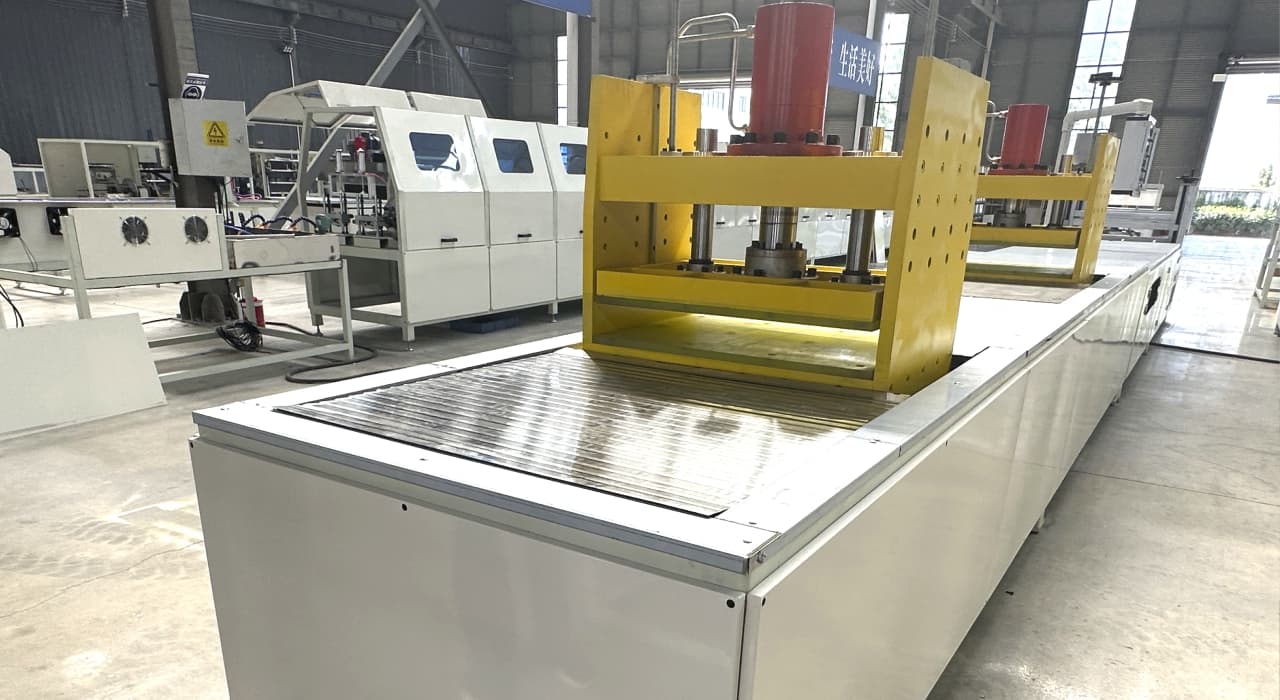
Semi‑automatic pultrusion machines add mechanical controls and partial automation. Fiber feeding and pulling are mechanized, while some processes like resin application and cutting may remain manual or partially automated.
Motorized pulling system
Controlled pulling speed
Partially automated temperature control
Limited cutting automation
Small to medium FRP profile lines
Experimental composite production
Manufacturers transitioning to higher output
| Pros | Cons |
|---|---|
| Better consistency than manual | Still requires operator input |
| Moderate cost | Limited automation flexibility |
| Easy to upgrade | Not ideal for high throughput |
Fully automated pultrusion machines represent the mainstream in industrial composite manufacturing. These systems control most steps via digital interfaces and PLC systems, delivering consistent quality with minimal manual intervention.
Programmable Logic Controller (PLC)
Touchscreen interface
Real‑time temperature and speed monitoring
Automated cutting and handling
Safety interlocks
High‑volume FRP profiles
Continuous rebars production
Industrial and commercial composite applications
| Pros | Cons |
|---|---|
| High product consistency | Higher upfront cost |
| Reduced labor | More complex maintenance |
| Better safety | Requires trained operators |
High‑speed pultrusion machines are a specialized subset of fully automated lines designed for high throughput. They typically incorporate advanced heating systems and precision pulling units that allow faster production without sacrificing quality.
High pulling speed capabilities
Enhanced cooling and curing systems
Optimized automation for reduced cycle time
Large‑scale composite profile manufacturers
Long production runs
Rebar and structural component production
| Pros | Cons |
|---|---|
| Increased output | High energy consumption |
| Optimized for industrial scale | Requires advanced controls |
| Improves ROI | Higher upfront investment |
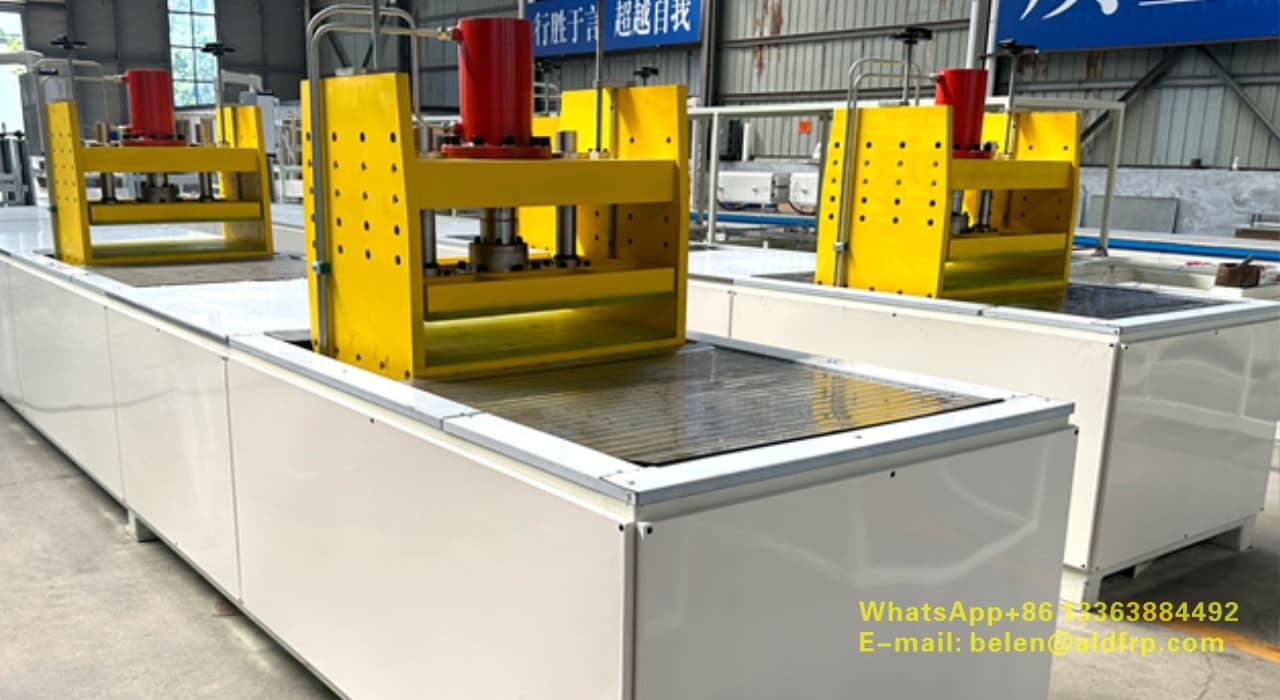
Some manufacturers require machines tailored for specific products or markets. Customized pultrusion lines are engineered to meet unique requirements, such as:
Special die shapes
Multiple profile sizes
Hybrid composite materials
Integration with downstream equipment
Custom dies and tooling
Modular machine design
Tailored temporary zones and controls
Specialty composites
Non‑standard profile shapes
Diverse product portfolios
| Pros | Cons |
|---|---|
| Maximum flexibility | High engineering cost |
| Tailored performance | Longer lead time |
| Easier future upgrades | Requires detailed spec planning |
Turnkey lines integrate all elements of pultrusion production into a single cohesive system. From fiber feeding to cutting and automated handling, these systems are built for high efficiency and minimal onsite assembly.
Full integration of all subsystems
Single‑vendor solution
Factory‑tested modules
Simplified installation
Large composite manufacturing plants
Automated continuous production
Companies scaling up operations
| Pros | Cons |
|---|---|
| Seamless integration | Significant upfront cost |
| Faster deployment | Complex project planning |
| Reduced setup risk | Higher initial capital |
Below is a summary comparison of the common types of pultrusion machines:
| Machine Type | Best For | Automation Level | Typical Cost |
|---|---|---|---|
| Manual | Prototyping | Low | Low |
| Semi‑Automatic | SME production | Medium | Moderate |
| Fully Automated | Industrial output | High | High |
| High‑Speed | Large throughput | Very High | High |
| Customized Line | Special profiles | Varies | Custom |
| Turnkey System | Complete production | Very High | Highest |
For startup composite labs or R&D centers, manual or semi‑automatic pultrusion machines provide flexibility and lower cost while enabling experimentation and light production.
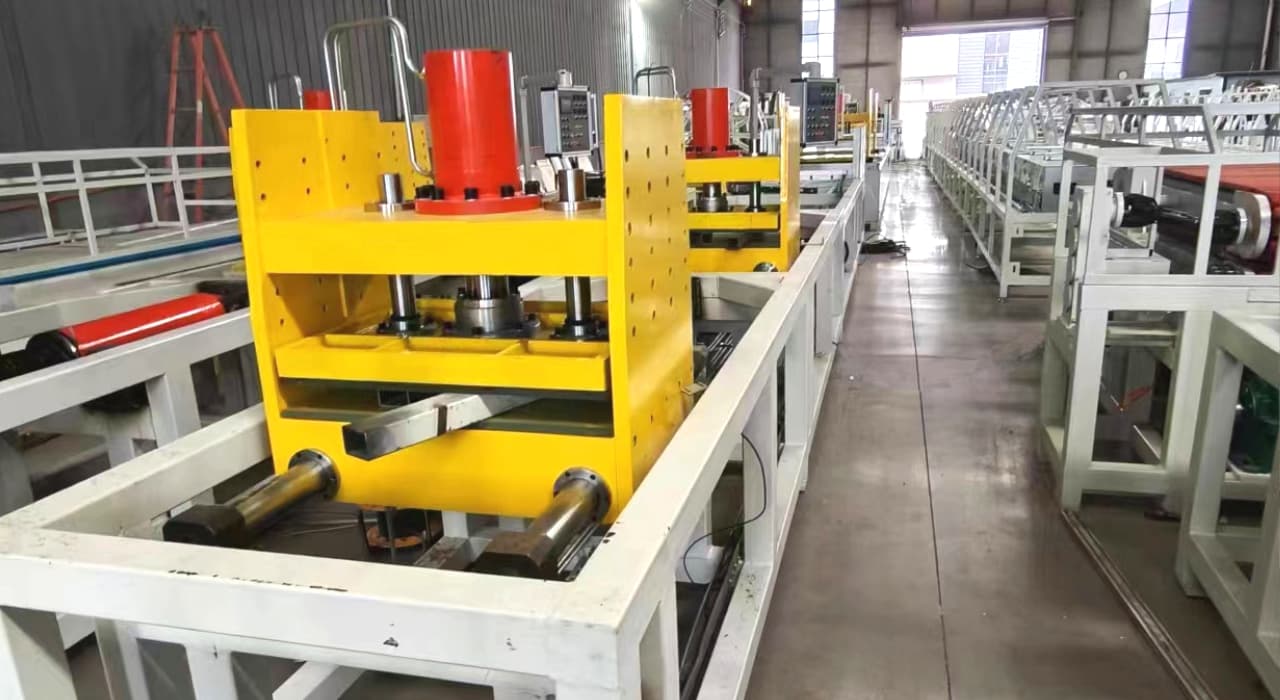
Companies that want reliable production but have moderate output goals will find semi‑automatic or fully automated machines provide the best balance of cost and performance.
For high output and minimal intervention, fully automated or high‑speed pultrusion machines deliver best value by maximizing consistency and reducing labor dependencies.
If your business involves custom or diverse product lines, customized pultrusion lines ensure the machine meets your exact specifications.
For companies building new manufacturing facilities or replacing aging production lines, turnkey systems simplify deployment and assure coordinated performance across all components.
Which pultrusion machine is most cost‑effective?
Semi‑automatic machines often offer the best balance of performance and cost for small to medium production.
Do all pultrusion machines support automation?
No. Manual systems require significant operator input, while fully automated machines incorporate digital controls.
Can a single machine handle various profiles?
Yes, modular designs and configurable tooling allow one machine to produce multiple profile types.
Is a turnkey line always necessary?
Not always. It depends on production volume, budget, and long‑term goals. Smaller operations may prefer standalone machines.
What’s the difference between high‑speed and fully automated machines?
High‑speed lines focus on maximizing throughput, often incorporating more robust heating and pulling mechanisms than standard automated machines.
Understanding what types of pultrusion machines are available empowers you to choose the right equipment for your composite manufacturing needs. From simple manual systems to fully integrated turnkey lines, each type serves a unique purpose. The right choice depends on production goals, materials, product complexity, and budget. With the right strategy, you can achieve consistent quality, reduce downtime, and scale your operations efficiently.