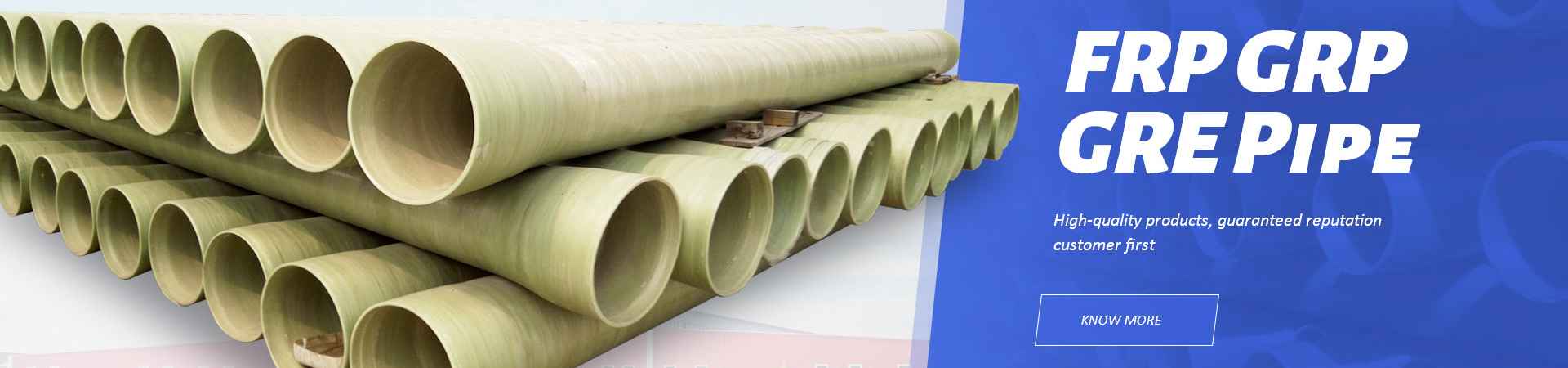

The structural design of an FRP Absorption Tower plays a decisive role in determining system stability, service life, and long-term gas treatment performance in industrial environments. Unlike conventional steel scrubbers, FRP-based systems operate under continuous chemical exposure, where corrosion resistance is not an optional feature but a fundamental design requirement.
In chemical plants, wastewater treatment facilities, metallurgical flue gas systems, and fertilizer production lines, the tower is exposed to acidic gases, alkaline vapors, moisture, and fluctuating thermal conditions. These combined factors create a complex operating environment where structural degradation is driven not only by mechanical stress but also by chemical interaction over time.
For this reason, modern engineering design of an FRP Absorption Tower must integrate composite material mechanics, fluid dynamics, and corrosion engineering into a unified structural framework rather than treating the tower as a simple pressure vessel.
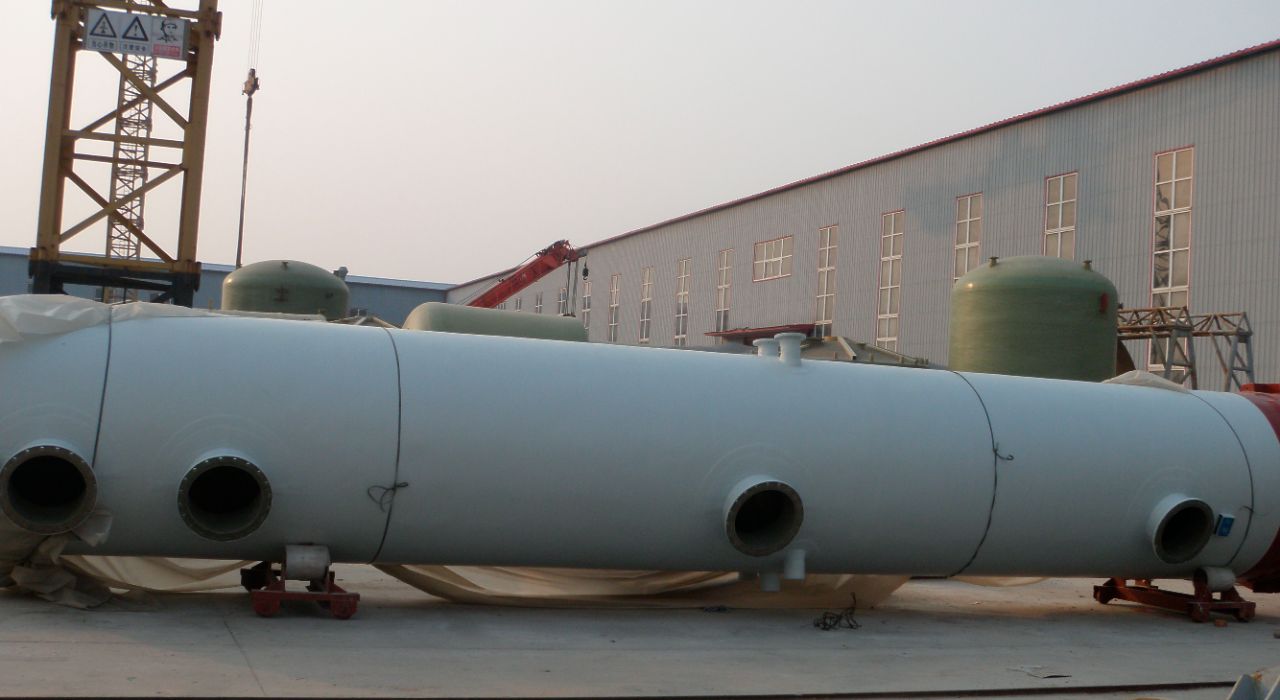
The shell is the primary load-bearing element of an FRP Absorption Tower, responsible for containing internal gas pressure while resisting external environmental loads such as wind, vibration, and installation stress. Unlike isotropic steel structures, FRP shells are built using layered composite laminates, where each layer contributes differently to mechanical performance.
Circumferential fiber layers are designed to withstand hoop stress generated by internal pressure, while axial layers provide longitudinal reinforcement and structural alignment. This anisotropic behavior allows FRP structures to achieve high strength-to-weight ratios, but it also introduces complexity in stress prediction and failure analysis.
In long-term operation, the shell is subjected to creep deformation due to continuous loading and environmental exposure. Temperature fluctuations and chemical interaction with acidic gases may gradually reduce resin stiffness, leading to slow but progressive structural relaxation.
Therefore, shell design is not limited to initial strength calculation. It requires long-term performance prediction under combined mechanical and chemical degradation conditions.
The internal configuration of an FRP Absorption Tower directly determines gas–liquid contact efficiency and overall removal performance. The system is composed of packing layers, liquid distribution components, and gas flow management zones that operate as a tightly coupled mass transfer network.
Packing materials such as structured polypropylene or random ceramic rings are used to maximize interfacial surface area between gas and liquid phases. Structured packing improves efficiency through ordered flow channels, while random packing provides higher resistance to fouling in particulate-heavy gas streams.
Above the packing section, the liquid distribution system ensures uniform wetting across the entire tower cross-section. If distribution is uneven, parts of the packing bed become hydraulically inactive, reducing effective mass transfer volume and increasing local flow resistance.
This internal system is highly sensitive to hydraulic imbalance. Small deviations in spray uniformity or gas velocity distribution can propagate through the system and gradually reduce overall absorption efficiency without visible mechanical damage.
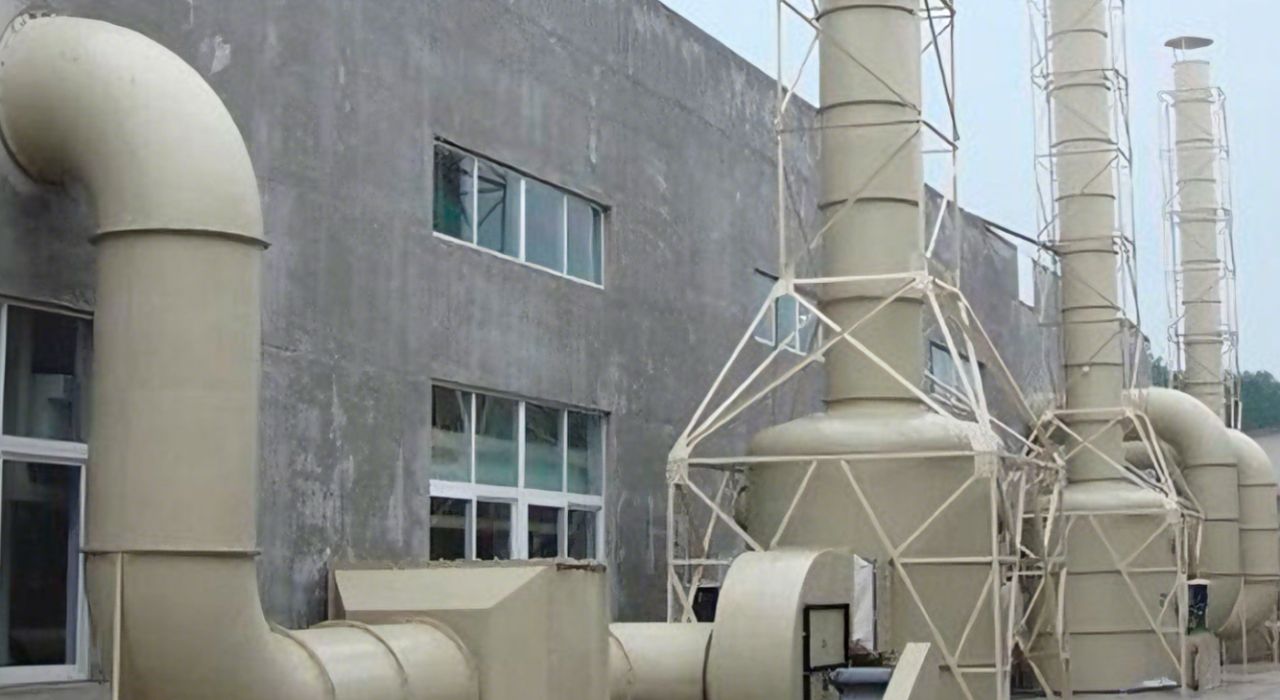
The working mechanism inside an FRP Absorption Tower is based on counter-current gas–liquid mass transfer, where exhaust gas flows upward and liquid absorbent flows downward through the same packed region. This configuration maximizes contact time and promotes continuous pollutant transfer from gas phase to liquid phase.
At the microscopic level, absorption occurs through diffusion across thin liquid films formed on the surface of packing materials. The driving force is the concentration gradient between gas-phase pollutants and liquid-phase absorbent molecules.
In industrial applications, this process is often coupled with chemical reactions. Acidic gases such as hydrogen chloride react with alkaline solutions to form stable salts, while ammonia and sulfur compounds undergo neutralization or dissolution depending on system chemistry.
Although the mechanism appears stable in theory, real operating conditions introduce non-uniform velocity fields, turbulence variation, and partial wetting effects. These factors make actual mass transfer performance significantly different from idealized models.
In real industrial operation, flow conditions inside an FRP Absorption Tower rarely remain perfectly uniform. Gas inlet distribution is often affected by upstream duct geometry, fan pressure variation, and structural constraints, which leads to uneven velocity profiles at the tower entrance.
When gas distribution becomes non-uniform, channeling occurs inside the packing bed. This phenomenon causes certain regions to carry excessive flow while others remain underutilized, reducing effective mass transfer area without any visible structural damage.
Liquid distribution instability introduces similar risks. Spray nozzle wear, scaling deposits, or pressure fluctuations can distort droplet distribution patterns. As a result, localized dry zones appear within the packing section, reducing reaction efficiency and gradually increasing system pressure drop.
These hydraulic deviations are critical because they accumulate slowly over time. Even small inefficiencies in distribution can evolve into significant performance degradation during long-term continuous operation.
The structural reliability of an FRP Absorption Tower depends heavily on resin system selection and laminate manufacturing quality. Common resin systems include vinyl ester, epoxy, and polyester, each offering different levels of chemical resistance and mechanical stability.
Vinyl ester resins are widely used in corrosive chemical environments due to their superior acid resistance and mechanical toughness. Epoxy systems provide higher structural strength and adhesion performance, making them suitable for high-load or large-diameter tower structures.
Laminate fabrication typically involves multiple alternating layers of fiber reinforcement and resin matrices, where fiber orientation is carefully controlled to optimize stress distribution. Improper layering or inconsistent curing can significantly reduce long-term structural reliability.
Manufacturing quality control is therefore not a secondary step but a core determinant of tower performance in industrial service conditions.
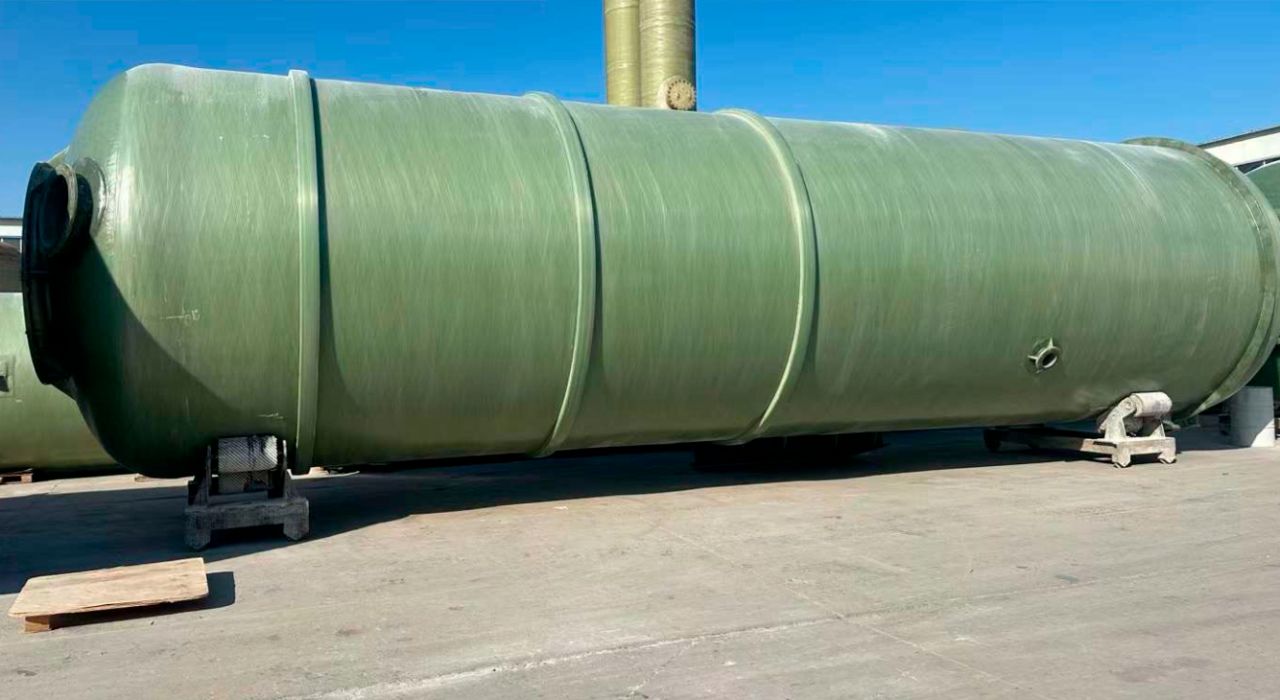
Mechanical behavior of an FRP Absorption Tower is governed by composite failure mechanisms rather than plastic deformation. Unlike steel structures, FRP materials do not yield before failure, meaning damage progresses through micro-cracking, fiber breakage, and interlayer delamination.
Critical stress zones are typically located around structural discontinuities such as nozzles, manways, and support connections. These areas experience localized stress concentration due to geometry changes and require reinforcement through additional laminate thickness or directional fiber wrapping.
Under long-term cyclic loading, repeated stress variation can initiate fatigue-like damage accumulation. Combined with chemical exposure, this accelerates degradation in high-risk regions.
Therefore, structural design relies on conservative safety factors and empirical performance data rather than purely theoretical maximum strength calculations.
Nozzle regions in an FRP Absorption Tower represent one of the most critical structural challenges due to abrupt changes in geometry and stress flow. Gas inlet, outlet, and liquid circulation ports create localized discontinuities that significantly increase stress concentration.
To mitigate this, engineers apply reinforcement strategies such as multi-layer laminate buildup, fiber orientation adjustment, and gradual stress transition design. These methods distribute load over a wider area and reduce the risk of crack initiation.
In corrosive gas environments, nozzle regions are also exposed to higher chemical attack intensity due to turbulence and localized condensation effects. This combination of mechanical and chemical stress makes proper reinforcement essential for long-term stability.
The support system of an FRP Absorption Tower is responsible for transferring static and dynamic loads to the foundation while maintaining alignment stability during operation. Common support configurations include skirt supports, saddle supports, and base ring structures depending on tower size and load conditions.
One important design consideration is thermal expansion mismatch between FRP materials and concrete foundations. If not properly accommodated, differential expansion can introduce additional stress at the base connection, leading to long-term fatigue accumulation.
Support design must also account for wind load, seismic load, and vibration transmitted through connected piping systems. These external forces must be absorbed without affecting internal mass transfer stability.
The FRP Absorption Tower is widely applied across industries where corrosive gas treatment is required under continuous operating conditions. In chemical processing plants, it is used for acid gas neutralization and hydrogen chloride recovery systems that require stable long-term operation.
In fertilizer production, it handles ammonia and sulfur compound emissions generated during synthesis and drying processes. Environmental engineering systems rely on it for odor control and wastewater exhaust purification under variable load conditions.
Metallurgical and semiconductor industries use these towers for flue gas purification and high-purity emission control, where contamination tolerance is extremely low and system reliability is critical.
Despite differences in application scenarios, all systems share a common requirement: corrosive gases must be safely treated before atmospheric discharge.
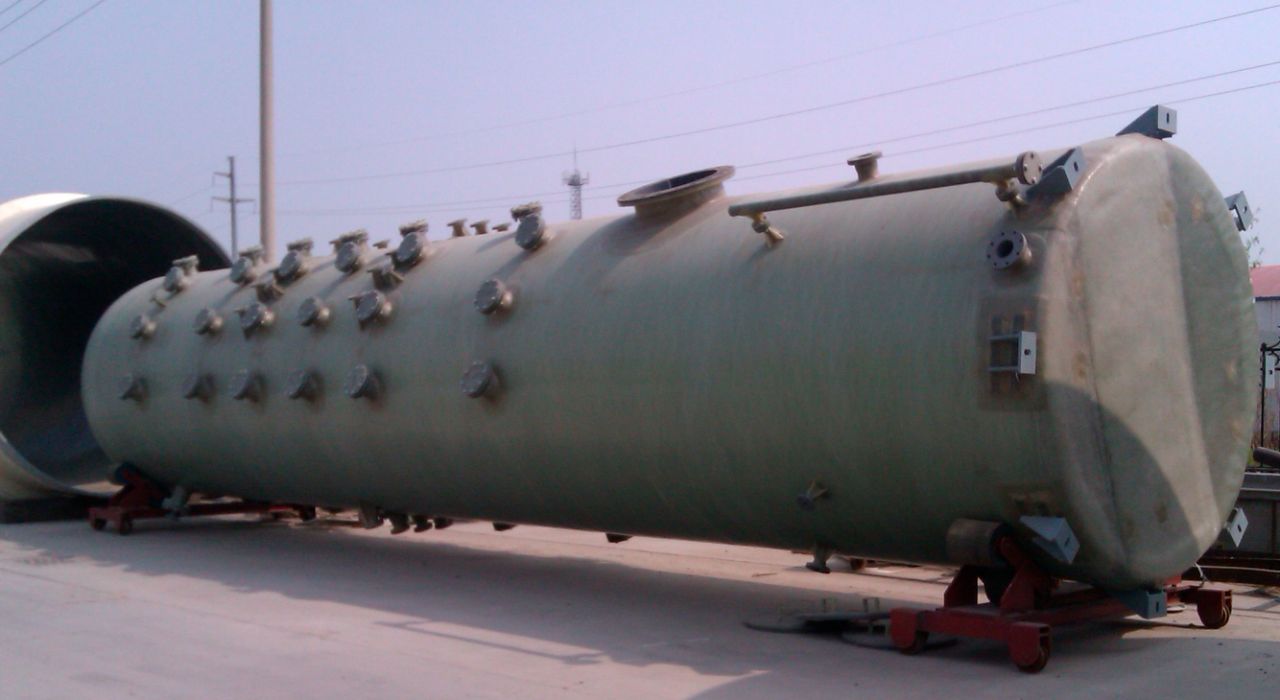
Selection of an FRP Absorption Tower is fundamentally an engineering decision based on process parameters rather than equipment size. Gas composition, flow rate, temperature, and contaminant concentration define the required absorption mechanism and system configuration.
Absorbent selection directly affects chemical reaction efficiency and operating cost. Incorrect chemical pairing can lead to incomplete gas removal or excessive reagent consumption, both of which reduce system efficiency.
Packing type selection must balance efficiency and fouling resistance. Structured packing offers higher mass transfer efficiency, while random packing performs better in particulate-rich environments with unstable gas composition.
Structural design must also consider long-term corrosion exposure, thermal cycling, and mechanical load variation to ensure stable service life.
Long-term performance of an FRP Absorption Tower depends on maintaining stable hydraulic conditions and consistent chemical operation. Liquid distribution uniformity is one of the most critical operational parameters, as even minor deviations can significantly affect mass transfer efficiency.
Internal components such as spray systems, packing materials, and circulation pumps require periodic inspection to prevent fouling and mechanical degradation. Although FRP structures are corrosion-resistant, internal systems remain subject to operational wear.
Pressure drop monitoring is widely used as a diagnostic indicator. Gradual increases typically indicate fouling, while sudden fluctuations suggest hydraulic instability or flow redistribution inside the packing bed.
System evaluation must focus on long-term stability rather than instantaneous efficiency, as industrial gas treatment performance is defined by sustained operation under continuous load conditions.
The FRP Absorption Tower represents a highly integrated industrial gas treatment system where structural design, fluid dynamics, and chemical reaction engineering operate simultaneously. Its performance depends on the coordinated behavior of shell structure, internal packing systems, liquid distribution networks, and long-term mechanical stability.
Unlike conventional metal scrubbers, FRP-based systems require anisotropic structural analysis and lifecycle performance prediction under corrosive environments. This makes engineering design more complex but significantly more reliable in harsh industrial conditions.
Ultimately, system success is determined not by theoretical efficiency, but by stable, long-term operation under real industrial conditions where gas composition, flow dynamics, and chemical exposure continuously interact.