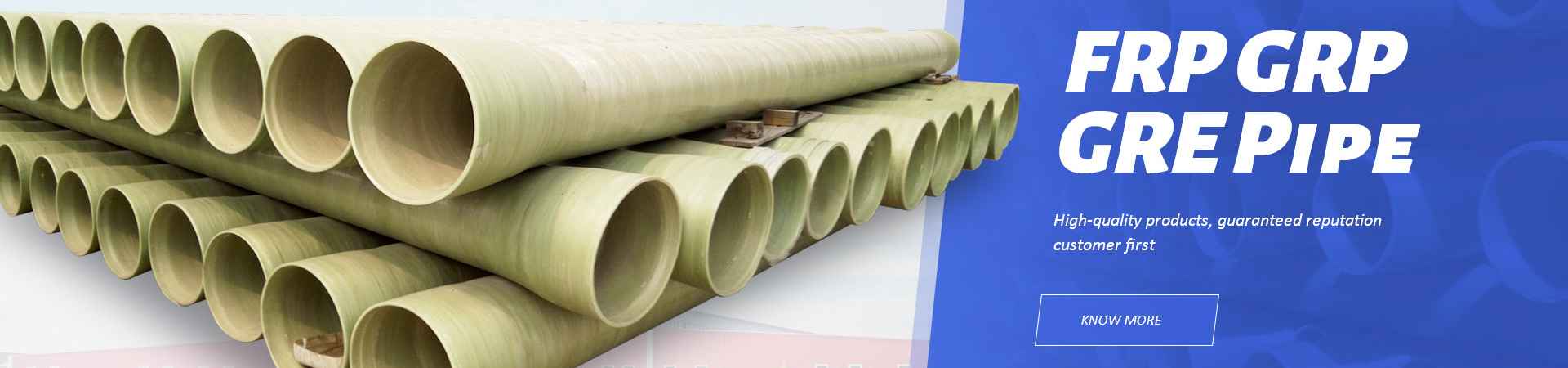

An FRP Absorption Tower is a core unit in industrial gas treatment systems designed to remove corrosive and harmful gases from exhaust streams before they are released into the atmosphere. It is widely used in chemical production, wastewater treatment, fertilizer manufacturing, metallurgy, and other heavy industries where emission control is critical for environmental compliance and operational safety.
Unlike traditional steel scrubbers, an FRP Absorption Tower is constructed using fiberglass reinforced plastic, a composite material that provides inherent resistance to acid mist, alkali vapors, and chloride-rich environments. This structural difference fundamentally changes how the equipment performs over long-term operation, especially in corrosive gas conditions.
In modern engineering practice, gas treatment systems are no longer evaluated only by removal efficiency. Engineers now consider pressure drop stability, corrosion resistance, lifecycle cost, and hydraulic behavior as equally important design parameters.
Understanding how an FRP Absorption Tower works requires examining three core mechanisms: gas flow behavior, mass transfer dynamics, and chemical absorption reactions inside the packed column.

At its core, an FRP Absorption Tower operates as a vertical gas–liquid contact system. The purpose is to bring contaminated gas into close contact with a liquid absorbent so that pollutants can be transferred from the gas phase into the liquid phase.
The process occurs inside a packed column structure. Exhaust gas enters from the lower section of the tower and moves upward. At the same time, absorbent liquid is sprayed from the top and flows downward under gravity. This opposite movement creates a counter-current flow system, which is highly efficient for mass transfer applications.
Inside the tower, packing media such as structured plastic packing or random rings significantly increases the surface area available for gas–liquid interaction. Instead of a simple empty chamber, the tower becomes a highly active contact environment where thin liquid films and gas streams continuously interact.
The system is not a simple filtration device. It is a controlled reaction environment where physical diffusion and chemical neutralization occur simultaneously.
Gas flow inside an FRP Absorption Tower begins at the inlet section, where exhaust gas is introduced into the system. Ideally, the gas should be evenly distributed across the entire cross-section of the tower before entering the packing zone.
In real industrial systems, however, gas distribution is rarely perfect. The flow profile is often influenced by upstream duct geometry, fan discharge patterns, and sudden changes in velocity. These conditions can lead to uneven flow distribution at the tower inlet.
Once inside the packing section, gas travels upward through void spaces between packing materials. The resistance created by the packing structure slows the gas velocity slightly, increasing contact time with the liquid phase.
If gas distribution is uneven, a phenomenon known as channeling may occur. In channeling conditions, gas prefers low-resistance paths, bypassing some areas of the packing bed. This reduces effective contact area and decreases overall system efficiency without causing any visible mechanical damage.
Proper gas flow design is therefore critical. Engineers often use inlet diffusers or flow straighteners to stabilize velocity distribution before gas enters the packing zone.
Liquid flow in an FRP Absorption Tower is equally important as gas flow. The absorbent liquid is introduced at the top of the tower and distributed evenly across the packing surface using spray nozzles or distribution trays.
As the liquid flows downward, it forms a thin film over the surface of the packing material. This film is the primary interface where mass transfer occurs between gas and liquid phases.
Uniform distribution is essential. If liquid is unevenly distributed, certain areas of the packing bed may become dry, while others become overloaded. Both conditions reduce overall absorption efficiency.
Nozzle design, spray pressure, and liquid viscosity all affect distribution quality. Over time, nozzle clogging or scaling can distort spray patterns, leading to reduced wetting efficiency and increased pressure drop inside the system.
In high-performance designs, liquid redistribution layers are sometimes added within the tower to re-balance flow and maintain consistent wetting across large column heights.

The core mechanism of an FRP Absorption Tower is gas–liquid mass transfer. This process is driven by concentration differences between gas phase pollutants and the liquid absorbent.
When gas comes into contact with the liquid film on the packing surface, pollutants transfer from the gas phase into the liquid phase. This transfer occurs due to diffusion and solubility differences, and in many cases, chemical reactions enhance the removal process.
For example, acidic gases such as hydrogen chloride (HCl) are absorbed into alkaline solutions, forming stable salts. Similarly, ammonia (NH₃) is captured effectively using acidic absorbents. Sulfur dioxide (SO₂) may undergo both dissolution and oxidation depending on system design.
The efficiency of mass transfer depends on three main factors:
Contact surface area between gas and liquid
Contact time within the packing bed
Renewal rate of the liquid film on packing surfaces
These factors are interconnected. Increasing one parameter often affects the others, making system optimization a multi-variable engineering problem rather than a simple adjustment.
Packing is one of the most critical components inside an FRP Absorption Tower. It defines how effectively gas and liquid phases interact within the system.
Structured packing provides highly ordered flow channels, which improve mass transfer efficiency and reduce pressure drop. This makes it suitable for high-performance chemical systems where efficiency is the priority.
Random packing, on the other hand, provides more chaotic flow paths, which improves resistance to fouling and particulate blockage. This makes it suitable for wastewater treatment and industrial exhaust streams with impurities.
The choice of packing material directly influences:
Mass transfer coefficient
Pressure drop across the tower
Risk of fouling or clogging
Long-term operational stability
In practical engineering design, packing selection is always based on a balance between efficiency and operational robustness.
In many industrial applications, the process inside an FRP Absorption Tower is not limited to physical absorption. Chemical reactions often occur simultaneously, improving overall pollutant removal efficiency.
When acidic gases enter an alkaline environment, neutralization reactions occur immediately. This converts gaseous pollutants into stable liquid-phase compounds, preventing re-emission.
Similarly, ammonia behaves as a basic gas and is efficiently captured using acidic solutions. In oxidizing systems, sulfur compounds may undergo further chemical transformation to improve removal stability.
These reactions enhance system performance but also introduce additional engineering considerations such as reagent consumption, heat generation, and by-product management.
Pressure drop is an important performance indicator in an FRP Absorption Tower. It reflects how easily gas can pass through the packing bed.
As gas flows upward, it encounters resistance from packing structures and liquid films. Under normal conditions, pressure drop remains stable. However, if fouling or channeling occurs, pressure drop may increase significantly.
A gradual increase in pressure drop often indicates packing contamination or partial blockage. A sudden change may indicate flow instability or liquid distribution failure.
Maintaining stable pressure drop is essential for energy efficiency and long-term operational stability.
In real-world operation, an FRP Absorption Tower rarely operates under ideal theoretical conditions. Gas composition may fluctuate, temperature may vary, and particulate load may change over time.
These variations directly affect absorption efficiency. For example, higher gas temperatures reduce solubility, while increased particulate content accelerates packing fouling.
Engineers must therefore design systems with operational flexibility rather than fixed-point optimization. This includes margin design for flow variation, corrosion allowance, and maintenance accessibility.
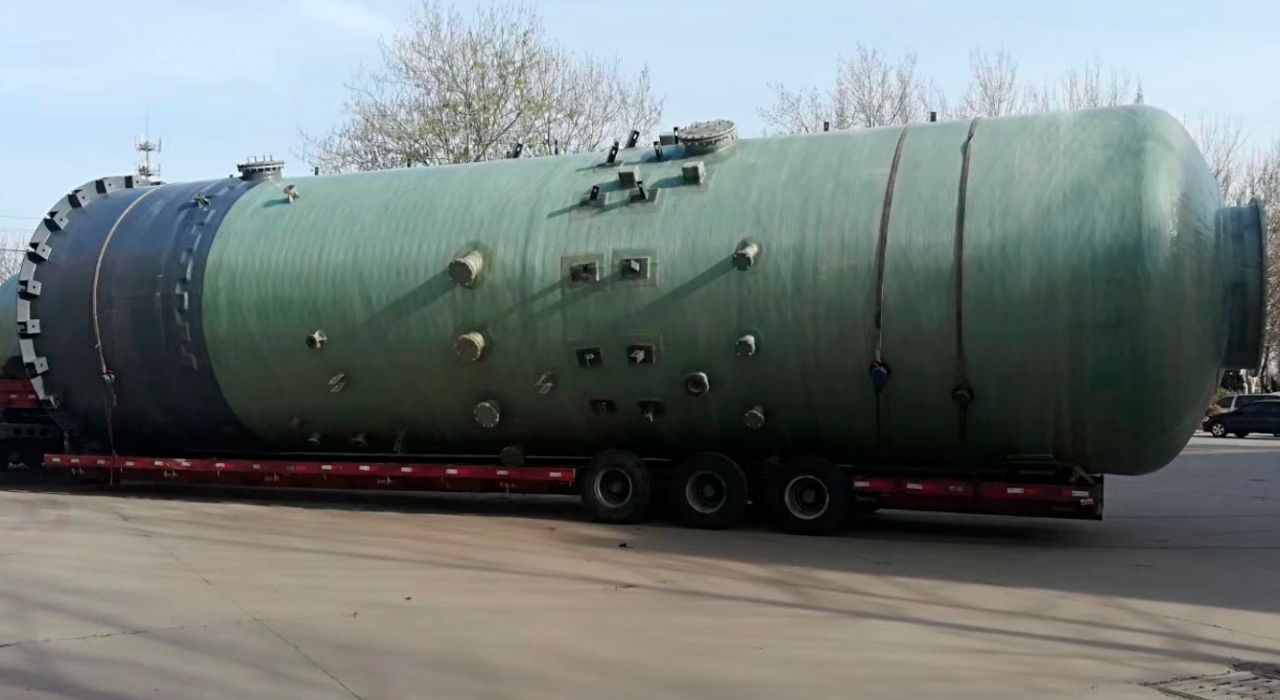
The working process of an FRP Absorption Tower can be summarized as a continuous cycle of:
Gas entering the system → upward flow through packing → liquid spray distribution → gas–liquid contact → pollutant transfer → chemical neutralization → clean gas discharge
Each stage depends on the stability of flow distribution and the efficiency of mass transfer inside the packing zone.
An FRP Absorption Tower operates through a combination of controlled gas flow, liquid distribution, and gas–liquid mass transfer inside a structured packed column. Its performance is determined not only by chemical reactions but also by hydraulic design, packing selection, and real-world operating stability.
In modern industrial systems, the value of an absorption tower is defined by long-term reliability rather than short-term efficiency. Properly designed FRP Absorption Towers provide stable emission control, reduced corrosion risk, and predictable operational performance across demanding chemical environments.