
As composite materials continue to dominate industries from construction to transportation, demand for high‑efficiency manufacturing equipment has never been stronger. Among the latest innovations, the pultrusion machine stands out as the backbone of continuous production for profiles that are lightweight, strong, and corrosion‑resistant.
In 2026, choosing the best pultrusion machine for sale means evaluating not just price and specs, but long‑term reliability, automation capability, and adaptability to evolving composite manufacturing demands. Whether you are producing structural beams, rod reinforcements, grating components, or piping profiles, investing in the right pultrusion technology can make all the difference in operational efficiency and product quality.
This guide explains what a pultrusion machine is, what features matter most in 2026, and how to evaluate top equipment to ensure your composite manufacturing line stays competitive.
A pultrusion machine is specialized equipment used for producing continuous profiles from fiber‑reinforced composite materials. The term “pultrusion” combines “pull” and “extrusion” — the process involves pulling continuous fiber reinforcements through a resin impregnation system and then through a heated die where the material cures into a rigid profile.
Key benefits of pultrusion technology include:
Constant cross‑sectional shape — profiles are uniform, with predictable strength properties.
High production efficiency — continuous manufacturing means faster output.
Excellent mechanical performance — especially when glass fiber reinforcements are used.
Corrosion resistance and low maintenance — ideal for chemical, structural, and outdoor applications.
Modern pultrusion lines produce a range of composite parts, including rods, beams, channels, and grating components. As composite demand grows, the value of choosing a high‑quality machine becomes even more significant.
Pultrusion technology has evolved steadily, and in 2026 we are seeing several key trends emerge:
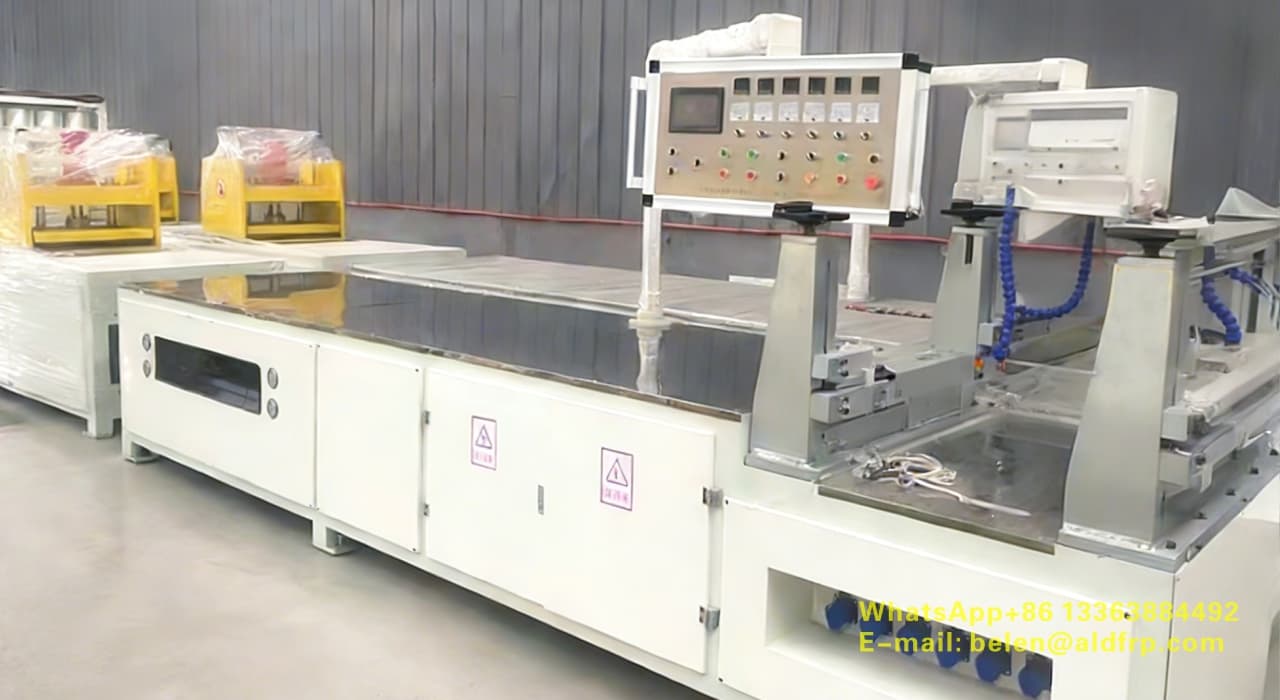
Higher Automation Standards: Machines increasingly integrate smart control systems that reduce manual intervention and ensure consistent output.
Energy Efficiency Improvements: New heating systems and motor controls significantly reduce energy consumption per unit.
Modular Design: Flexible configurations allow manufacturers to adapt pultrusion lines for different profile types.
Digital Monitoring and IoT Connectivity: Real‑time data and remote diagnostics improve uptime and maintenance planning.
These advancements make the modern fiberglass pultrusion machine more than just a piece of equipment — it becomes a strategic asset in composite manufacturing.
When evaluating the best pultrusion machines available for sale in 2026, consider the following critical features:
Not all pultrusion machines are created equal. Higher capacity machines can handle larger profiles or higher throughput, which directly affects your output efficiency.
Things to verify:
Maximum pulling speed
Supported profile diameter and wall thickness
Continuous duty capability
A machine that meets your current requirements but also has room to grow ensures a better return on investment.
Advanced automation is one of the biggest differentiators for modern pultrusion technology.
Important elements:
Digital touch panel controls
Programmable logic controllers (PLC)
Real‑time monitoring of temperature and tension
Automated safety interlocks
Automation not only improves consistency but also reduces skill‑dependent variability, making your line more reliable.
The best pultrusion machines are designed to work with a variety of composite materials. A fiberglass pultrusion machine should handle:
Glass fiber reinforcements (rovings, mats)
Advanced resin systems (vinyl ester, epoxy, polyester)
Additives for fire retardancy or UV resistance
This flexibility allows you to tailor products for different end‑use industries.
While initial cost is important, long‑term operating expenses are equally critical. Modern machines focus on:
Efficient heating zones that reduce energy waste
Intelligent motor controls
Thermal insulation to reduce heat loss
Lower energy consumption not only reduces cost but also aligns with sustainability goals that many customers now demand.
Composite manufacturing needs can change over time. A modular pultrusion production line allows you to:
Add or upgrade heating sections
Change dies quickly for new profile shapes
Integrate additional finishing equipment
This adaptability helps manufacturers stay competitive as product demands evolve.
When shopping for the best pultrusion machine for sale, price is a key consideration — but it’s important to understand what drives cost.
High‑quality motors, heating elements, and precision electronics increase upfront cost but improve durability and performance.
More advanced control systems translate to higher machine costs. However, automation often pays for itself by reducing labor costs and improving efficiency.
A standalone pultrusion machine costs less than a full production line that includes:
Resin impregnation systems
Cutting mechanisms
Fiber feeding systems
Automation integration
Turnkey solutions cost more upfront but reduce integration challenges later.
Custom designs tailored to specific product types or production goals will increase cost but ensure the equipment meets your exact needs.
Finding the best pultrusion machine for sale starts with identifying the right supplier. Here’s how to evaluate manufacturing partners:
A reputable supplier will operate its own manufacturing facility and demonstrate experience with multiple installations. Avoid suppliers that act only as traders or resellers.
Top suppliers offer a range of configurations — from standard machines to fully automated pultrusion lines tailored for specific products.
After‑sales support is crucial. The best suppliers provide:
Installation and commissioning support
Training for operators
Ongoing maintenance guidelines
Troubleshooting assistance
Good support ensures higher uptime and fewer surprises.
Reliable manufacturers can provide case studies, references, or real project examples that demonstrate performance and reliability.
In 2026, sourcing the best pultrusion machine should be about more than upfront cost. The ideal supplier will act as a long‑term partner who understands your composite manufacturing goals and helps you optimize performance.
Consider partners that:
Provide turnkey solutions rather than just standalone machines
Offer customization and engineering support
Have a proven track record of installations in your industry
Deliver ongoing service and spare parts support
A strong manufacturing partner enables you to focus on production and growth rather than troubleshooting equipment issues.
Pultrusion machines are widely used in construction, transportation, chemical processing, electrical systems, and infrastructure applications — anywhere strong, lightweight, corrosion‑resistant profiles are needed.
For medium to large operations, turnkey lines reduce integration challenges, improve consistency, and often deliver better long‑term value than standalone machines.
Not all. Older or budget models may rely on human operator intervention, while modern machines emphasize automated control for efficiency and consistency.
With proper maintenance, high‑quality machines can operate reliably for many years, often outlasting initial investment expectations.
Routine maintenance includes monitoring heating systems, checking pulling systems, inspecting electrical controls, and ensuring proper resin handling procedures.
Finding the best pultrusion machine for sale in 2026 means looking beyond price tags and product brochures. Today’s advanced composite manufacturing equipment must combine automation, precision, flexibility, and support to meet evolving industry requirements.
By focusing on production capacity, automation systems, energy efficiency, supplier capability, and long‑term value, manufacturers can make informed investment decisions that support growth and profitability.