
In the composite manufacturing industry, efficiency and consistency are critical for staying competitive. One of the most important pieces of equipment enabling this is the automatic fiberglass pultrusion machine. Designed for continuous production of FRP (fiber reinforced plastic) profiles, this machine has become a cornerstone for manufacturers producing structural components such as beams, grating, rods, and customized profiles.
If you are planning to invest in production equipment, understanding how an automatic fiberglass pultrusion machine works—and what factors influence its performance—can help you make a smarter purchasing decision.
An automatic fiberglass pultrusion machine is used to produce continuous FRP profiles by pulling fiberglass reinforcements through a resin bath and heated die. The process creates strong, lightweight, and corrosion-resistant products with consistent cross-sections.
Unlike manual or semi-automatic systems, automatic machines offer:
Higher production efficiency
Better dimensional accuracy
Reduced labor dependency
Consistent product quality
This makes them ideal for large-scale industrial manufacturing.
Understanding the structure of an automatic fiberglass pultrusion machine helps buyers evaluate equipment quality and performance.
The creel holds fiberglass roving and ensures smooth and continuous feeding into the system. Proper tension control is critical to maintaining product consistency.
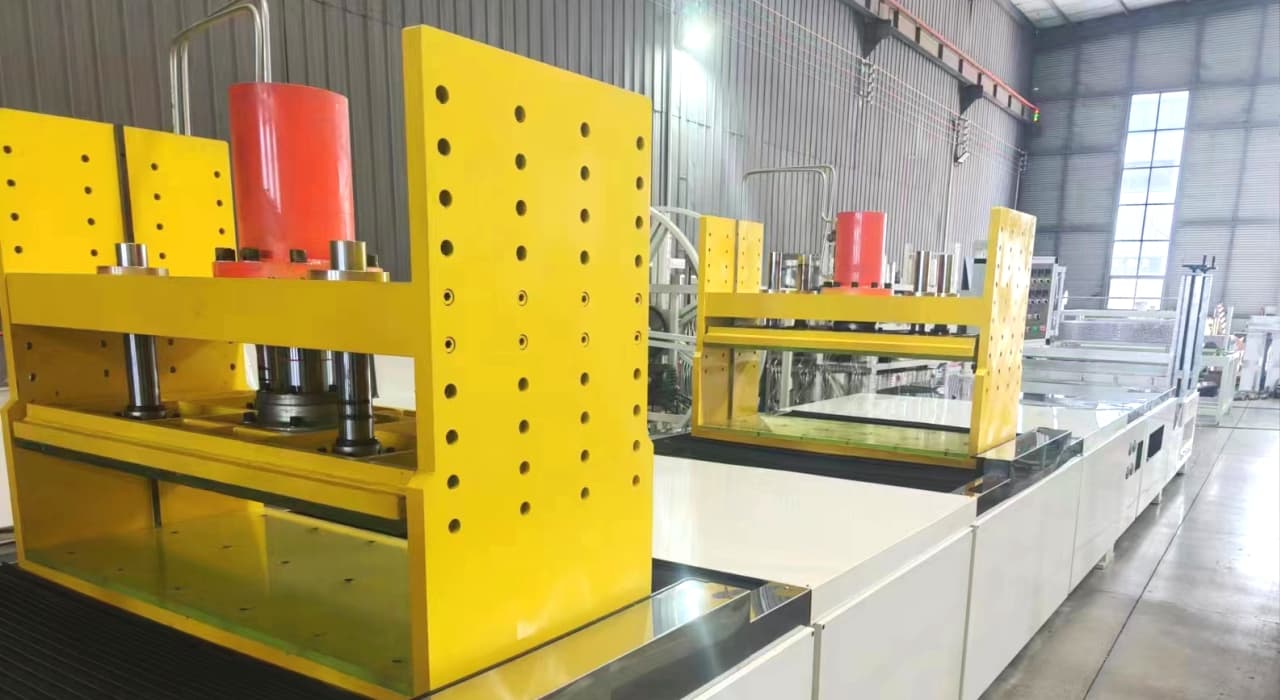
Fiberglass fibers are saturated with resin in this stage. The resin system determines the final product’s chemical resistance and mechanical strength.
Before entering the die, fibers are shaped into the desired form. This step ensures uniform distribution and alignment, improving structural integrity.
The die is where curing occurs. Heat activates the resin, solidifying the material into a rigid profile. Precision in temperature control is essential for product quality.
The pulling mechanism continuously draws the material through the die. In an automatic fiberglass pultrusion machine, this process is controlled by motors and automation systems for consistent speed.
The final stage involves cutting the finished profile into specified lengths. Automatic cutting systems improve efficiency and accuracy.
Automation significantly increases output compared to manual systems. Manufacturers can achieve continuous production with minimal downtime.
Because the process is controlled by automated systems, the automatic fiberglass pultrusion machine ensures uniform dimensions and mechanical properties across all products.
Automation reduces the need for manual intervention, lowering labor costs and minimizing human error.
The machine can produce a wide range of FRP profiles, including:
Structural beams
Channels and angles
Grating components
Rods and flat bars
This flexibility allows manufacturers to serve multiple industries.
Pultruded profiles are used for bridges, platforms, and structural supports due to their high strength-to-weight ratio.
FRP products are widely used in corrosive environments where metal would fail. The automatic fiberglass pultrusion machine enables consistent production of corrosion-resistant components.
Non-conductive FRP materials are ideal for electrical insulation and cable management systems.
Lightweight FRP profiles reduce weight while maintaining strength, making them suitable for transportation applications.
When evaluating an automatic fiberglass pultrusion machine, price varies depending on several factors.
Larger machines capable of producing bigger profiles or higher output volumes will cost more.
Fully automated systems with advanced control panels and sensors are more expensive but offer better efficiency and precision.
High-performance heating systems ensure uniform curing, which improves product quality but increases cost.
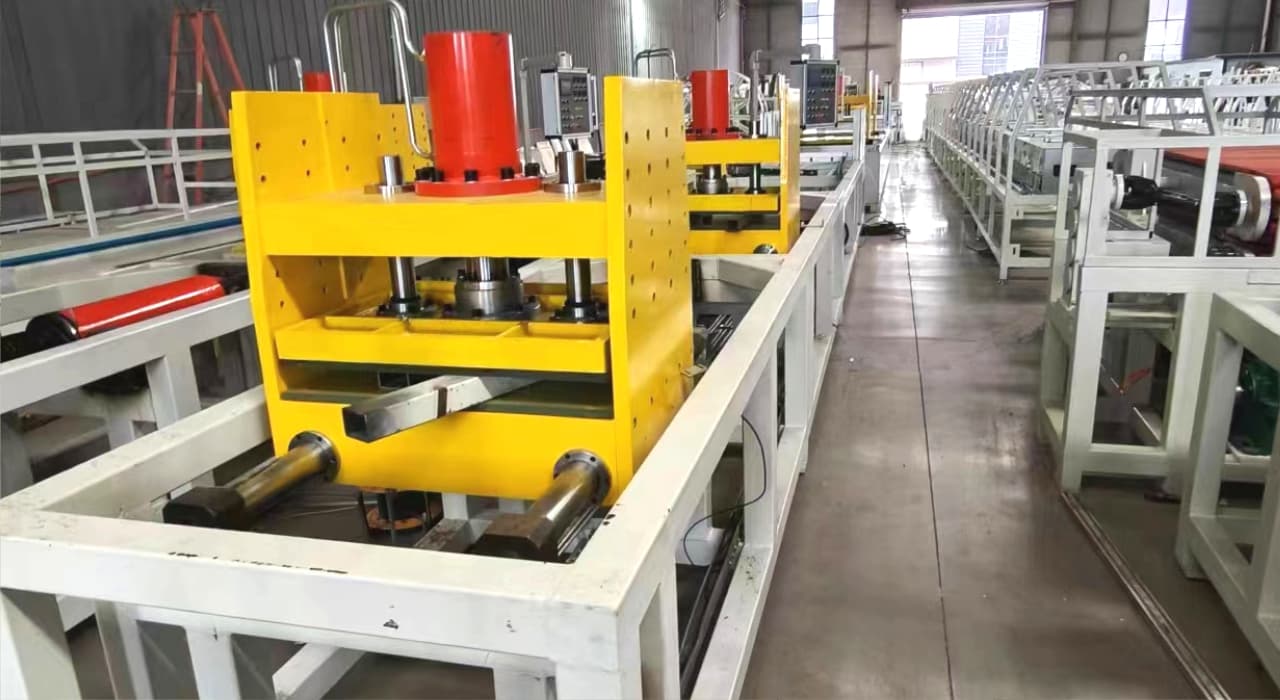
Machines designed for specific profiles or applications may require custom molds and configurations, affecting overall price.
Experienced manufacturers often charge more due to better engineering, reliability, and after-sales support.
Start by identifying the types of profiles you want to produce and your expected production volume.
Check parameters such as pulling force, die temperature control, and automation level.
Choose a supplier with proven experience in manufacturing automatic fiberglass pultrusion machine systems and providing technical support.
Focus on durability, maintenance costs, and energy efficiency rather than just initial price.
To maximize performance, regular maintenance is essential:
Inspect pulling system components
Maintain proper resin levels and quality
Clean dies and molds regularly
Monitor temperature control systems
Proper maintenance ensures long service life and consistent production quality.
automatic fiberglass pultrusion machine price
FRP pultrusion production line equipment
fiberglass pultrusion machine for profiles
industrial automatic pultrusion machine system
continuous FRP pultrusion manufacturing equipment
An automatic fiberglass pultrusion machine can produce beams, rods, grating, channels, and customized FRP profiles.
Automation improves efficiency, consistency, and reduces labor costs, making it ideal for industrial-scale production.
With proper maintenance, these machines can operate efficiently for many years.
Yes, machines can be tailored to produce specific profile shapes and sizes.
Construction, chemical processing, electrical, and transportation industries commonly use FRP pultrusion products.
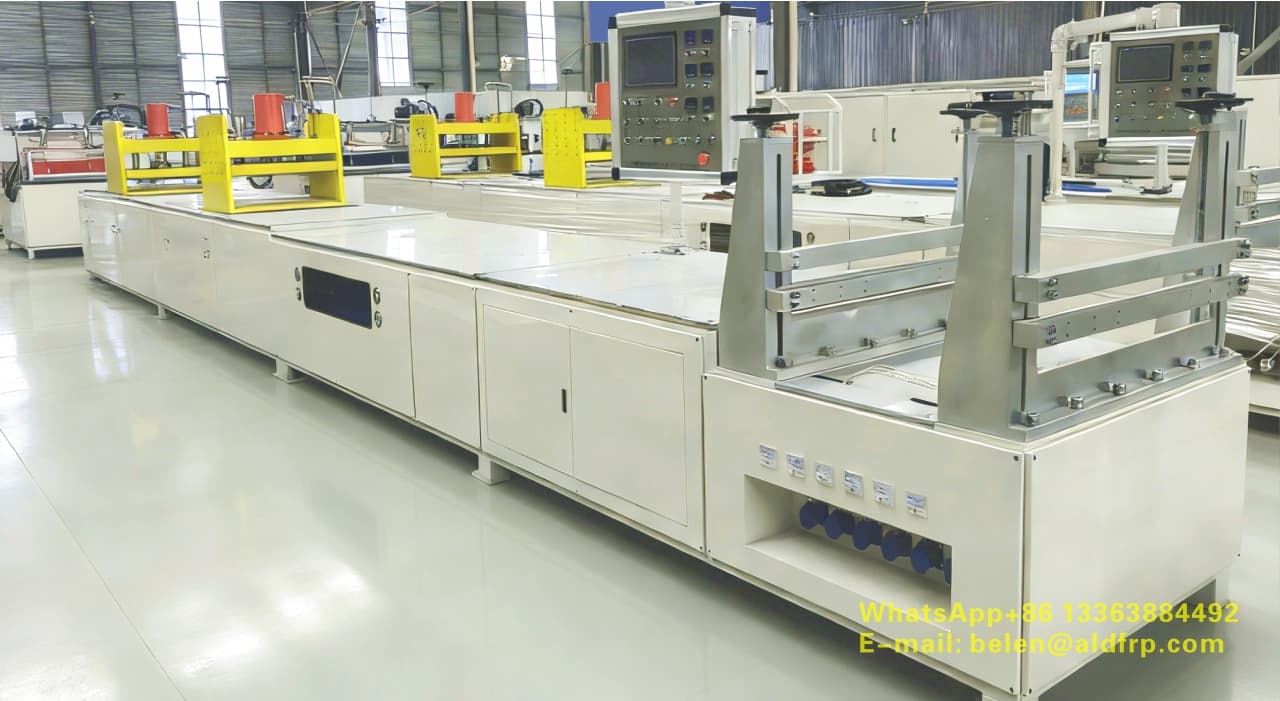
Investing in an automatic fiberglass pultrusion machine is a strategic decision for any manufacturer looking to scale production and improve product consistency.
While the initial investment may be significant, the long-term benefits—such as increased efficiency, reduced labor costs, and consistent product quality—make it a valuable asset in modern composite manufacturing.
Choosing the right machine and supplier ensures not only reliable production but also long-term profitability.