
In any industrial chemical production project-especially fertilizer plants such as potassium sulfate(K₂SO₄)production systems—success is not determined by individual machines.
It is determined by how well the entire production system is designed and integrated.
A modern plant is not a collection of equipment.
It is a continuous, interconnected engineering system where every component directly affects:
Production efficiency
Operating cost
Product quality
Safety performance
Long-term stability
This guide explains how industrial production systems are structured, how each subsystem works, and how to make the right engineering decisions when designing a plant.
Many investors focus only on the product or process.
But in real industrial engineering:
The equipment system determines whether the process can actually succeed.
A poorly designed system leads to:
Unstable production
High energy consumption
Low product purity
Frequent maintenance shutdowns
Safety and environmental risks
Process defines what you want to produce
Equipment system determines whether you can produce it efficiently
Most chemical and fertilizer plants (including potassium sulfate production plants) are built around five integrated subsystems:
Raw material handling system
Reaction system
Separation system
Drying & finishing system
Environmental & automation system
Each system is interconnected and cannot operate independently.
This is the starting point of every production process.
Raw materials such as:
Potassium chloride(KCl)
Sulfuric acid(H₂SO₄)
Additives or auxiliary chemicals
are stored in:
Steel or lined silos(solid materials)
Corrosion-resistant tanks(liquid materials)
Anti-corrosion structure
Level monitoring system
Leak protection system
Poor storage design directly leads to contamination and unstable reaction performance.
This system controls material accuracy.
Typical equipment:
Screw feeders
Belt conveyors
Dosing pumps
Flow meters
Even a 1–2% error in feeding ratio can lead to:
Lower product purity
Higher raw material waste
Unstable reaction temperature
In industrial plants: accuracy = profitability
This is where chemical transformation occurs.
In potassium sulfate production, this is where KCl reacts with sulfuric acid under high temperature.
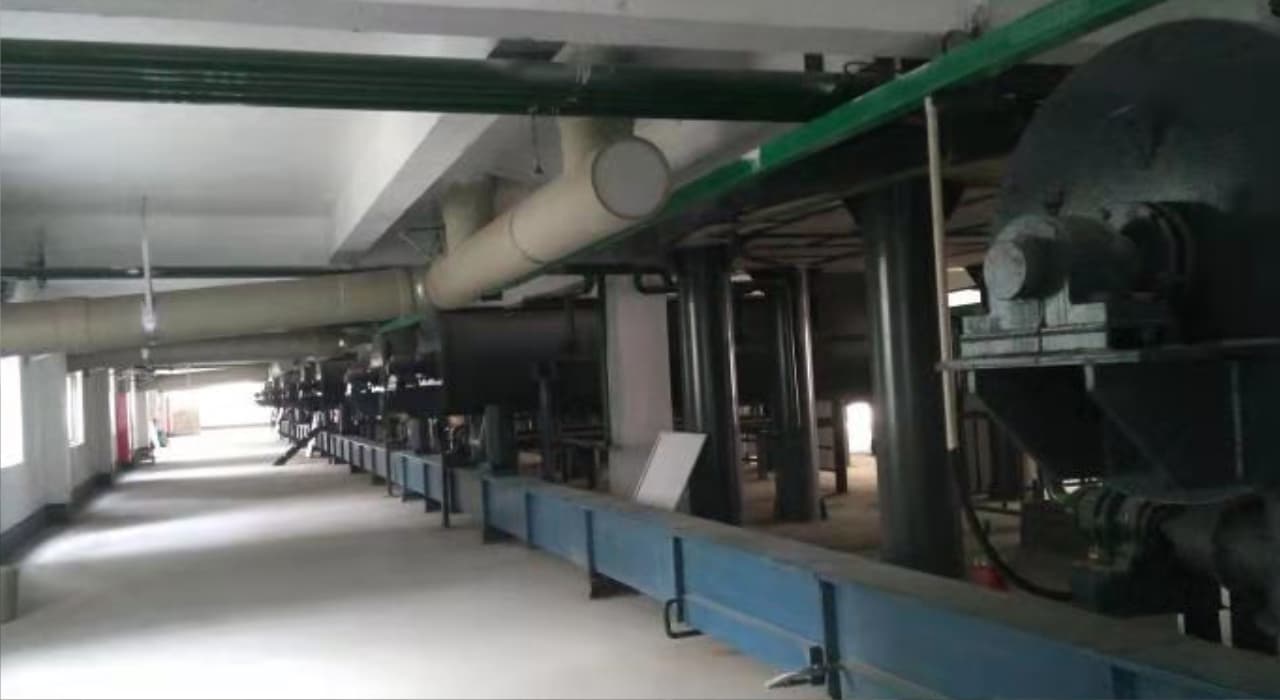
Common reactor types:
Mannheim furnace (high-temperature continuous system)
Stirred tank reactor (wet process system)
Fluidized bed reactor (advanced systems)
High corrosion resistance
Stable heat transfer
Continuous operation capability
500∼600∘C500 /sim 600/circ C500∼600∘C
This subsystem is the core value generator of the entire plant
Common energy sources:
Natural gas burners(modern standard)
Waste heat recovery systems(advanced plants)
Electric heating (small-scale systems)
Energy recovery systems are becoming standard in modern chemical plants
Many chemical reactions produce gas by-products.
In K₂SO₄ production:
Hydrogen chloride (HCl)
Gas capture
Neutralization or conversion
By-product recovery
Proper gas handling is essential for environmental approval and profitability
After reaction, the product mixture must be separated into usable output.
Controls:
Crystal size
Product purity
Final market grade
Equipment:
Cooling crystallizers
Evaporation crystallizers
This step directly determines product commercial value
Common equipment:
Centrifuges
Vacuum filters
Pressure filters
Recovery efficiency (directly impacts plant yield)
After separation, the product still contains moisture.
Common systems:
Rotary dryer
Fluidized bed dryer
Temperature
Airflow
Residence time
Purpose:
Prevent caking
Stabilize storage performance
Equipment:
Vibrating screen
Rotary sieve
Ensures uniform particle size and market-grade consistency
Final stage before product shipment.
Equipment includes:
Automatic weighing system
Bagging machine
Sealing system
Palletizing system
25kg bags
50kg bags
Bulk containers (FIBC bags)
Automation here directly reduces labor cost and improves consistency
Modern chemical plants cannot operate without environmental systems.
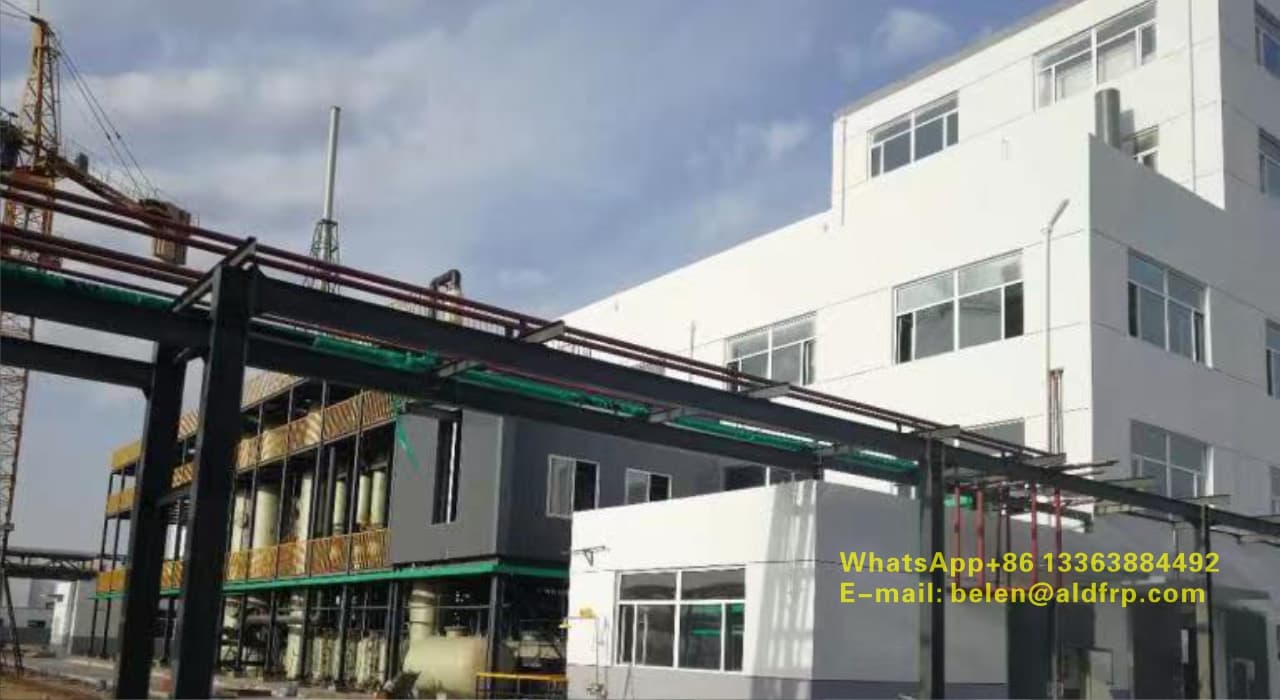
Functions:
HCl gas absorption
Acid recovery
Emission control
Equipment:
Bag filters
Cyclone separators
Protects both environment and equipment lifespan
Processes:
Neutralization
Filtration
Recycling
Environmental systems are not optional—they are project approval requirements
Modern plants rely heavily on automation.
Controls:
Temperature
Flow rate
Pressure
Feeding ratio
Allows:
Real-time plant monitoring
Fault detection
Efficiency optimization
Includes:
Temperature sensors
Pressure sensors
Flow meters
Level detectors
Automation is what transforms a plant into a modern production system
A complete production system operates as a continuous flow:
Raw material storage →
Accurate feeding →
Reaction system →
Gas treatment →
Crystallization →
Separation →
Drying →
Screening →
Packaging →
Environmental control (continuous)
Every subsystem affects the next one
Materials used:
Stainless steel
Lined carbon steel
Special alloys
Modern systems focus on:
Heat recovery
Thermal integration
Reduced fuel consumption
Industrial plants are designed for:
24/7 operation
Minimal downtime
Good systems allow:
Capacity expansion
Modular upgrades
Many plant failures come from poor system design:
❌ Ignoring gas treatment systems
❌ Underestimating corrosion issues
❌ Poor reactor selection
❌ Lack of automation
❌ Weak layout design
These mistakes often cost more than equipment savings
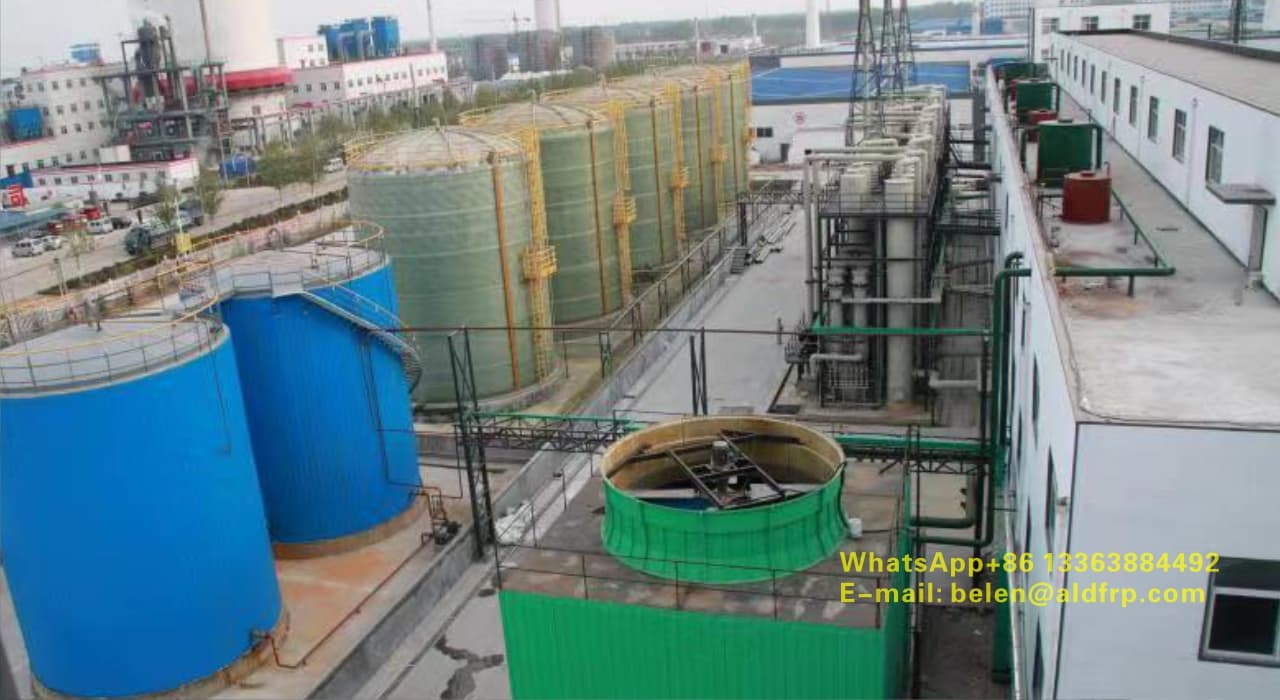
The future of industrial plants is evolving toward:
Smart manufacturing (Industry 4.0)
AI-based process optimization
Modular skid-mounted systems
Low-carbon production technologies
High-efficiency heat recovery systems
Modern plants are becoming data-driven engineering systems
A modern industrial production plant is not a collection of machines—it is a fully integrated engineering system.
Each subsystem, from raw material handling to reaction, separation, drying, and environmental treatment, plays a critical role in:
Production stability
Cost efficiency
Product quality
Long-term profitability
In industrial engineering:
Good system design is more important than individual equipment quality.