

If you are researching the potassium sulfate manufacturing process, you are likely evaluating more than just chemistry—you are exploring production efficiency, investment feasibility, and long-term plant performance.
In industrial practice, potassium sulfate(K₂SO₄)is not produced by a single fixed method. Instead, different technologies are selected based on:
Raw material availability
Production scale
Environmental regulations
Investment budget
Product quality requirements
Understanding these processes is essential before designing a potassium sulfate production plant, because the process directly determines:
Operating cost
Plant layout
Equipment selection
Product purity
Overall ROI
This guide explains the real industrial production routes used worldwide, with a focus on engineering logic and practical decision-making.
Potassium sulfate(SOP – Sulfate of Potash) is a chloride-free potassium fertilizer widely used in high-value agriculture.
Fruits and vegetables
Tobacco cultivation
Tea and coffee plantations
Greenhouse farming
Export-oriented crops
Compared with potassium chloride (MOP), SOP provides:
No chloride toxicity
Better crop quality
Higher market value
Strong export demand
This makes it a high-margin specialty fertilizer product, not a commodity.
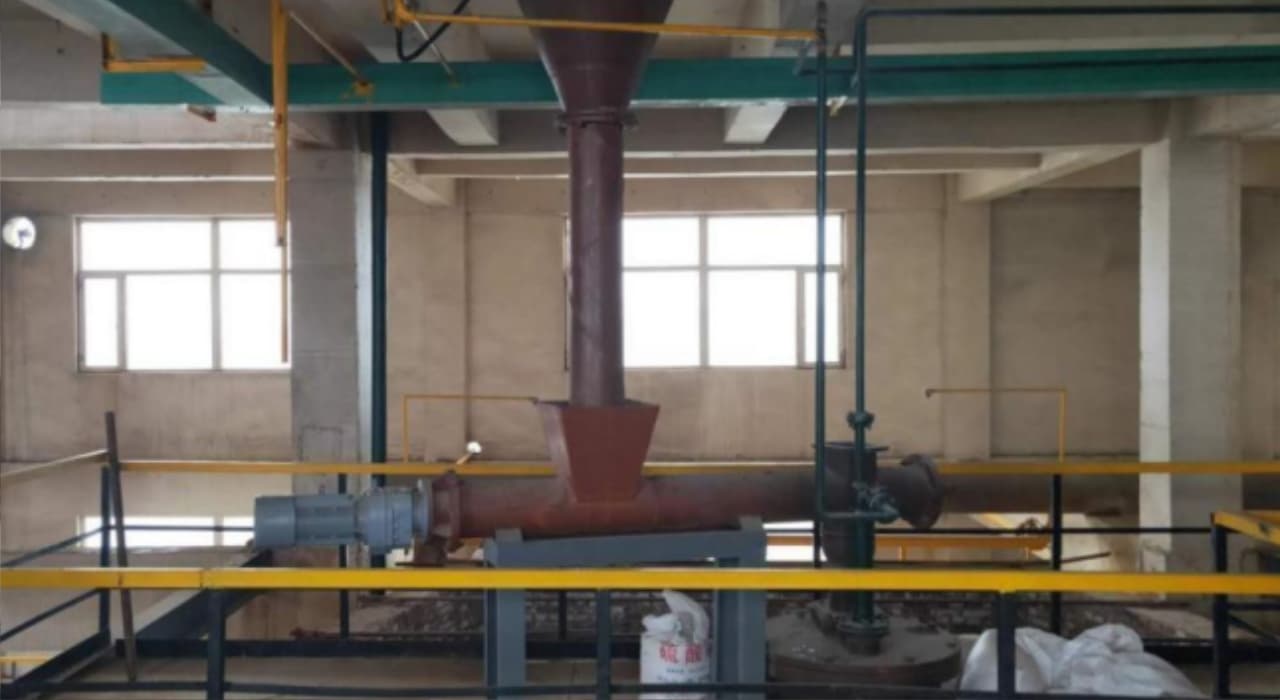
Globally, three main industrial production methods are used:
The Mannheim process is the most widely used commercial method for K₂SO₄ production.
2KCl+H2SO4→K2SO4+2HCl2KCl + H_2SO_4 \rightarrow K_2SO_4 + 2HCl2KCl+H2SO4→K2SO4+2HCl
Step 1: Raw Material Feeding
Potassium chloride (KCl) and sulfuric acid (H₂SO₄) are continuously fed into a high-temperature reactor.
Step 2: High-Temperature Reaction
Temperature: 500–600°C
Reaction takes place in a Mannheim furnace
Produces molten K₂SO₄ and HCl gas
Step 3: HCl Gas Recovery
Hydrogen chloride gas is absorbed in water
Converted into hydrochloric acid
Can be reused or sold as by-product
Step 4: Cooling & Crystallization
Molten potassium sulfate is cooled and solidified into crystals.
Step 5: Crushing, Drying & Packaging
Final product is processed to meet market specifications.
Mature industrial technology
Stable large-scale production
High purity (50–52% K₂O equivalent)
Strong global market acceptance
High energy consumption
Corrosive environment
Requires advanced gas treatment system
Best suited for: medium to large-scale industrial plants
This is a solution-based wet chemical method.
KCl+Na2SO4→K2SO4+2NaClKCl + Na_2SO_4 \rightarrow K_2SO_4 + 2NaClKCl+Na2SO4→K2SO4+2NaCl
Raw materials dissolved in water
Controlled chemical reaction
Crystallization of K₂SO₄
Solid-liquid separation
Drying and product finishing
Lower temperature operation
Lower emissions
Better environmental performance
Lower efficiency
Complex crystallization control
Sensitive to raw material purity
Best suited for: regions with strict environmental regulations
This method extracts potassium sulfate directly from mineral ores such as:
Langbeinite (K₂SO₄·2MgSO₄)
Kainite
Mining and crushing
Separation and purification
Dissolution and crystallization
Drying and packaging
Low chemical consumption
Environmentally friendly
Lower operational emissions
Resource-dependent
Location-restricted
Limited scalability
Regardless of process, an industrial plant typically includes:
Core reaction unit
High-temperature resistant design
Acid-resistant lining
Converts HCl gas into hydrochloric acid
Essential for environmental compliance
Controls particle size and purity
Direct impact on product grade
Centrifuge or filtration equipment
Improves yield efficiency
Rotary or fluidized bed dryer
Ensures storage stability
Required for environmental approval
Reduces operational risk
Equipment performance directly determines plant efficiency—not just individual machine quality.
| Factor | Mannheim Process | Double Decomposition | Mineral Method |
|---|---|---|---|
| Technology maturity | High | Medium | Medium |
| Investment cost | Medium–High | Medium | Variable |
| Operating cost | Moderate | Moderate | Low |
| Environmental impact | Medium | Low | Low |
| Scalability | High | Medium | Limited |
Large-scale export production → Mannheim Process
Environmental compliance priority → Double decomposition
Resource-based production → Mineral method
Impacts:
Reaction efficiency
Energy consumption
Product purity
500∼600∘C500 \sim 600^\circ C500∼600∘C
Too high → energy waste + equipment damage
Too low → incomplete reaction
Determines:
Particle size
Market grade consistency
Affects:
Continuous operation stability
Maintenance cost
Long-term yield
Modern K₂SO₄ plants must comply with strict regulations:
HCl gas recovery system
Wastewater treatment system
Dust emission control
High-temperature operational safety
Environmental systems are not optional—they directly affect plant approval and long-term operation.
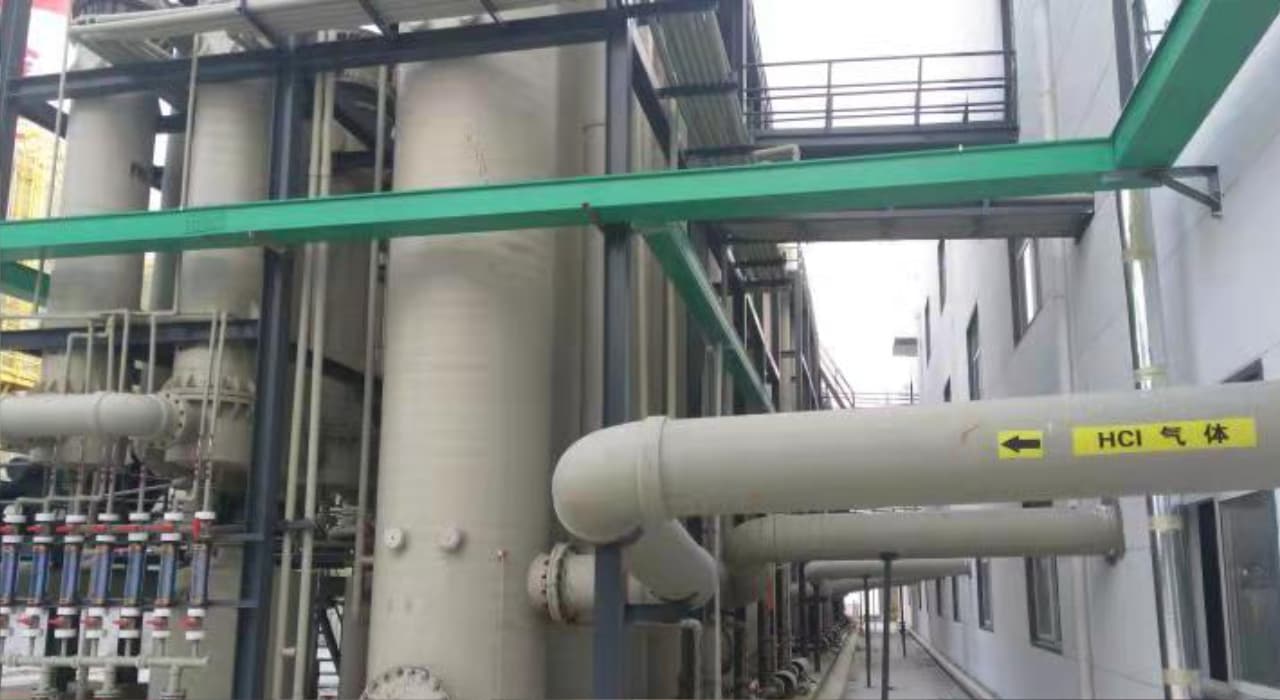
Your process choice directly influences:
CAPEX (initial investment)
OPEX (operating cost)
Energy consumption
Maintenance frequency
Mannheim → higher energy but stable output
Wet process → lower energy but complex control
Mineral → lowest chemical cost but resource limited
The industry is moving toward:
Energy-efficient furnace systems
Zero-emission gas treatment
Automated process control (PLC/DCS)
Modular plant design
Smart monitoring systems (Industry 4.0)
Future plants are no longer just chemical plants—they are data-driven production systems.
The potassium sulfate manufacturing process is fundamentally a systems engineering decision, not just a chemical reaction.
Success depends on balancing:
Process technology
Equipment configuration
Environmental compliance
Investment structure
Market demand
In most global projects, the Mannheim process remains the industrial standard, but the optimal solution always depends on your specific raw materials, budget, and production goals.