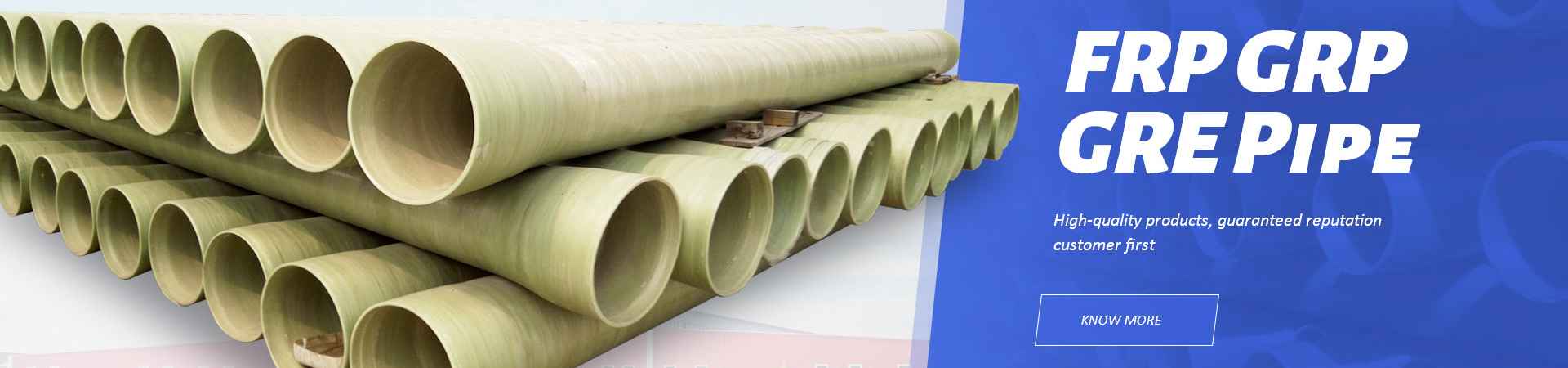

Fiberglass reinforced plastic (FRP) pipes are widely used in industries like water supply, chemical processing, wastewater treatment, and irrigation because of their corrosion resistance, lightweight structure, and long service life. But what gives FRP pipes their exceptional strength? The answer lies in the filament winding process—a specialized manufacturing technique that ensures durability and consistency.
In this guide, we’ll break down the filament winding process for FRP pipes, explain how it works, and highlight why it is the preferred method for producing high-quality fiberglass pipes.
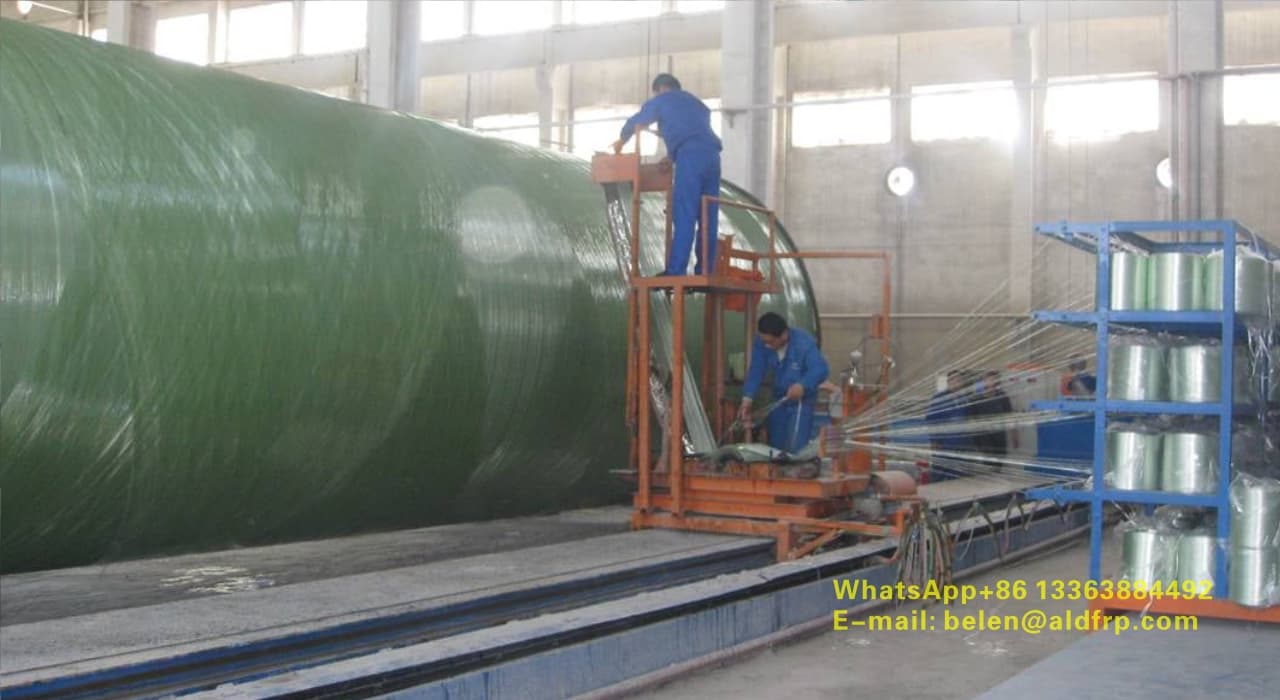
The filament winding process is a method used to create cylindrical composite structures, such as FRP pipes, by winding continuous fiberglass strands impregnated with resin onto a rotating mandrel. This process allows precise control over fiber orientation, pipe wall thickness, and mechanical properties.
Unlike traditional pipe manufacturing, which relies on molds or extrusion, filament winding builds the pipe layer by layer. Each layer contributes to the overall strength, pressure resistance, and durability of the finished pipe.
Filament winding offers several advantages that make it ideal for FRP pipe production:
High Strength-to-Weight Ratio – Properly wound fibers provide excellent structural integrity while keeping the pipe lightweight.
Customizable Design – Manufacturers can adjust fiber angles, number of layers, and resin types to meet specific project requirements.
Uniform Quality – Computer-controlled winding ensures consistent thickness and mechanical performance along the entire pipe.
Corrosion Resistance – Fiberglass and resin form a non-corrosive composite suitable for aggressive chemical environments.
Flexibility in Diameter and Length – Pipes of different sizes can be produced without changing the core equipment significantly.
These benefits explain why filament winding is the standard for producing high-performance FRP pipes.
The filament winding process relies on three main materials:
Fiberglass – The reinforcement material, typically supplied as continuous rovings or mats. It provides tensile strength and structural support.
Resin – Common thermosetting resins include polyester, vinyl ester, and epoxy. The resin binds fibers together and protects against corrosion and chemical attack.
Fillers (Optional) – Materials like quartz sand or calcium carbonate may be added to increase stiffness or reduce production costs.
The combination of these materials ensures a strong, durable, and corrosion-resistant pipe.
Let’s explore each stage of the filament winding process in detail:
A mandrel acts as the mold for the pipe. Before production:
The mandrel is cleaned and coated with a release agent to prevent sticking.
The mandrel size determines the internal diameter of the finished pipe.
Mandrels can be fixed or collapsible, depending on the pipe diameter and production scale.
Proper mandrel preparation ensures smooth inner surfaces and easy demolding after curing.
Fiberglass fibers are passed through a resin bath to ensure complete saturation.
Fibers must be fully coated with resin to guarantee proper bonding.
Resin can be mixed with hardeners or additives depending on the application.
Uniform impregnation ensures the final pipe has consistent strength and chemical resistance.
The filament winding machine rotates the mandrel while the resin-impregnated fibers are wound around it.
Hoop Winding – Fibers wrap around the mandrel in circular patterns, improving resistance to internal pressure.
Helical Winding – Fibers are laid diagonally along the pipe axis, enhancing axial strength and flexibility.
Polar Winding (Optional) – Fibers cover the pipe ends for additional reinforcement.
Modern winding machines are computer-controlled, allowing precise angles and layer thicknesses for optimal mechanical performance.
Multiple layers are applied to achieve the desired wall thickness and structural strength.
Large-diameter pipes may include a sand-filled or mortar layer between fiberglass layers to increase stiffness and reduce material costs.
The number of layers is designed based on pressure rating, pipe diameter, and intended application.
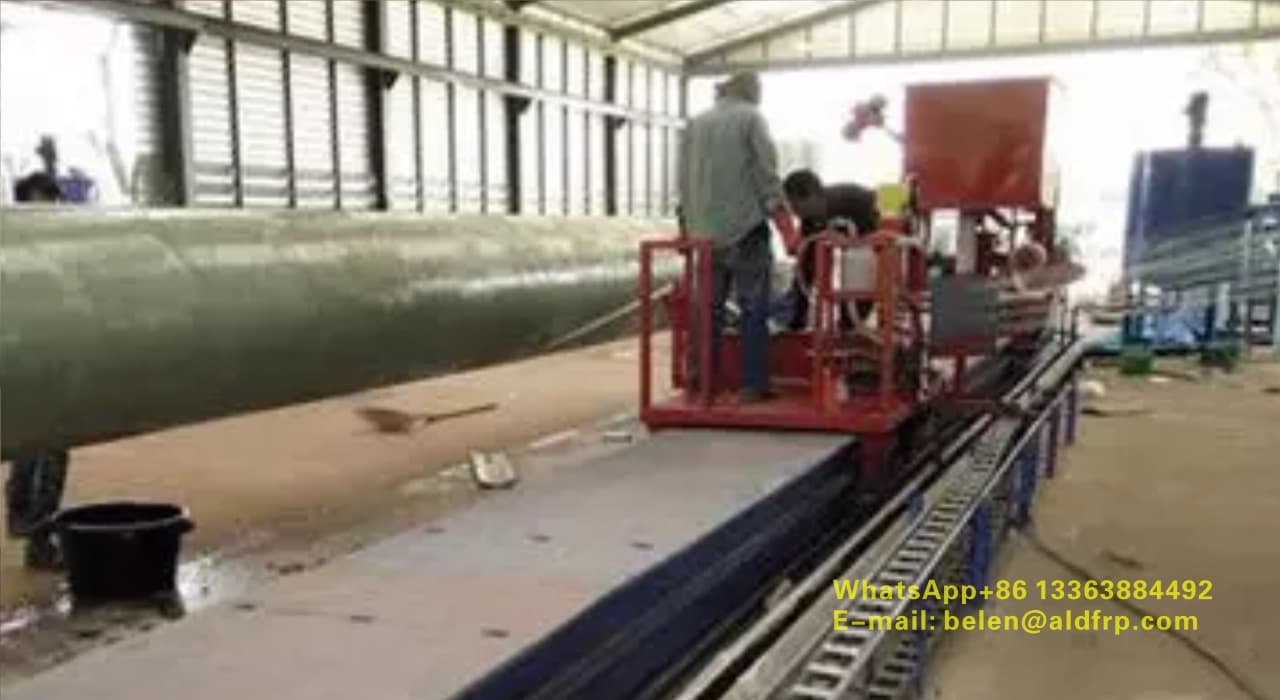
Once winding is complete, the pipe must undergo curing to harden the resin and stabilize the structure.
Natural Curing – Room temperature, slow but effective.
Oven Curing – Controlled heat accelerates the resin reaction.
Infrared Heating – Provides precise temperature control for consistent curing.
Proper curing is essential for achieving full mechanical properties and chemical resistance.
After curing, the finished pipe is removed from the mandrel.
Hydraulic or mechanical systems may be used to prevent damage.
Release agents applied at the start make this step smoother.
The pipe is now ready for trimming, inspection, and testing.
The final steps include:
Cutting the pipe to required lengths
Smoothing pipe ends
Performing hydrostatic pressure tests and dimensional checks
Verifying surface quality
These steps ensure the pipe meets industry standards and project specifications.
The filament winding process provides several benefits for FRP pipe manufacturing:
Precision – Computer-controlled winding ensures uniform wall thickness and fiber placement.
Customization – Fiber angles, resin types, and layer sequences can be adjusted for different pressures and environments.
High Efficiency – Automated winding machines produce pipes faster than manual methods.
Long-Term Durability – Correctly wound and cured FRP pipes resist corrosion, chemical attack, and mechanical stress.
Pipes manufactured using the filament winding process are widely used in:
Water Supply and Distribution – High-pressure and corrosion-resistant pipelines
Wastewater Treatment – Resistant to acids, sludge, and chemical attack
Chemical Industry – Safe for transporting corrosive fluids
Irrigation and Agricultural Systems – Lightweight and easy to install
Industrial Cooling Systems – Resistant to moisture and chemical corrosion
This versatility makes filament-wound FRP pipes a preferred choice in modern infrastructure projects.
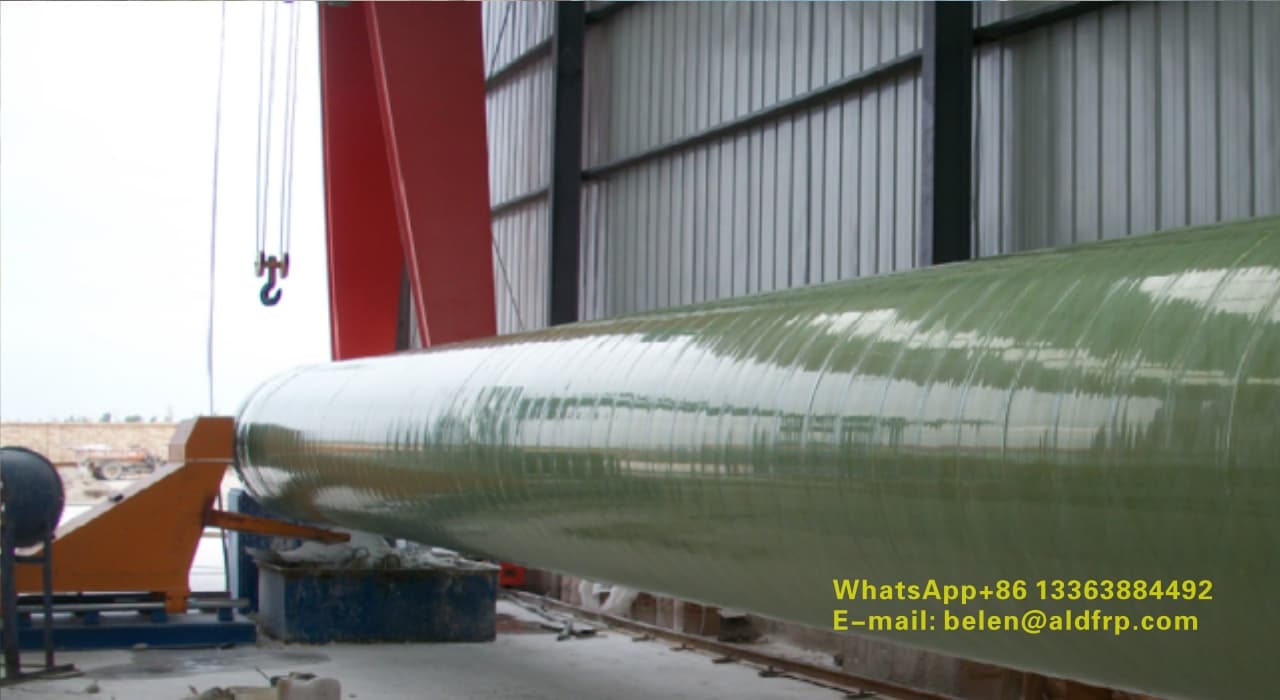
The filament winding process for FRP pipes is a sophisticated manufacturing method that ensures durability, consistency, and long service life. By carefully controlling fiber placement, resin saturation, and curing, manufacturers produce pipes that are lightweight, corrosion-resistant, and strong enough for demanding industrial applications.
For engineers, project managers, and plant operators, understanding this process helps explain why FRP pipes have become a standard solution in water, wastewater, chemical, and industrial piping systems.