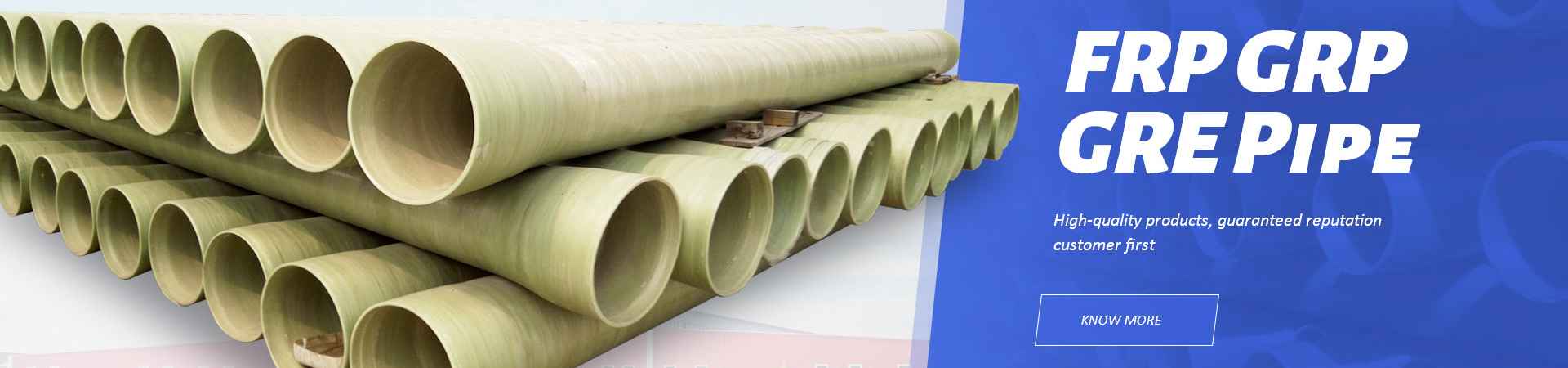

Fiberglass reinforced plastic (FRP) pipes are becoming increasingly popular across industries such as water supply, wastewater treatment, chemical processing, and agriculture. Their durability, corrosion resistance, and long service life make them a cost-effective alternative to steel and concrete pipes. However, producing high-quality FRP pipes requires the right manufacturing equipment. Choosing the wrong machine can result in inconsistent quality, increased maintenance costs, and wasted investment.
In this guide, we’ll explain how to choose the right FRP pipe manufacturing equipment, key considerations for different production needs, and tips for maximizing efficiency and profitability.
Before selecting equipment, it’s important to understand how FRP pipes are manufactured. The filament winding process is the most widely used method for FRP pipe production.
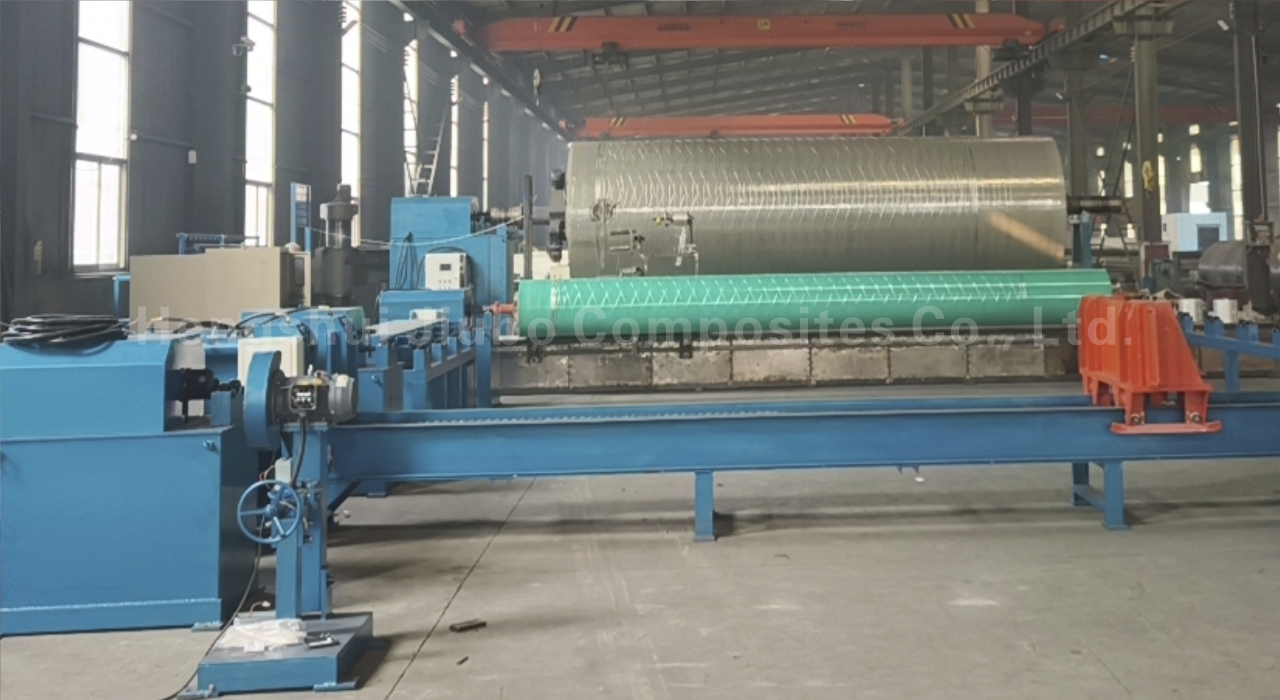
Fiber impregnation with resin
Winding fibers around a mandrel
Building up multiple layers for strength
Curing the resin
Demolding, trimming, and finishing
Pressure testing and quality inspection
Different machines are responsible for each step, and selecting equipment that can handle your desired pipe sizes, production capacity, and material types is crucial.
The first step in choosing FRP pipe manufacturing equipment is to clearly define your production requirements.
Ask yourself:
What pipe diameters will I produce? (Small, medium, or large diameter?)
What pipe lengths do I need?
What is the target production capacity per day or per month?
Will I produce pipes with mortar or sand-filled layers?
What resin types will I use (polyester, vinyl ester, epoxy)?
Answering these questions helps determine the type and size of machinery you need. For example, small-diameter pipe production may require a compact filament winding machine, while large-diameter pipes may need a heavy-duty mandrel system and larger winding carriage.
When selecting equipment, it’s important to know the main components of a complete FRP pipe production line.
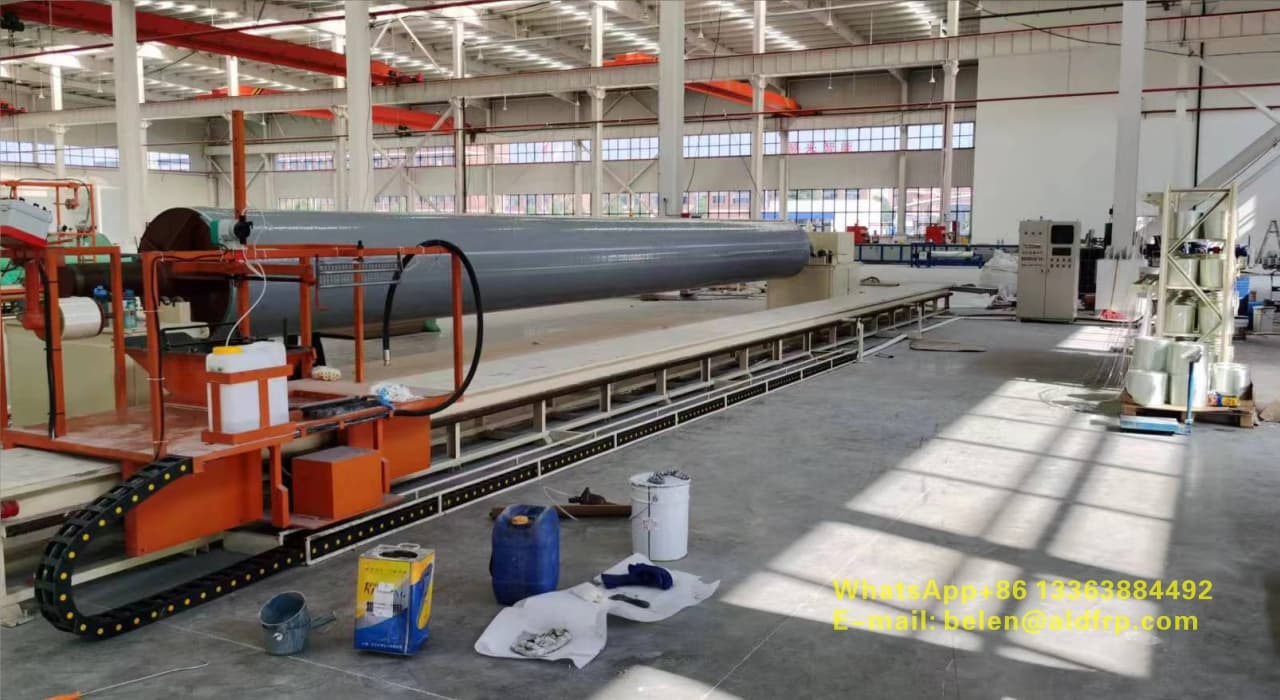
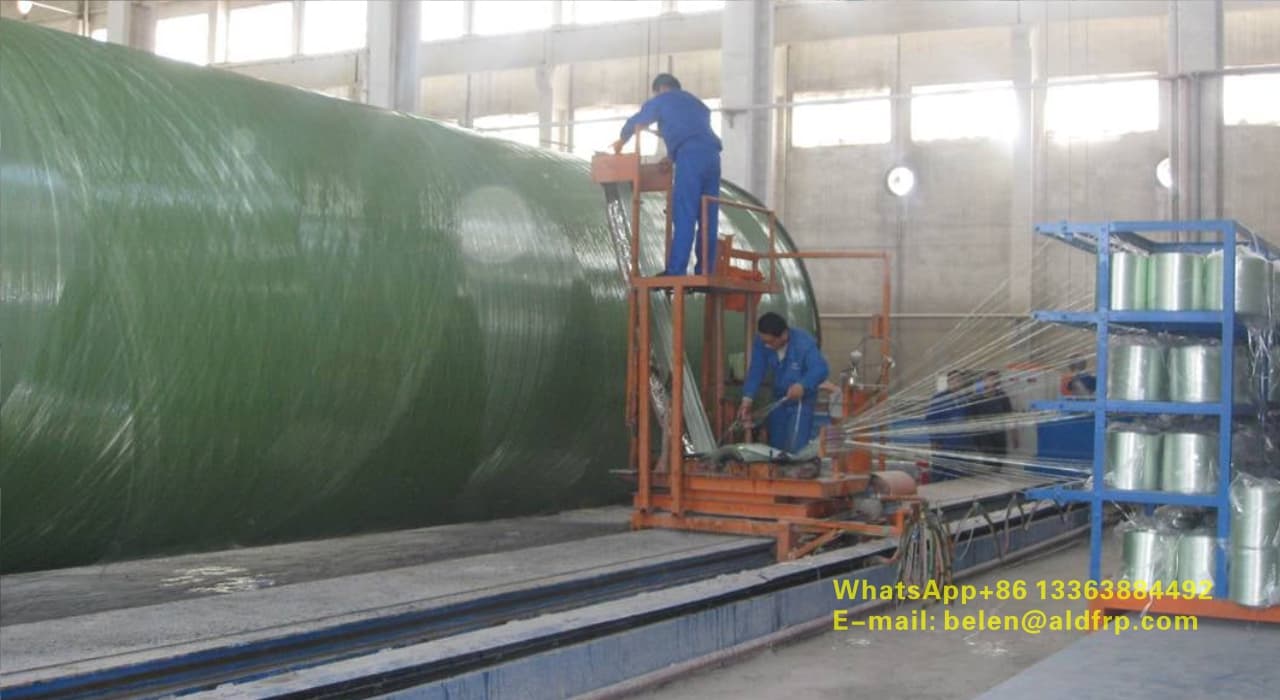
The heart of the production line
Winds resin-impregnated fiberglass onto a rotating mandrel
Controls fiber angle, tension, and layer thickness
Modern machines feature computer-controlled PLC systems for precision
Tip: Choose a winding machine with flexibility in diameter and length adjustment to accommodate different project requirements.
Determines the internal diameter of the pipe
Can be fixed or collapsible depending on production needs
Requires high strength to withstand winding and curing forces
For large-diameter or long pipes, a robust mandrel system ensures structural stability during production.
Prepares and delivers resin to the winding machine
Controls resin flow and mixture ratios
Supports different resin types and curing agents
Accurate resin control is critical for consistent pipe strength and chemical resistance.
Adds stiffness to large-diameter FRP pipes
Reduces material cost without compromising strength
Integrated with the winding machine for efficiency
Hardens the resin and stabilizes the pipe structure
Methods include natural room-temperature curing, electric heating, or infrared heating
Temperature control ensures uniform mechanical properties
Removes pipes from the mandrel safely
Cuts pipe ends to the required length
Smooths surfaces and repairs minor imperfections
Ensures pipes meet pressure ratings and quality standards
Detects leaks and verifies structural integrity
Modern FRP pipe production lines rely on automation and computer control systems.
Benefits of automated equipment include:
Consistent fiber placement and wall thickness
Faster production speeds
Reduced labor costs
Easier monitoring and adjustments
When choosing equipment, consider:
PLC or CNC control systems
User-friendly interface for operators
Adjustable parameters for fiber tension, winding speed, and resin supply
Automation is particularly important for large-scale production or high-value pipes used in critical infrastructure.
Your production capacity determines the size and speed of the machines you need.
Small-scale production: 1–2 machines producing low-volume pipes
Medium-scale: multiple winding machines with automated curing systems
Large-scale: fully integrated production lines with continuous fiber supply, large mandrels, and hydraulic demolding systems
Always match equipment capacity to your projected demand. Over-investing in machinery can tie up capital unnecessarily, while under-equipped lines can lead to production bottlenecks.
Ensure the equipment you choose is compatible with the materials you plan to use:
Resin type (polyester, epoxy, vinyl ester)
Fiber type (E-glass, S-glass, or hybrid)
Optional fillers like sand or quartz
Some older winding machines may not handle high-viscosity resins or large-diameter pipes efficiently. Confirm compatibility to avoid production issues.
Reliable equipment requires ongoing maintenance. When selecting FRP pipe manufacturing equipment, consider:
Availability of spare parts
Manufacturer support and service
Ease of maintenance for moving parts and resin systems
Training for operators
A well-supported machine reduces downtime and ensures consistent product quality.
While initial investment cost is important, total cost of ownership should be your focus.
Consider:
Upfront equipment cost
Installation and setup expenses
Energy consumption
Labor requirements
Long-term maintenance and spare parts
Sometimes a slightly higher investment in automated, reliable equipment pays off with lower operating costs and higher-quality pipes.
Your production needs may grow over time. Choose equipment that can adapt to:
Larger pipe diameters or lengths
Higher production capacity
Different resin or fiber types
Additional optional layers like mortar or sand
Future-proofing your equipment ensures long-term profitability.
When selecting FRP pipe manufacturing equipment, consider:
Production requirements: pipe diameter, length, and pressure rating
Core equipment: filament winding machine, mandrel, resin system, curing and finishing machines
Automation and control for consistent quality
Production capacity and scalability
Material compatibility with fibers and resin
Maintenance, support, and spare parts availability
Budget and total cost of ownership
Flexibility for future expansion
Choosing the right equipment is critical for producing high-quality, durable FRP pipes efficiently and cost-effectively.
Investing in the right FRP pipe manufacturing equipment can determine the success of your production line. By evaluating your production needs, capacity, materials, and long-term goals, you can select machinery that delivers reliable performance, consistent quality, and profitability for years to come.