
Chemical plants generate various types of exhaust gases during production, reaction, storage, and material processing. These gas streams may contain corrosive and hazardous components such as hydrogen chloride (HCl), chlorine (Cl₂), sulfur dioxide (SO₂), ammonia (NH₃), hydrogen fluoride (HF), and acidic vapors. Without proper treatment, these emissions can damage equipment, affect workplace safety, and create environmental compliance risks.
A FRP Tail Gas Absorption Tower is one of the most reliable solutions for industrial waste gas treatment because it combines excellent corrosion resistance with efficient gas purification performance. Compared with traditional metal scrubbers, FRP (Fiberglass Reinforced Plastic) equipment provides superior resistance against acidic, alkaline, and high-humidity environments, making it ideal for continuous operation in chemical industries.
However, achieving stable treatment performance requires more than corrosion-resistant materials. Tower structure, packing selection, absorbent chemistry, gas-liquid distribution, and operating conditions all directly influence removal efficiency, energy consumption, and equipment lifespan.
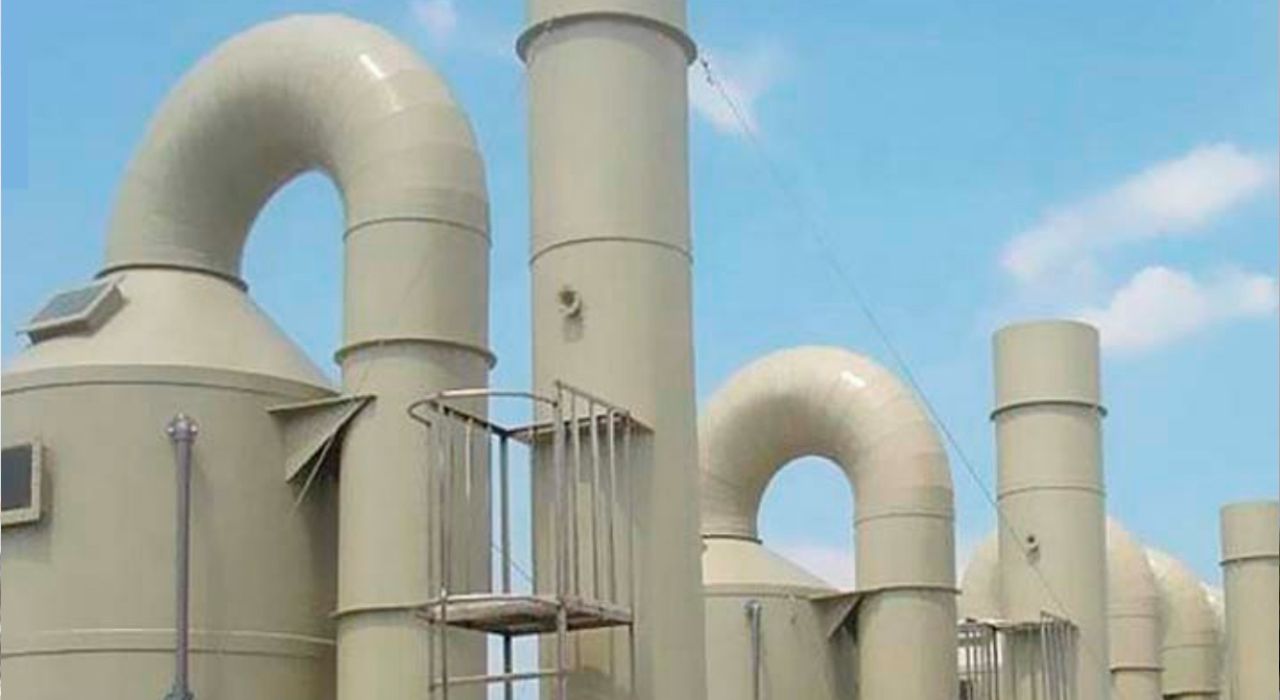
An FRP Tail Gas Absorption Tower is a vertical gas treatment system designed to remove harmful pollutants from industrial exhaust gases through gas-liquid absorption technology. It is widely applied in chemical plants, fertilizer factories, electrochemical industries, pharmaceutical production, metal processing, and other industries where corrosive gases are generated.
The basic working principle is based on gas-liquid mass transfer. Contaminated gas enters from the bottom of the tower and moves upward through the internal packing section, while absorption liquid is sprayed or distributed from the top and flows downward. During this counter-current contact process, pollutants transfer from the gas phase into the liquid phase through physical absorption and chemical reactions.
Unlike simple spray washing systems, an absorption tower uses packing materials to create a larger contact surface between gas and liquid. This increases residence time, improves reaction efficiency, and allows the system to achieve higher removal rates under continuous industrial operation.
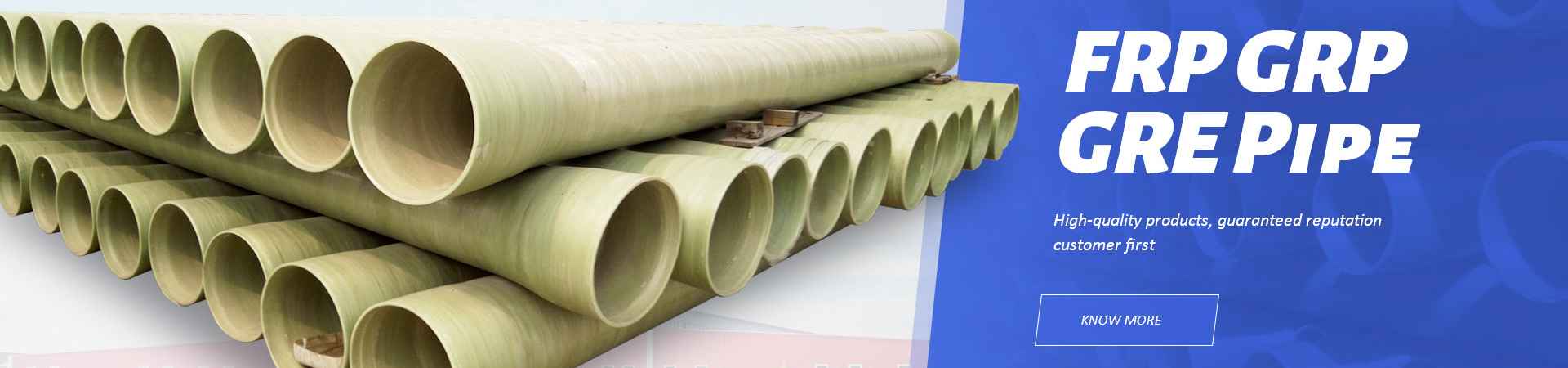
The tower body is manufactured using fiberglass reinforcement combined with corrosion-resistant resin systems. Depending on operating conditions, materials such as vinyl ester resin, epoxy resin, or chemical-resistant polyester resin can be selected to provide long-term protection against aggressive chemical environments.
For chemical plants, this material advantage is especially important because conventional steel equipment often requires protective coatings. Once coatings deteriorate due to chemical attack, corrosion can quickly reduce equipment reliability. FRP structures provide built-in corrosion resistance throughout the laminate structure, reducing maintenance frequency and extending service life.
The operation of an FRP Tail Gas Absorption Tower depends on efficient contact between contaminated gas and absorption liquid. During operation, exhaust gas enters the lower section of the tower and flows upward through the packing bed, while the absorbent solution is continuously distributed from the upper section.
The packing inside the tower creates a large surface area where gas and liquid interact. As the liquid forms a thin film on the packing surface, pollutant molecules transfer from the gas phase into the liquid phase through diffusion. Depending on the pollutant type, the absorbed components may dissolve physically or react chemically with the absorbent.
For example, HCl gas is commonly treated using alkaline solutions such as sodium hydroxide (NaOH), converting acidic gas into stable salts. Ammonia-containing gases may be treated using acidic solutions, while chlorine-containing emissions require specially selected absorption chemicals according to process requirements.
The overall efficiency of the absorption process depends on several engineering factors, including:
Gas flow velocity
Liquid circulation rate
Packing type and height
Temperature conditions
Absorbent concentration
Gas-liquid distribution uniformity
In real industrial operation, airflow is rarely perfectly uniform. Improper duct design, unstable fan operation, or uneven inlet distribution may cause channeling inside the packing section. When this happens, some areas receive excessive gas flow while others contribute less to absorption, reducing the effective treatment capacity.
Liquid distribution is equally important. Blocked spray nozzles, scaling, or unstable circulation can create uneven wetting conditions. Over time, these problems may reduce absorption efficiency and increase pressure drop across the tower.
Therefore, professional engineering design is essential to ensure stable performance throughout the equipment lifecycle.
A complete FRP Tail Gas Absorption Tower System consists of several integrated components that work together to achieve efficient waste gas treatment.
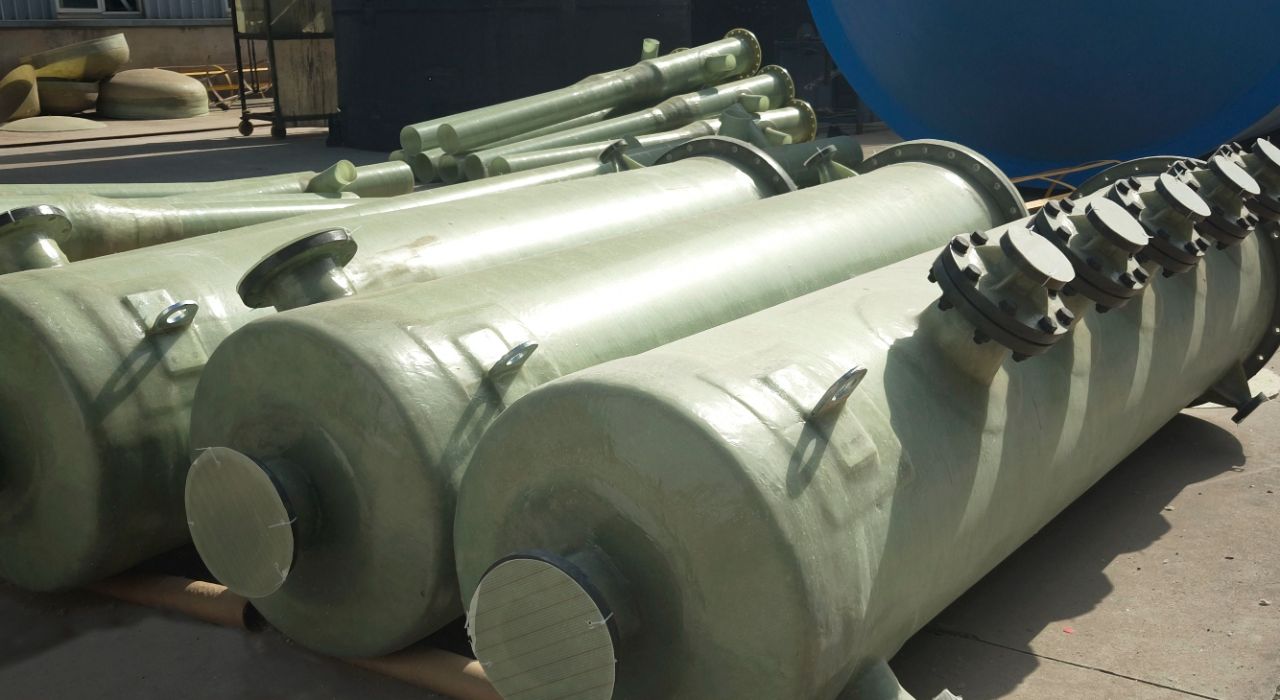
The FRP shell is the main structural body of the absorption tower. It provides mechanical strength while resisting corrosion caused by acids, alkalis, chemical vapors, and moisture.
The resin selection and laminate thickness are determined according to operating temperature, chemical concentration, pressure conditions, and expected service life. In highly corrosive applications, vinyl ester resin is commonly selected because of its excellent chemical resistance.
The packing section is the core area where gas-liquid mass transfer occurs. Packing materials increase contact surface area and improve absorption efficiency.
Different packing types can be selected depending on process requirements. Random packing, such as polypropylene Pall rings and cascade rings, provides good fouling resistance and is suitable for industrial gases containing impurities. Structured packing offers higher efficiency and lower pressure drop for applications requiring strict emission control.
The liquid distribution system ensures uniform spraying throughout the packing area. Proper distribution allows the entire packing surface to remain active, improving pollutant removal efficiency.
Poor distribution can create dry zones and reduce the effective contact area between gas and liquid phases.
The mist eliminator removes fine liquid droplets carried by treated gas before discharge. This prevents secondary emissions and protects downstream equipment such as fans, ducts, and exhaust stacks from corrosion.
The typical Industrial Waste Gas Treatment Process using an FRP absorption tower includes several key stages.
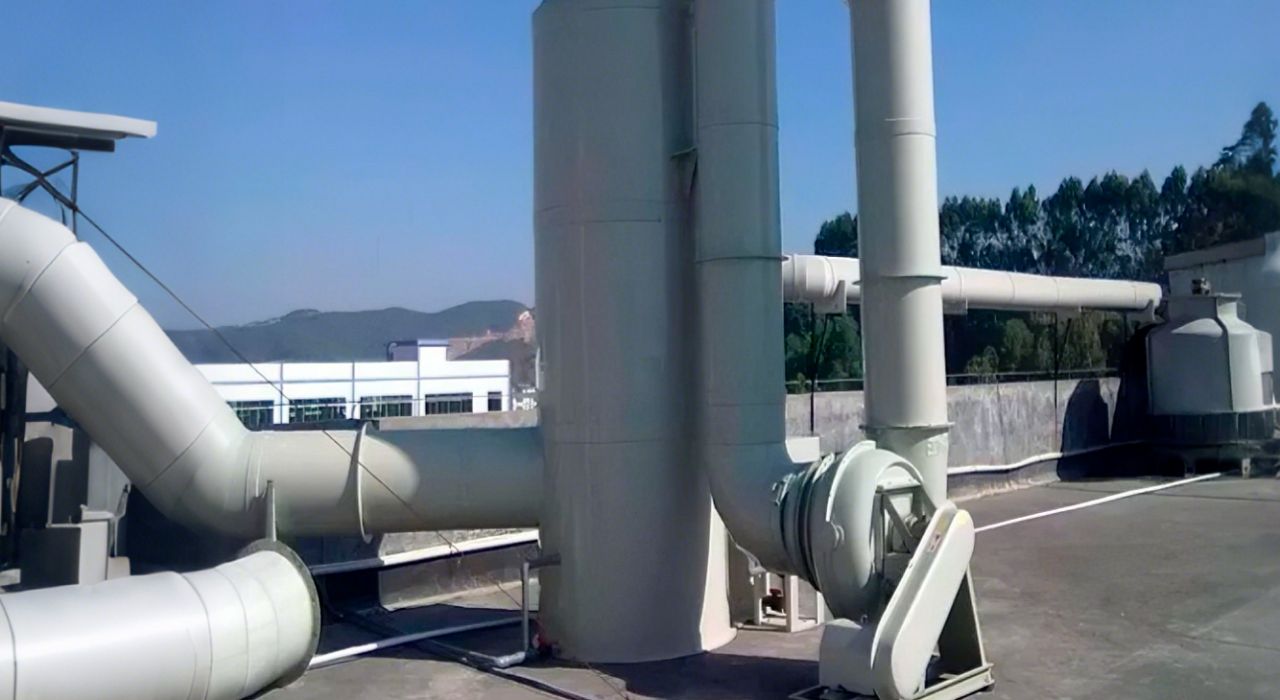
First, exhaust gas generated from production equipment is collected through duct systems and transported to the absorption tower. Depending on the application, pre-treatment equipment such as filters, cooling systems, or dust removal devices may be installed to reduce contamination loading.
After entering the tower, polluted gas moves upward through the packing section while absorbent liquid flows downward. The pollutants are transferred into the liquid phase and neutralized through chemical reactions.
The treated gas then passes through the mist eliminator before being released through the exhaust stack. The absorption liquid is collected in the circulation tank and continuously monitored. Chemical dosing systems automatically adjust solution concentration to maintain stable treatment performance.
For complex emissions containing multiple pollutants, multi-stage absorption systems can be applied. Different absorption chemicals can be used in each stage to achieve higher purification efficiency.
Because of its excellent corrosion resistance and stable performance, the FRP Tail Gas Absorption Tower is widely used in many chemical industries.
In hydrochloric acid production plants, absorption towers are used for HCl gas recovery and emission control. Since hydrogen chloride is highly corrosive, FRP equipment provides reliable long-term operation compared with traditional metal systems.
Sulfuric acid plants use absorption systems to control acidic gases and acid mist emissions. The corrosion-resistant properties of FRP make it suitable for continuous operation under strong acidic conditions.
In chlor-alkali industries, FRP absorption towers help control chlorine emissions and protect workers from hazardous gas exposure. Fertilizer plants also use these systems for ammonia removal and chemical gas purification.
Other applications include:
Pharmaceutical production
Fine chemical manufacturing
Electroplating exhaust treatment
Metal pickling processes
Wastewater treatment odor control
Although each industry has different gas compositions, the main objective remains the same: achieving reliable pollutant removal while minimizing operating costs.
Proper design is the key factor determining absorption tower performance. Engineers must evaluate gas composition, pollutant concentration, temperature, humidity, airflow rate, and operating conditions before selecting the correct system configuration.
Packing selection should balance efficiency, pressure drop, and fouling resistance. High-efficiency packing may improve removal performance, but it may also require cleaner gas conditions to avoid blockage.
Material selection is equally important. The resin system must match the chemical environment to ensure long-term corrosion resistance. In addition, structural calculations should consider mechanical stress, wind load, temperature changes, and continuous operation requirements.
Modern FRP absorption systems increasingly use automatic monitoring technologies to control pH value, liquid circulation, pressure drop, and exhaust concentration, improving stability and reducing chemical consumption.
Although FRP materials provide excellent corrosion resistance, regular maintenance is still necessary to maintain high treatment efficiency.
Routine inspection should include packing condition, spray nozzles, circulation pumps, mist eliminators, and chemical dosing systems. Increasing pressure drop often indicates packing fouling or blockage, while unstable liquid flow may indicate distribution problems.
Maintaining proper absorbent concentration and cleaning internal components regularly can significantly extend equipment life and prevent unexpected shutdowns.
An FRP Tail Gas Absorption Tower for Chemical Plants is a proven solution for modern industrial waste gas treatment. By combining corrosion-resistant FRP materials with efficient gas-liquid absorption technology, these systems provide reliable control of acidic, alkaline, and chemically aggressive emissions.
Successful operation depends on proper engineering design, suitable packing selection, effective liquid distribution, and professional maintenance management. When these factors are optimized, FRP absorption towers can deliver high removal efficiency, long service life, lower maintenance costs, and stable environmental compliance.
For chemical manufacturers facing increasingly strict emission requirements, an FRP Tail Gas Absorption Tower provides a practical and reliable approach to achieving safer production and sustainable industrial operation.