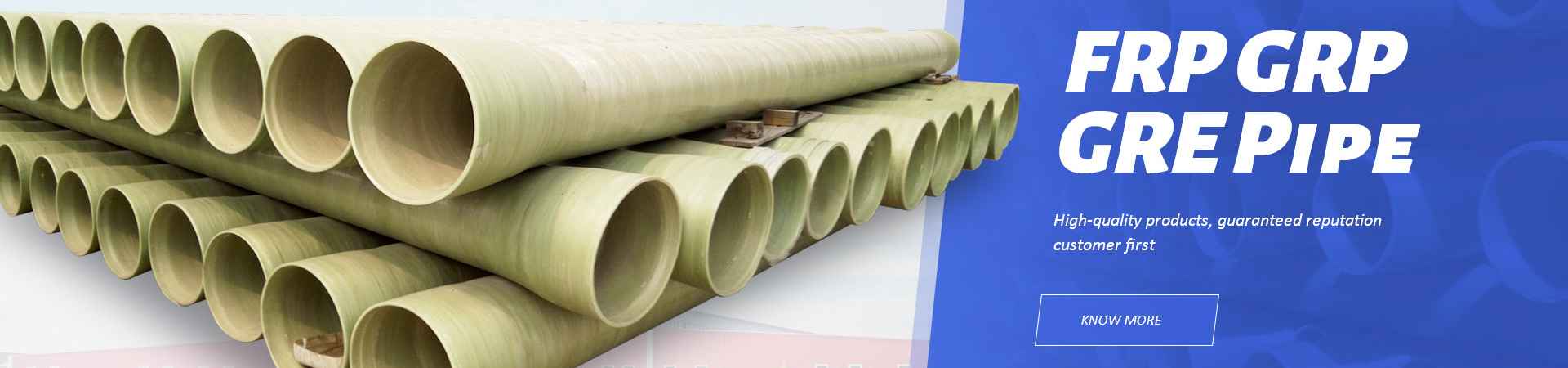

In modern industries, safe and reliable liquid storage is essential for smooth operations. From chemical processing plants to water treatment facilities, storage tanks play a critical role in handling liquids, chemicals, and industrial fluids. Among the many storage options available today, the FRP storage tank has become one of the most popular choices due to its durability, corrosion resistance, and long service life.
Fiberglass reinforced plastic (FRP) tanks offer several advantages over traditional materials such as steel or concrete. They are lightweight, highly resistant to corrosion, and require minimal maintenance. Because of these benefits, industries around the world are increasingly adopting FRP storage tanks for various applications.
In this article, we will explore what an FRP storage tank is, how it is manufactured, its advantages, common applications, and important factors to consider when choosing one.
An FRP storage tank is a container made from fiberglass reinforced plastic, a composite material created by combining glass fibers with resin. The fiberglass provides structural strength, while the resin acts as a protective layer that resists chemical corrosion and environmental damage.
This combination results in a tank that is both strong and lightweight. Unlike metal tanks, FRP tanks do not rust, making them ideal for storing corrosive liquids and chemicals.
FRP storage tanks are commonly used to store materials such as:
Industrial chemicals
Acids and alkalis
Water and wastewater
Liquid fertilizers
Food-grade liquids
Process liquids in manufacturing plants
Because the material properties can be customized, FRP tanks can be designed to meet the specific needs of different industries.
The production of a high-quality FRP storage tank involves several advanced manufacturing processes designed to ensure strength and durability.
One of the most common manufacturing methods is the filament winding process. During this process, fiberglass fibers are soaked in resin and then wound around a rotating mold or mandrel.
The fibers are applied in precise patterns and angles to create a strong structural wall. Layer by layer, the tank wall is built until the desired thickness and strength are achieved.
Filament winding offers several advantages:
Consistent wall thickness
High structural strength
Efficient production
Excellent quality control
Because of these benefits, filament winding is widely used for manufacturing large FRP tanks.
Another manufacturing method used for smaller or customized tanks is the hand lay-up process. In this method, fiberglass mats and resin are manually applied to a mold.
While this method offers flexibility for custom designs, it is generally slower than automated filament winding.
After the fiberglass layers are applied, the tank undergoes a curing process. During curing, the resin hardens and forms a strong composite structure.
Once curing is complete, the tank is removed from the mold and finished with additional components such as nozzles, flanges, manholes, and support structures.
Many industries choose FRP storage tank solutions because of the numerous advantages they offer.
One of the most important benefits of FRP tanks is their resistance to corrosion. Unlike steel tanks, which may rust when exposed to chemicals or moisture, FRP tanks remain stable in aggressive chemical environments.
This makes them ideal for chemical plants, wastewater treatment facilities, and fertilizer production plants.
FRP tanks are much lighter than metal or concrete tanks. This lightweight design simplifies transportation and installation.
In many cases, FRP tanks can be installed more quickly and with less heavy equipment compared to traditional tanks.
Another advantage of an FRP storage tank is its long lifespan. With proper installation and maintenance, FRP tanks can last 20 to 30 years or even longer.
Their resistance to corrosion and environmental degradation contributes to their durability.
FRP tanks require minimal maintenance compared with steel tanks. Since the material does not rust or corrode, there is no need for regular repainting or anti-corrosion treatments.
This reduces maintenance costs over the tank’s lifetime.
FRP tanks can be customized to meet specific project requirements. Manufacturers can adjust tank dimensions, wall thickness, resin types, and structural reinforcements according to customer needs.
This flexibility allows engineers to design tanks for a wide range of industrial applications.
Depending on the application, several types of FRP storage tank designs are available.
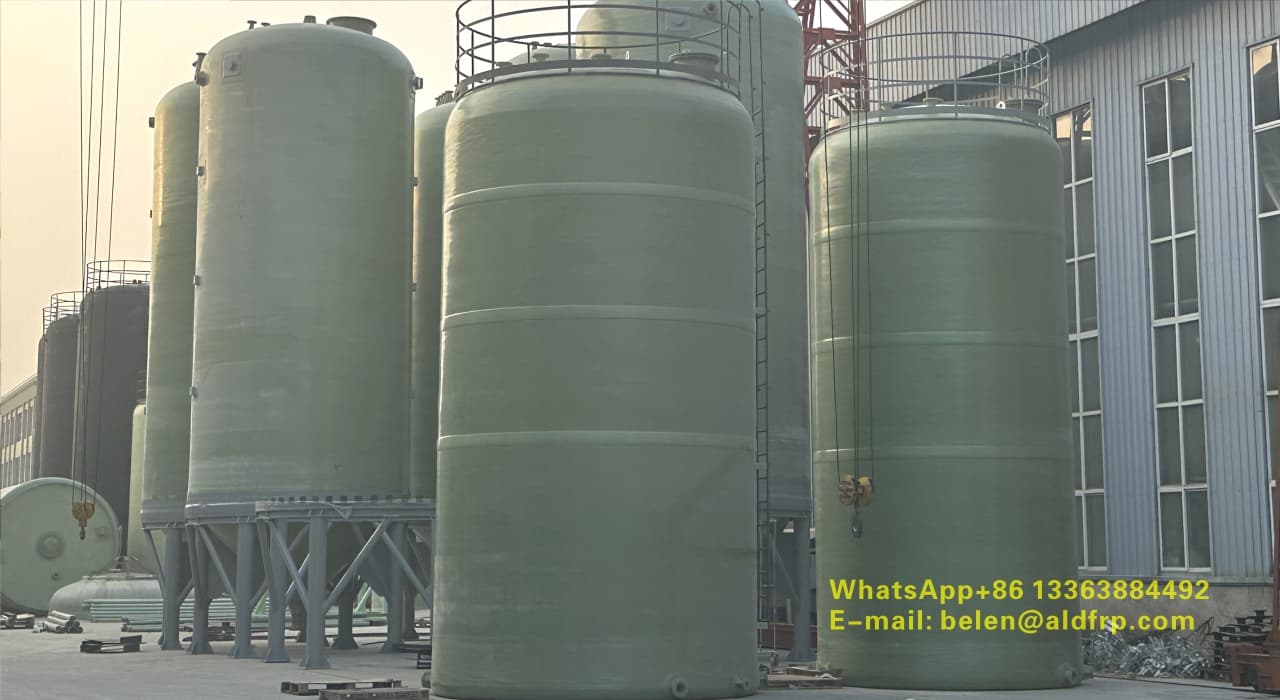
Vertical tanks are the most common type used in industrial facilities. They provide large storage capacity while occupying minimal floor space.
These tanks are widely used for chemical storage and water treatment systems.
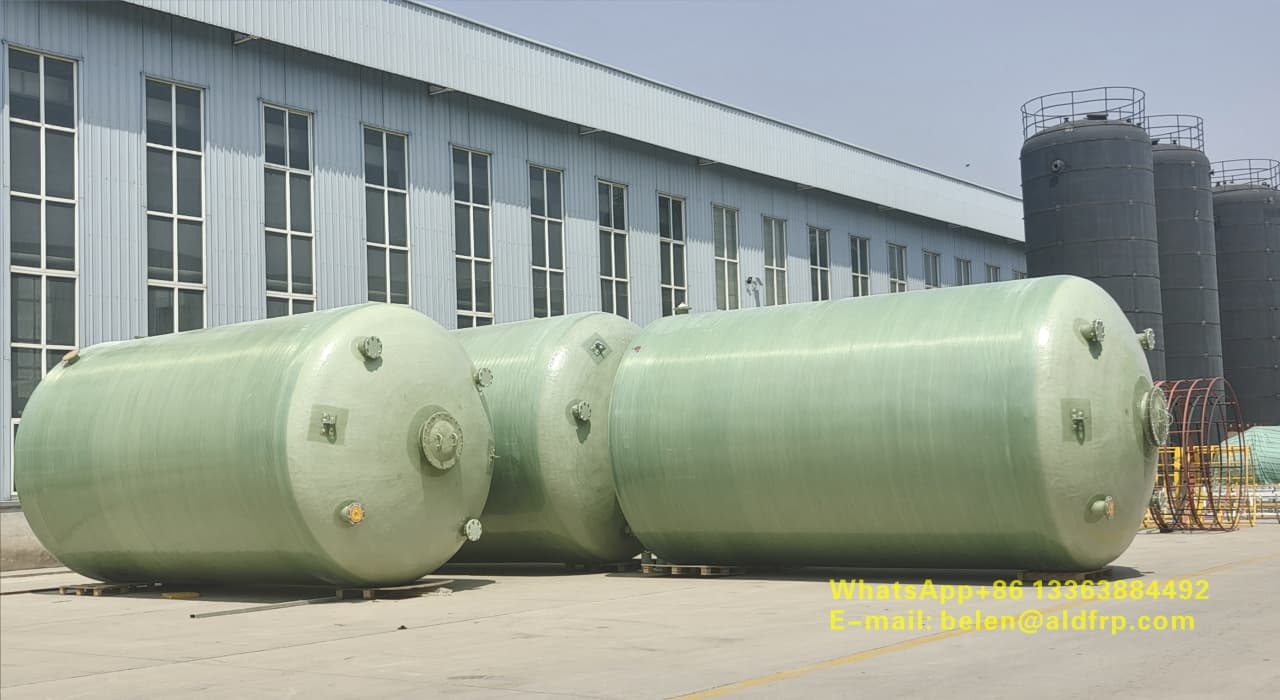
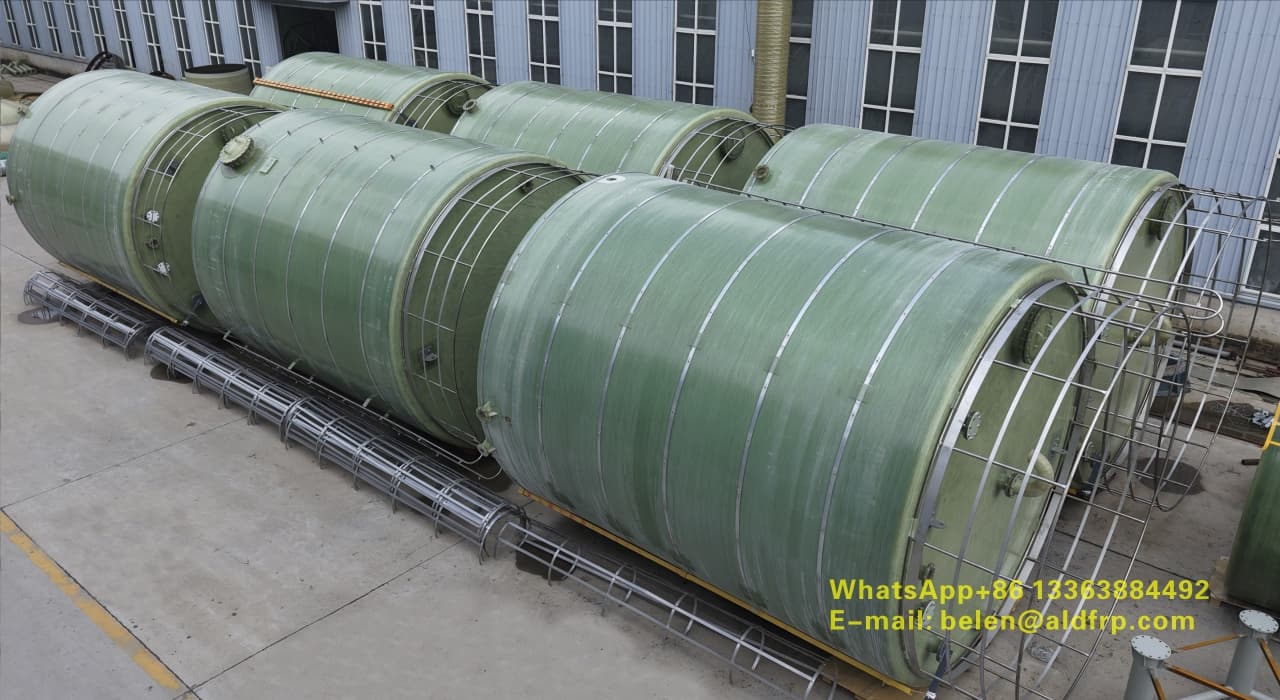
Horizontal tanks are typically installed on support frames or transport platforms. They are often used in situations where height restrictions exist.
Underground tanks are designed to withstand soil pressure and environmental conditions when installed below ground level.
They are commonly used for fuel or chemical storage in facilities where space is limited.
Double-wall FRP tanks provide an additional protective layer for storing hazardous materials. The outer wall acts as secondary containment in case of leaks.
Because of their durability and corrosion resistance, FRP storage tank systems are used in many industries.
Chemical plants use FRP tanks to store acids, solvents, and other corrosive substances.
FRP tanks are commonly used to store water, sludge, and treatment chemicals in municipal and industrial water treatment systems.
Liquid fertilizers and agricultural chemicals are often stored in FRP tanks because of their resistance to corrosion.
Certain FRP tanks can be designed for food-grade applications such as storing water or non-corrosive liquids used in production.
When selecting an FRP storage tank, several factors should be carefully considered.
The resin system used in the tank must be compatible with the stored liquid to ensure long-term durability.
The tank should be designed to meet the required storage volume and operational needs.
Environmental conditions such as temperature, wind load, and seismic activity should be considered during the design process.
Reliable manufacturers typically follow international standards and provide certifications that verify product quality.
As industries continue to demand corrosion-resistant materials, the market for FRP storage tank solutions is expected to grow.
Modern manufacturers are adopting advanced technologies such as automated filament winding systems and improved resin formulations. These innovations help produce tanks that are stronger, more durable, and more efficient.
In addition, digital design tools allow engineers to optimize tank structures for specific applications.
The FRP storage tank has become an essential piece of equipment for industries that require safe and reliable liquid storage. With advantages such as corrosion resistance, lightweight construction, long service life, and low maintenance requirements, FRP tanks offer a highly effective alternative to traditional steel or concrete tanks.
From chemical processing plants to wastewater treatment facilities and agricultural applications, FRP storage tanks provide flexible and durable solutions for modern industrial operations.
By choosing the right design and working with a reliable manufacturer, businesses can benefit from the long-term performance and efficiency that FRP storage tanks provide.