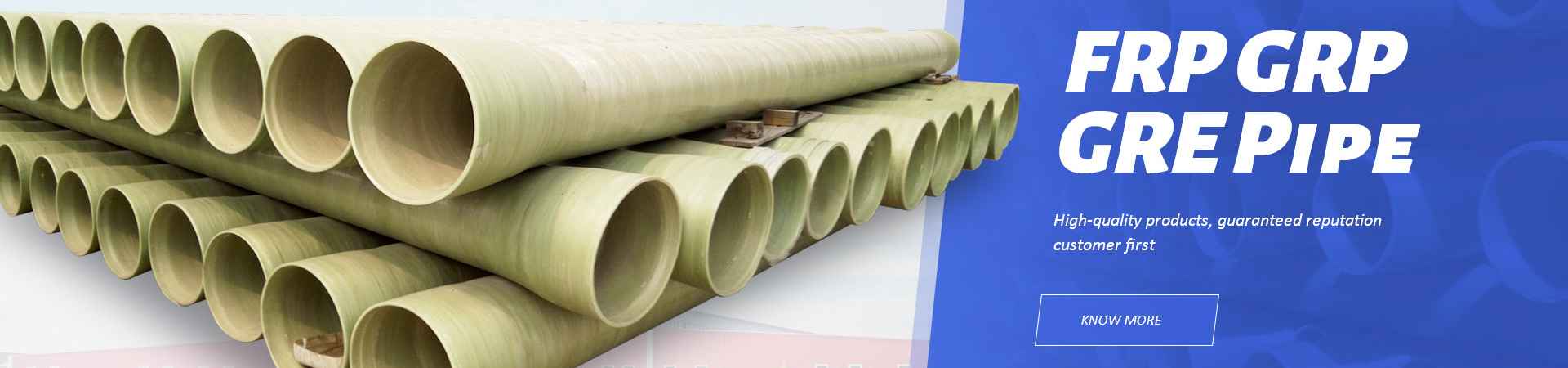

If you’re in the composite industry, you already know one thing: pipe quality depends heavily on the manufacturing process. It’s not just about raw materials — it’s about precision, consistency, and control. That’s exactly why more manufacturers are investing in a FRP pipe filament winding machine.
Whether you’re producing pipes for water supply, chemical transport, irrigation systems, or industrial applications, the right equipment can completely change your production efficiency and product quality. In this article, we’ll break down what a FRP pipe filament winding machine does, why it matters, and how to choose the right one for your factory.
Let’s keep it practical and straightforward.
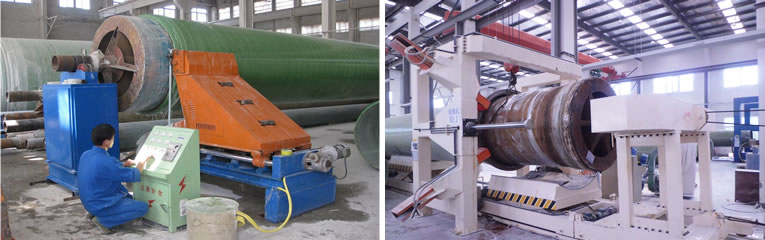
A FRP pipe filament winding machine is specialized equipment used to manufacture fiberglass reinforced plastic (FRP) pipes through a controlled filament winding process.
Here’s how it works in simple terms:
Continuous glass fibers are impregnated with resin.
The resin-coated fibers are wound onto a rotating steel mandrel.
The winding angle is precisely controlled.
The pipe is cured and then removed from the mandrel.
This automated process ensures consistent wall thickness, high structural strength, and repeatable quality.
Instead of relying on manual lay-up methods, a FRP pipe filament winding machine allows manufacturers to produce pipes that meet strict international standards with high efficiency.
Before we dive deeper into the machine itself, it’s important to understand why filament winding has become the preferred manufacturing method.
Strength in composite pipes comes from fiber alignment. A FRP pipe filament winding machine controls winding angles (such as hoop winding and helical winding) with extreme accuracy.
This means:
Better pressure resistance
Improved axial strength
Optimized structural performance
Manual processes simply can’t match this level of consistency.
Uneven thickness leads to weak spots. Weak spots lead to failures.
With automated control systems, a FRP pipe filament winding machine ensures even resin distribution and uniform layering. That translates to safer and more durable pipes.
Time is money in manufacturing.
Modern filament winding machines are designed for continuous production. Depending on the configuration, one line can produce multiple pipe sizes with minimal changeover time.
That means:
Higher output
Lower labor costs
Reduced production waste
To understand its value, let’s look at the main components.
The mandrel determines pipe diameter and surface quality. High-precision mandrels ensure smooth inner walls and dimensional accuracy.
This system controls resin content and ensures proper fiber impregnation. Stable resin ratios are essential for mechanical strength.
The carriage moves along the mandrel, laying fibers at programmed angles. Advanced CNC systems make the process fully automated.
Modern machines use PLC or CNC systems with touchscreen interfaces. Operators can set parameters like:
Pipe diameter
Wall thickness
Winding angle
Production speed
With a reliable FRP pipe filament winding machine, everything is digitally controlled, reducing human error.
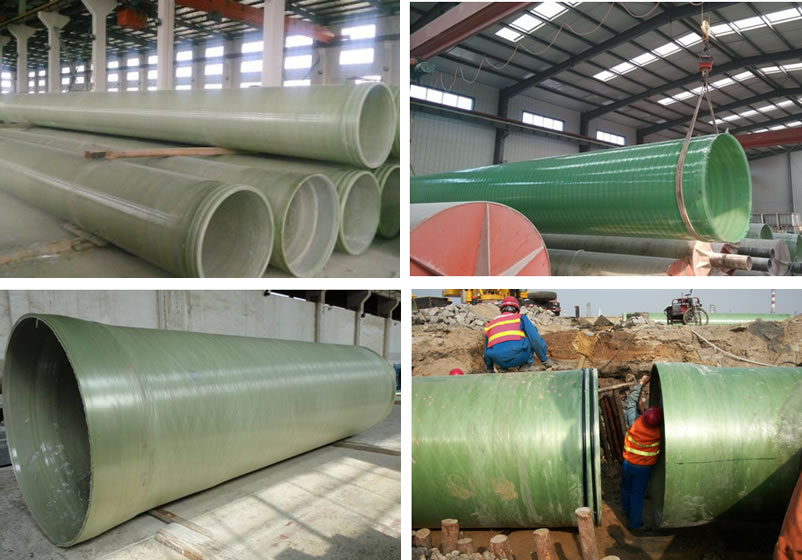
So who really needs this equipment?
Municipal infrastructure projects demand long-lasting, corrosion-resistant pipes. Filament wound FRP pipes meet these needs perfectly.
Chemical plants transport corrosive media daily. Pipes must resist acids, alkalis, and high temperatures. High-quality production using a FRP pipe filament winding machine ensures durability in these harsh environments.
Large-diameter pipes are often required for irrigation systems. Automated winding ensures strength without unnecessary material waste.
Composite pipes are increasingly used for offshore and onshore applications due to their corrosion resistance and lightweight properties.
One of the biggest advantages of investing in a FRP pipe filament winding machine is flexibility.
A well-designed production line can manufacture pipes with:
Diameters ranging from DN50 to DN4000 (or customized)
Various pressure ratings
Different resin systems (epoxy, vinyl ester, polyester)
Sand-filled core structures for stiffness
Special corrosion-resistant liners
If your business plans to expand product offerings, having a versatile machine gives you a serious competitive advantage.
Let’s be honest — manual production limits scalability.
A modern FRP pipe filament winding machine offers:
Automatic tension control
Programmable winding patterns
Real-time monitoring
Data recording for quality traceability
This level of automation means you can train operators faster and maintain stable production standards.
It also makes certification processes smoother because production parameters are documented and repeatable.
Another major concern for manufacturers today is operational cost.
New-generation machines are designed to:
Reduce resin waste
Optimize fiber usage
Lower energy consumption
Minimize maintenance downtime
While the initial investment in a FRP pipe filament winding machine may seem significant, the long-term savings in labor and material costs often justify the purchase.
In many cases, manufacturers see ROI within a few years.
Not all machines are built the same. If you’re planning to invest, here are some key factors to consider:
Choose a supplier with real production experience, not just equipment assembly capability.
Your market may require specific pipe standards. The machine should match your product goals.
A stable PLC or CNC system ensures smooth operation and fewer breakdowns.
Installation guidance, operator training, and remote technical support are critical.
Can the machine adapt to larger diameters or higher pressure classes later?
A reliable FRP pipe filament winding machine supplier won’t just sell equipment — they’ll provide a long-term partnership.
Let’s say your company wants to produce DN1000 pressure pipes for municipal water supply.
With a properly configured FRP pipe filament winding machine, the process would look like this:
Set pipe diameter in the control system
Program required wall thickness
Adjust winding angle for pressure rating
Start automatic resin impregnation
Continuous winding begins
Curing process completes
Pipe demolding and finishing
The entire cycle is streamlined, repeatable, and efficient.
Compare that to manual methods — slower, less precise, and more labor-intensive.
The global demand for composite pipes continues to rise.
Governments are upgrading infrastructure. Industries are replacing corroded steel pipelines. Environmental regulations encourage corrosion-resistant materials.
That means manufacturers equipped with a reliable FRP pipe filament winding machine are well-positioned for long-term growth.
If you’re looking to expand production capacity or enter the composite pipe market, investing in the right equipment is the first strategic step.
Manufacturing quality composite pipes isn’t just about materials — it’s about process control.
A high-performance FRP pipe filament winding machine gives you:
Precision
Efficiency
Scalability
Consistent quality
Lower long-term production costs
In today’s competitive market, automation and reliability aren’t optional — they’re essential.
If your goal is to produce durable, high-strength FRP pipes that meet international standards while maintaining strong profit margins, upgrading to a modern FRP pipe filament winding machine could be the smartest move your factory makes this year.
After all, better machines don’t just improve products — they transform businesses.