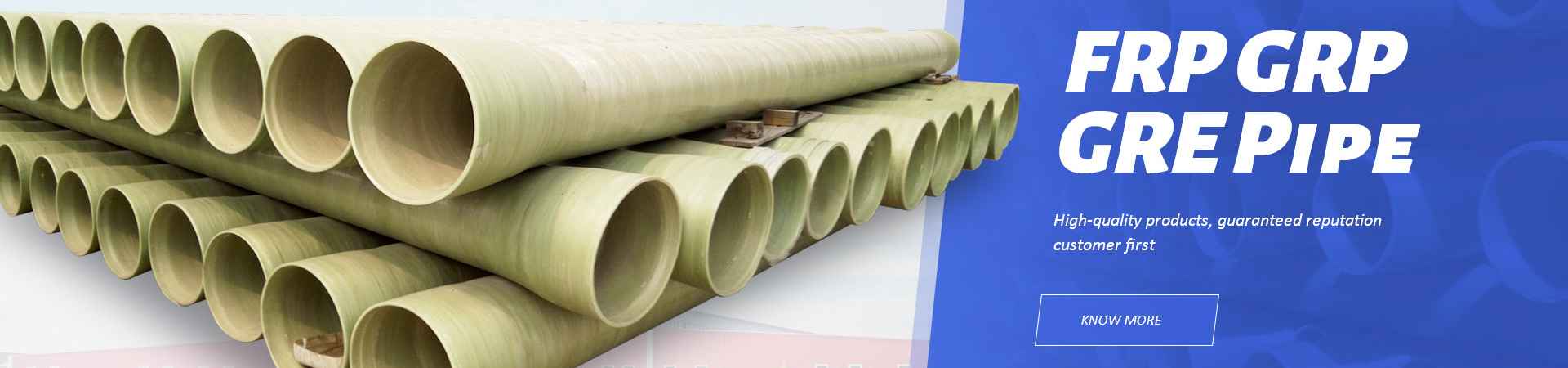

When it comes to reliable liquid storage, choosing the right tank is more important than many people realize. Whether you’re storing water, chemicals, wastewater, or industrial liquids, the tank you select will directly impact safety, maintenance costs, and long-term performance. That’s where the GRP tank stands out.
In recent years, more industries have shifted from traditional steel or concrete tanks to fiberglass solutions.And for good reason. A well-designed GRP tankoffers corrosion resistance, long service life, and excellent structural performance—without the heavymaintenance burden of conventional materials.
In this article, we’ll break down what a GRP tank is, why it’s becoming the preferred choice in multiple industries, and how to select the right solution for your project.
A GRP tank is a storage tank made from Glass Reinforced Plastic (also known as fiberglass reinforced plastic). It combines high-strength glass fibers with a durable resin matrix to create a lightweight yet extremely strong composite material.
Think of it this way:
Steel tanks are strong but prone to corrosion. Concrete tanks are durable but heavy and time-consuming to build. A GRP tank gives you strength, chemical resistance, and flexibility—all in one package.
Because of these advantages, GRP tanks are widely used in:
Industrial wastewater treatment plants
Chemical processing facilities
Agricultural irrigation systems
Firefighting water storage
Potable water storage
Fertilizer production lines
Let’s look at the real reasons companies are switching.
Corrosion is the silent enemy of storage tanks. Steel tanks require coatings and constant inspection. Even then, rust eventually wins.
A GRP tank, on the other hand, naturally resists corrosion. It performs exceptionally well in environments involving:
Acids
Alkalis
Saline water
Industrial chemicals
Wastewater
For example, in chemical fertilizer production, tanks often store aggressive media. Using a GRP tank significantly reduces maintenance costs and eliminates the risk of internal corrosion contamination.
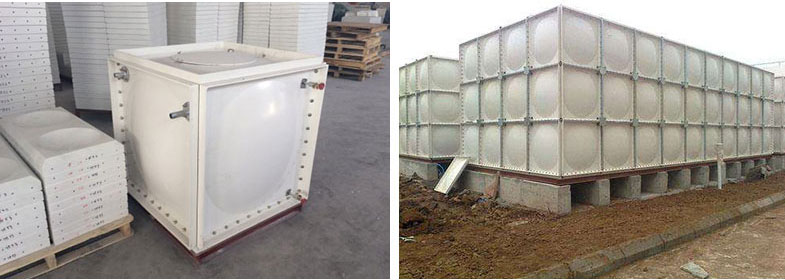
One of the biggest advantages of a GRP tank is its high strength-to-weight ratio.
Compared to concrete tanks, installation is much easier. You don’t need heavy foundation reinforcement in many cases. Transport costs are lower. On-site assembly is faster.
Yet despite being lightweight, GRP tanks offer impressive mechanical strength. They can be designed to withstand:
High internal pressure
External wind loads
Seismic conditions
Elevated temperature variations
This makes them suitable for both above-ground and underground applications.
A properly manufactured GRP tank can last 20–30 years or more with minimal maintenance.
There’s no rust.
No internal scaling.
No constant repainting.
For businesses thinking long-term, lifecycle cost matters more than initial purchase price. And when you compare total ownership cost, a GRP tank often proves to be the smarter investment.
Every project is different. Storage capacity, installation space, and stored media all vary.
The good news? GRP tanks are highly customizable.
They can be manufactured in:
Cylindrical or rectangular shapes
Vertical or horizontal configurations
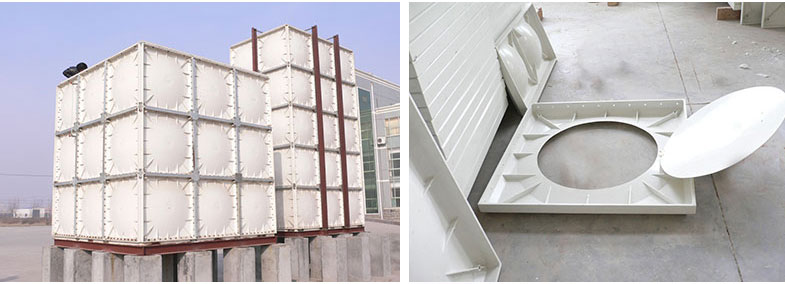
Sectional panel types for modular assembly
Underground or above-ground structures
You can also customize:
Resin type (vinyl ester, epoxy, polyester)
Wall thickness
Internal lining
Manholes and access ports
Nozzle positions
Ladder and platform systems
If your project has limited space or special chemical storage requirements, a GRP tank can be engineered to match your exact specifications.
Let’s take a closer look at how different industries benefit from GRP tanks.
Wastewater often contains corrosive compounds and fluctuating pH levels. Traditional materials deteriorate quickly.
A GRP tank provides chemical resistance and structural durability, making it ideal for:
Equalization tanks
Neutralization tanks
Sludge storage
Effluent holding
Because fiberglass does not react easily with most chemicals, it ensures long-term reliability.
In fertilizer production facilities, raw materials such as acids or brine solutions must be stored safely.
Using a GRP tank minimizes corrosion risk and reduces contamination. It also allows integration with pipelines, pumps, and filtration systems without compatibility issues.
For potable water storage, material safety is essential. GRP tanks can be manufactured using food-grade resins, ensuring water quality compliance.
In fire protection systems, quick installation and durability are crucial. A GRP tank offers:
Fast assembly
Leak-proof sectional design
Weather resistance
Farmers need large water reserves for irrigation systems. Concrete tanks can crack, and metal tanks corrode over time.
A GRP tank provides:
UV resistance
Long outdoor lifespan
Low maintenance
Modular expansion capability
Time is money in industrial projects. Construction delays mean increased costs.
One advantage of modular GRP tanks is that they can be:
Pre-fabricated in factory conditions
Shipped in sections
Assembled on-site
This reduces construction time significantly compared to traditional cast-in-place concrete tanks.
For remote project locations, this is especially beneficial.
Maintenance is simple:
Periodic visual inspection
Occasional cleaning
Checking gasket seals (for sectional tanks)
No sandblasting.
No repainting.
No corrosion repair.
That’s why many facility managers prefer a GRP tank over metal alternatives.
Sustainability is becoming a priority in modern industry.
A GRP tank contributes to environmental protection by:
Reducing leakage risk
Extending service life
Lowering maintenance-related waste
Minimizing chemical contamination
From a financial perspective, the lower lifecycle cost makes it a strong ROI investment.
Not all fiberglass tanks are created equal.
When selecting a supplier, consider:
Manufacturing experience
Resin and material quality
Engineering capability
Custom design support
Quality control process
Certifications (ISO, CE, etc.)
After-sales technical support
A reliable manufacturer will help you choose the right resin system and structural design based on your stored media, temperature conditions, and installation environment.
Let’s say you operate a chemical processing plant and need a 100m³ acid storage tank.
Option 1: Carbon steel tank
Lower initial cost
Requires corrosion-resistant lining
Frequent maintenance
Option 2: Concrete tank
Heavy foundation
Longer construction period
Potential cracking over time
Option 3: GRP tank
Factory-controlled production
Corrosion-resistant structure
Faster installation
Lower long-term maintenance
In most cases, the GRP tank becomes the most balanced and cost-effective solution.
With rising maintenance costs and stricter environmental regulations, many companies are reevaluating their storage systems.
If your current tank shows signs of:
Rust
Cracks
Leakage
Frequent repair needs
It might be time to consider switching to a GRP tank.
The technology has matured. Manufacturing standards are higher than ever. And customization options make it suitable for almost any industrial application.
Choosing the right storage solution is a long-term decision. You need durability, safety, cost-efficiency, and performance—all in one.
A GRP tank delivers exactly that.
It combines corrosion resistance, structural strength, flexible design, and low maintenance into one highly efficient storage solution. Whether you're operating in wastewater treatment, chemical manufacturing, agriculture, or water supply, a GRP tank can provide reliable performance for decades.
If you're planning a new project or upgrading an existing system, now is a great time to explore how a custom-engineered GRP tank can meet your specific needs.
After all, smart storage isn’t just about holding liquids—it’s about protecting your investment for the long run.
When it comes to reliable liquid storage, choosing the right tank is more important than many people realize. Whether you’re storing water, chemicals, wastewater, or industrial liquids, the tank you select will directly impact safety, maintenance costs, and long-term performance. That’s where the GRP tank stands out.
In recent years, more industries have shifted from traditional steel or concrete tanks to fiberglass solutions. And for good reason. A well-designed GRP tank offers corrosion resistance, long service life, and excellent structural performance—without the heavy maintenance burden of conventional materials.
In this article, we’ll break down what a GRP tank is, why it’s becoming the preferred choice in multiple industries, and how to select the right solution for your project.
A GRP tank is a storage tank made from Glass Reinforced Plastic (also known as fiberglass reinforced plastic). It combines high-strength glass fibers with a durable resin matrix to create a lightweight yet extremely strong composite material.
Think of it this way:
Steel tanks are strong but prone to corrosion. Concrete tanks are durable but heavy and time-consuming to build. A GRP tank gives you strength, chemical resistance, and flexibility—all in one package.
Because of these advantages, GRP tanks are widely used in:
Industrial wastewater treatment plants
Chemical processing facilities
Agricultural irrigation systems
Firefighting water storage
Potable water storage
Fertilizer production lines
Let’s look at the real reasons companies are switching.
Corrosion is the silent enemy of storage tanks. Steel tanks require coatings and constant inspection. Even then, rust eventually wins.
A GRP tank, on the other hand, naturally resists corrosion. It performs exceptionally well in environments involving:
Acids
Alkalis
Saline water
Industrial chemicals
Wastewater
For example, in chemical fertilizer production, tanks often store aggressive media. Using a GRP tank significantly reduces maintenance costs and eliminates the risk of internal corrosion contamination.
One of the biggest advantages of a GRP tank is its high strength-to-weight ratio.
Compared to concrete tanks, installation is much easier. You don’t need heavy foundation reinforcement in many cases. Transport costs are lower. On-site assembly is faster.
Yet despite being lightweight, GRP tanks offer impressive mechanical strength. They can be designed to withstand:
High internal pressure
External wind loads
Seismic conditions
Elevated temperature variations
This makes them suitable for both above-ground and underground applications.
A properly manufactured GRP tank can last 20–30 years or more with minimal maintenance.
There’s no rust.
No internal scaling.
No constant repainting.
For businesses thinking long-term, lifecycle cost matters more than initial purchase price. And when you compare total ownership cost, a GRP tank often proves to be the smarter investment.
Every project is different. Storage capacity, installation space, and stored media all vary.
The good news? GRP tanks are highly customizable.
They can be manufactured in:
Cylindrical or rectangular shapes
Vertical or horizontal configurations
Sectional panel types for modular assembly
Underground or above-ground structures
You can also customize:
Resin type (vinyl ester, epoxy, polyester)
Wall thickness
Internal lining
Manholes and access ports
Nozzle positions
Ladder and platform systems
If your project has limited space or special chemical storage requirements, a GRP tank can be engineered to match your exact specifications.
Let’s take a closer look at how different industries benefit from GRP tanks.
Wastewater often contains corrosive compounds and fluctuating pH levels. Traditional materials deteriorate quickly.
A GRP tank provides chemical resistance and structural durability, making it ideal for:
Equalization tanks
Neutralization tanks
Sludge storage
Effluent holding
Because fiberglass does not react easily with most chemicals, it ensures long-term reliability.
In fertilizer production facilities, raw materials such as acids or brine solutions must be stored safely.
Using a GRP tank minimizes corrosion risk and reduces contamination. It also allows integration with pipelines, pumps, and filtration systems without compatibility issues.
For potable water storage, material safety is essential. GRP tanks can be manufactured using food-grade resins, ensuring water quality compliance.
In fire protection systems, quick installation and durability are crucial. A GRP tank offers:
Fast assembly
Leak-proof sectional design
Weather resistance
Farmers need large water reserves for irrigation systems. Concrete tanks can crack, and metal tanks corrode over time.
A GRP tank provides:
UV resistance
Long outdoor lifespan
Low maintenance
Modular expansion capability
Time is money in industrial projects. Construction delays mean increased costs.
One advantage of modular GRP tanks is that they can be:
Pre-fabricated in factory conditions
Shipped in sections
Assembled on-site
This reduces construction time significantly compared to traditional cast-in-place concrete tanks.
For remote project locations, this is especially beneficial.
Maintenance is simple:
Periodic visual inspection
Occasional cleaning
Checking gasket seals (for sectional tanks)
No sandblasting.
No repainting.
No corrosion repair.
That’s why many facility managers prefer a GRP tank over metal alternatives.
Sustainability is becoming a priority in modern industry.
A GRP tank contributes to environmental protection by:
Reducing leakage risk
Extending service life
Lowering maintenance-related waste
Minimizing chemical contamination
From a financial perspective, the lower lifecycle cost makes it a strong ROI investment.
Not all fiberglass tanks are created equal.
When selecting a supplier, consider:
Manufacturing experience
Resin and material quality
Engineering capability
Custom design support
Quality control process
Certifications (ISO, CE, etc.)
After-sales technical support
A reliable manufacturer will help you choose the right resin system and structural design based on your stored media, temperature conditions, and installation environment.
Let’s say you operate a chemical processing plant and need a 100m³ acid storage tank.
Option 1: Carbon steel tank
Lower initial cost
Requires corrosion-resistant lining
Frequent maintenance
Option 2: Concrete tank
Heavy foundation
Longer construction period
Potential cracking over time
Option 3: GRP tank
Factory-controlled production
Corrosion-resistant structure
Faster installation
Lower long-term maintenance
In most cases, the GRP tank becomes the most balanced and cost-effective solution.
With rising maintenance costs and stricter environmental regulations, many companies are reevaluating their storage systems.
If your current tank shows signs of:
Rust
Cracks
Leakage
Frequent repair needs
It might be time to consider switching to a GRP tank.
The technology has matured. Manufacturing standards are higher than ever. And customization options make it suitable for almost any industrial application.
Choosing the right storage solution is a long-term decision. You need durability, safety, cost-efficiency, and performance—all in one.
A GRP tank delivers exactly that.
It combines corrosion resistance, structural strength, flexible design, and low maintenance into one highly efficient storage solution. Whether you're operating in wastewater treatment, chemical manufacturing, agriculture, or water supply, a GRP tank can provide reliable performance for decades.
If you're planning a new project or upgrading an existing system, now is a great time to explore how a custom-engineered GRP tank can meet your specific needs.
After all, smart storage isn’t just about holding liquids—it’s about protecting your investment for the long run.