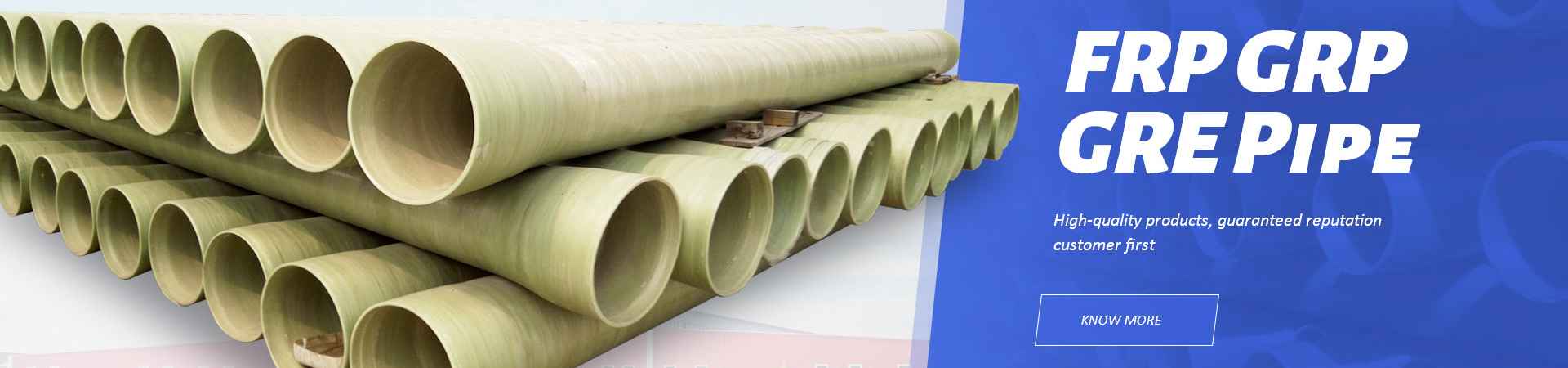

If you’re in the business of producing high-quality composite pipes, you know the importance of precision, efficiency, and consistency. This is where FRP pipe filament winding equipment comes into play. From small-scale factories to large industrial plants, this equipment has transformed how fiberglass reinforced plastic (FRP) pipes are manufactured, making the process faster, safer, and more cost-effective.
In this article, we’ll explore what FRP pipe filament winding equipment is, why it’s essential for modern pipe production, and how it can benefit your business. We’ll also touch on practical examples and highlight features that make this equipment a must-have for serious manufacturers.
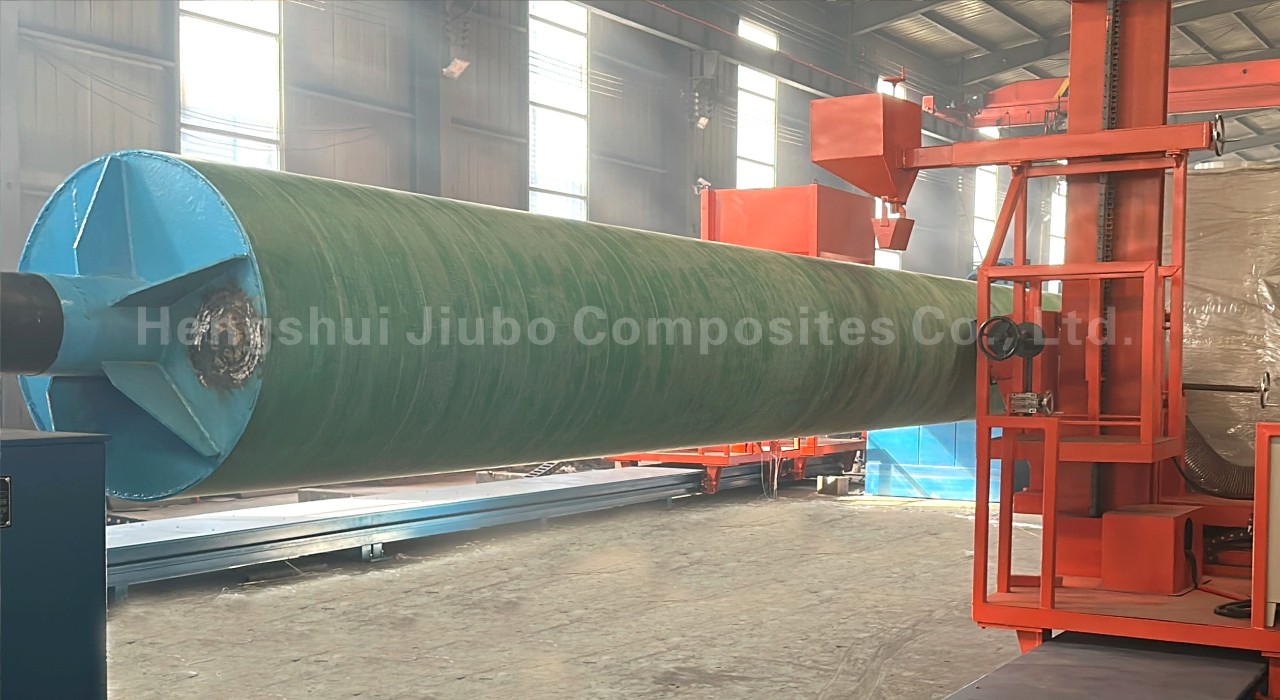
Simply put, FRP pipe filament winding equipment is a specialized system designed to produce fiberglass reinforced plastic pipes using a filament winding process. Instead of manually laying fibers and resin, this equipment automates the process to ensure high precision and consistent quality.
Here’s how it works:
Glass fibers are continuously fed into a resin bath.
Impregnated fibers are wound onto a rotating mandrel at precise angles.
The machine controls wall thickness, fiber orientation, and curing time.
Once the pipe is fully wound and cured, it is demolded and ready for use.
This process allows manufacturers to produce FRP pipes with consistent mechanical properties, excellent corrosion resistance, and optimal structural strength.
The filament winding process has become the industry standard for a reason. Here are some key benefits of using FRP pipe filament winding equipment:
The orientation of fibers in a pipe wall is critical. With automated winding equipment, you can control fiber angles precisely, giving the pipe superior hoop and axial strength. This means your FRP pipes can handle higher pressure without cracking or deformation.
For example, chemical plants often require pipes that can resist aggressive media. Using automated filament winding equipment ensures every pipe meets strict safety and durability standards.
Uneven wall thickness is a common issue with manual pipe production, leading to weak points and premature failures. FRP pipe filament winding equipment ensures that every layer of fiber is applied evenly, producing pipes that are strong, reliable, and long-lasting.
Time is money in manufacturing. Automated winding equipment can run continuously, producing pipes of various diameters and lengths with minimal downtime. The system handles resin impregnation, fiber winding, and curing automatically, which significantly reduces labor costs and production waste.
For instance, a factory that used to produce 50 pipes per day manually can easily double or triple output with automated FRP pipe filament winding equipment.
No two projects are exactly alike. One of the biggest advantages of modern FRP pipe filament winding equipment is its flexibility. Manufacturers can customize:
Pipe diameters from small irrigation lines to large industrial conduits.
Wall thickness to meet specific pressure ratings.
Fiber-resin combinations for chemical or water applications.
Internal linings for enhanced corrosion resistance.
This level of customization is difficult, if not impossible, to achieve with manual methods.
Understanding the main components helps you appreciate why this equipment delivers superior results:
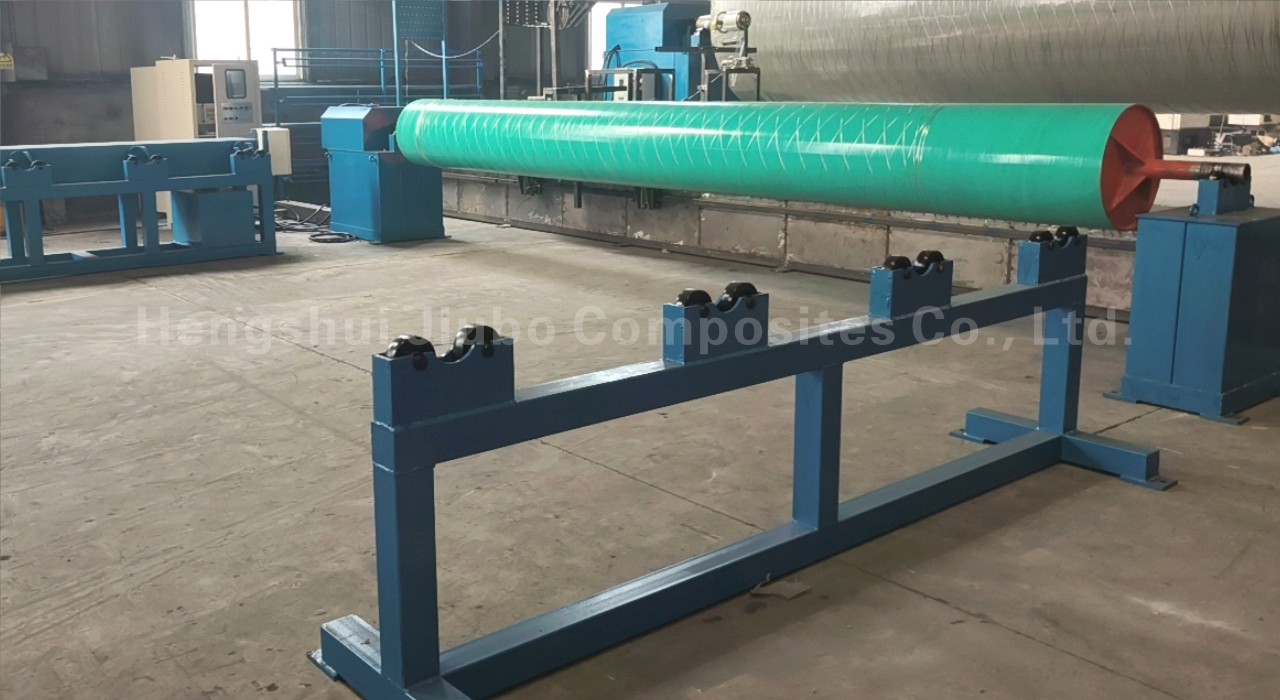
The mandrel serves as the pipe’s core. High-precision mandrels ensure accurate diameters, smooth surfaces, and consistent pipe dimensions.
This system impregnates fibers with the correct amount of resin. Stable resin content is crucial for mechanical strength and pipe durability.
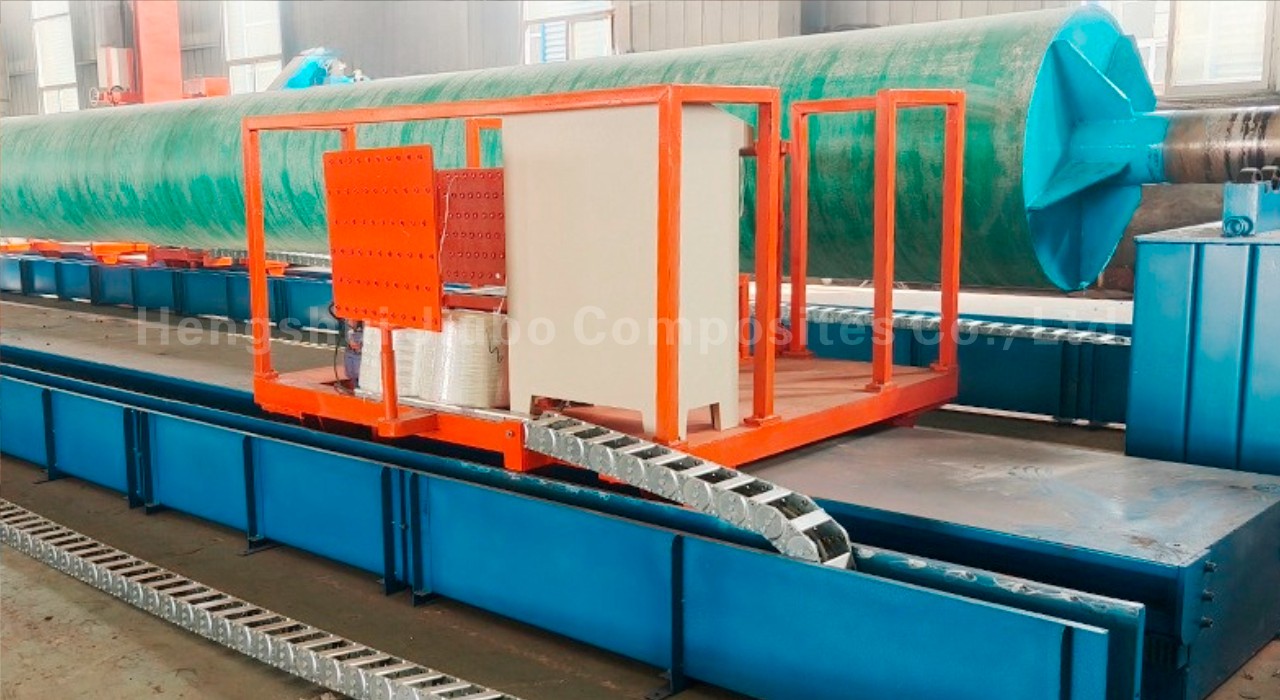
The carriage moves along the mandrel, laying fibers at programmed angles. CNC-controlled movement ensures precision and repeatability.
Modern equipment comes with PLC or CNC systems. Operators can set parameters like winding speed, fiber tension, pipe diameter, and wall thickness. Some systems even allow remote monitoring and automatic data logging.
FRP pipe filament winding equipment serves a wide range of industries, including:
Municipal water pipelines require pipes that are corrosion-resistant, leak-proof, and durable. Filament wound FRP pipes are ideal for these applications.
Industries that handle acids, alkalis, or corrosive liquids benefit from the chemical resistance of FRP pipes. Automated winding equipment ensures pipes meet the highest quality standards.
Large-scale irrigation projects need durable, lightweight pipes that are easy to transport and install. FRP pipes made with filament winding equipment are perfect for this.
Corrosion-resistant and high-strength composite pipes are increasingly used in oil and gas pipelines, both onshore and offshore. Automated filament winding ensures consistent quality and safety compliance.
Manual winding is labor-intensive and prone to error. Automated FRP pipe filament winding equipment offers:
Stable fiber tension control
Accurate winding patterns
Uniform resin impregnation
Reduced human error
This means you can produce higher-quality pipes with less supervision, fewer mistakes, and faster turnaround.
FRP pipe filament winding equipment is built for durability. Routine maintenance is simple and usually involves:
Checking fiber tension and resin levels
Inspecting mandrels and rollers
Cleaning the resin bath system
Verifying control system settings
Unlike older machinery, modern systems require minimal downtime, ensuring consistent production schedules.
Investing in FRP pipe filament winding equipment may seem costly upfront, but the benefits outweigh the initial investment:
Reduced labor costs due to automation
Minimal material waste
Long service life of produced pipes
Energy-efficient operation
Additionally, producing corrosion-resistant pipes reduces environmental hazards caused by leaks or pipe failures.
When selecting FRP pipe filament winding equipment, consider:
Manufacturer experience and reputation
Customization options for pipe size and resin system
Reliability of the control system (PLC or CNC)
After-sales support, including installation and training
Scalability for future production needs
Partnering with a trustworthy supplier ensures you get the most value from your investment.
Suppose a manufacturer needs DN800 pipes for a municipal water project. With the right FRP pipe filament winding equipment:
They can set the pipe diameter, wall thickness, and winding angle in the control system.
The machine automatically impregnates fibers with resin and winds them onto the mandrel.
Pipes are cured, demolded, and ready for installation within hours.
Compare this with manual methods, where production is slower, wall thickness can vary, and labor costs are higher. The difference in efficiency and quality is clear.
The demand for high-quality FRP pipes is growing worldwide. Cities are upgrading water infrastructure, industrial facilities are replacing corroded steel pipes, and agricultural projects require lightweight, durable solutions.
Having advanced FRP pipe filament winding equipment positions manufacturers to meet this demand efficiently and profitably.
Investing in FRP pipe filament winding equipment is not just about machinery — it’s about transforming your production process.
With automated winding, precise fiber orientation, uniform wall thickness, and high efficiency, this equipment ensures that every pipe meets strict quality standards. Whether you produce pipes for water, chemical, agricultural, or industrial applications, filament winding equipment offers unmatched consistency, durability, and cost savings.
In short, if you want to stay competitive, reduce production errors, and increase output, a modern FRP pipe filament winding equipment setup is an investment that pays off in the long run.