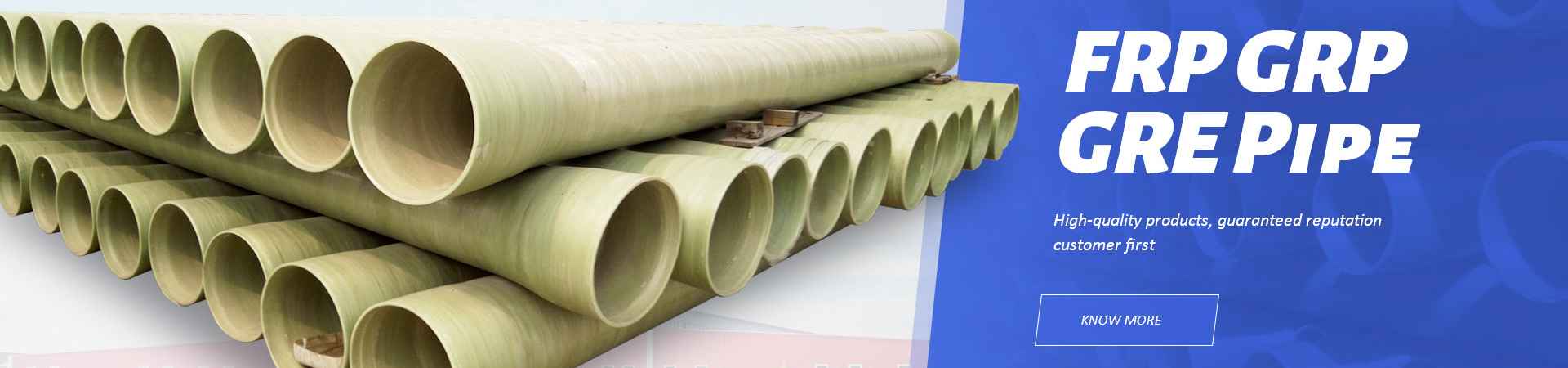

In many industries, standard storage tanks are not always suitable for specific operational requirements. Different facilities may need tanks with unique sizes, special chemical resistance, or customized structural designs. This is where a custom FRP tank becomes the ideal solution.
Fiberglass reinforced plastic (FRP) tanks are known for their durability, corrosion resistance, and lightweight structure. When these tanks are customized according to a project’s exact specifications, they provide even greater flexibility and performance. From chemical storage to wastewater treatment and fertilizer production, custom FRP tanks are widely used in industries that demand reliable and long-lasting storage equipment.
In this article, we will explore what a custom FRP tank is, why customization is important, how these tanks are manufactured, and what factors to consider when ordering one.
A custom FRP tank is a fiberglass reinforced plastic storage tank designed and manufactured according to specific customer requirements. Instead of using standard dimensions and features, the tank is engineered to meet the exact needs of a particular application.
Customization can involve several aspects, including:
Tank size and capacity
Shape and structural design
Resin type for chemical resistance
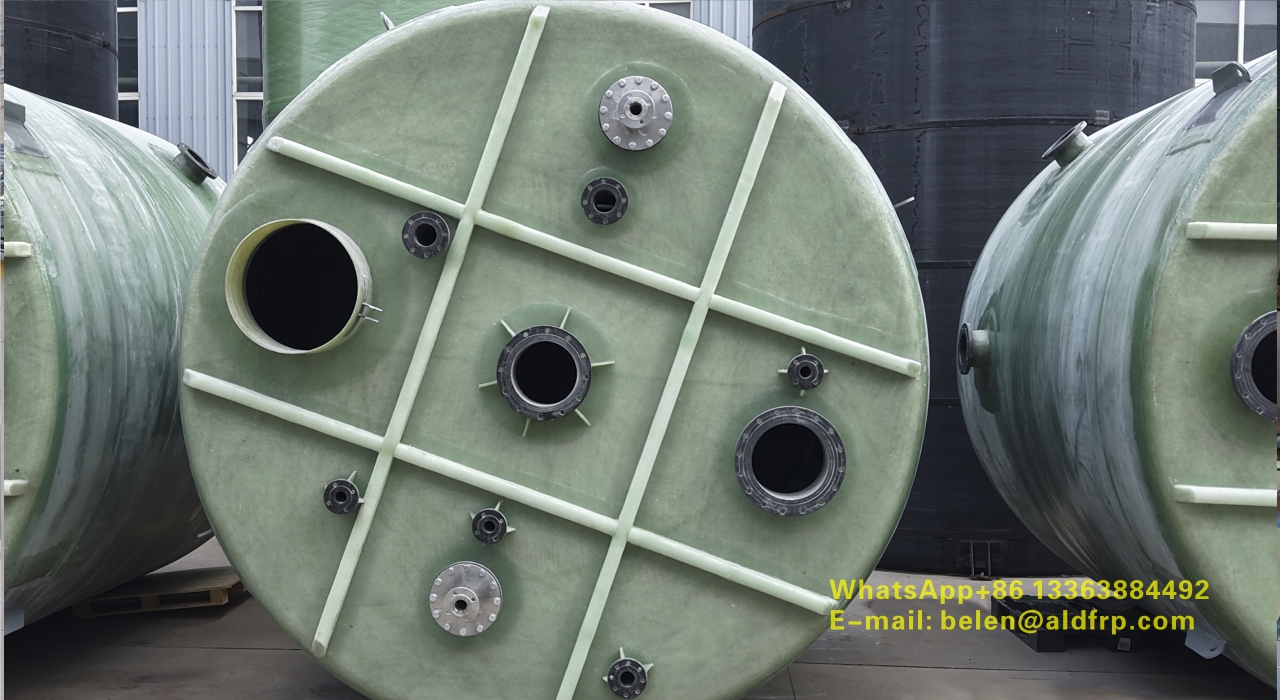
Nozzle positions and connection ports
Reinforcement layers and wall thickness
By tailoring the design, manufacturers can ensure that the tank performs optimally in its intended environment.
For example, a chemical plant storing highly corrosive liquids may require a specialized resin system, while a water treatment facility might prioritize large capacity and structural stability.
Standard tanks can work well in many situations, but industrial operations often have unique conditions that require customized solutions. Choosing a custom FRP tank offers several important advantages.
Every industrial facility has different space limitations and layout requirements. A custom tank can be designed to fit perfectly within the available space.
For example, if a plant has limited height but wide floor space, a manufacturer can design a shorter and wider tank to maximize storage capacity.
Different chemicals require different types of corrosion-resistant materials. The resin system used in an custom FRP tank can be selected specifically for the chemical being stored.
Common resin options include:
Polyester resin
Vinyl ester resin
Epoxy resin
Each type offers different levels of resistance to acids, solvents, and other chemicals.
When a tank is designed specifically for the operating conditions of a facility, it can better handle pressure, temperature changes, and environmental stress.
This improves the safety of the storage system and reduces the risk of leaks or structural failures.
Although custom tanks may require more engineering work during the design phase, they can actually reduce long-term costs.
Because the tank is optimized for the application, it often requires less maintenance and has a longer service life compared with poorly matched standard tanks.
The production of a custom FRP tank typically involves advanced composite manufacturing technologies.
The process begins with engineering design. Manufacturers analyze the customer’s requirements, including:
Storage volume
Chemical properties
Operating temperature
Installation location
Based on these factors, engineers develop a detailed design for the tank structure.
Once the design is finalized, a mold or mandrel is prepared. This mold determines the final shape and dimensions of the tank.
Most custom FRP tanks are manufactured using the filament winding process. In this process, fiberglass fibers coated with resin are wound around the rotating mold.
The fibers are placed at controlled angles to achieve the required strength and structural performance.
Layer by layer, the tank wall is built until it reaches the specified thickness.
After winding is complete, the tank undergoes curing so the resin hardens and forms a solid composite structure.
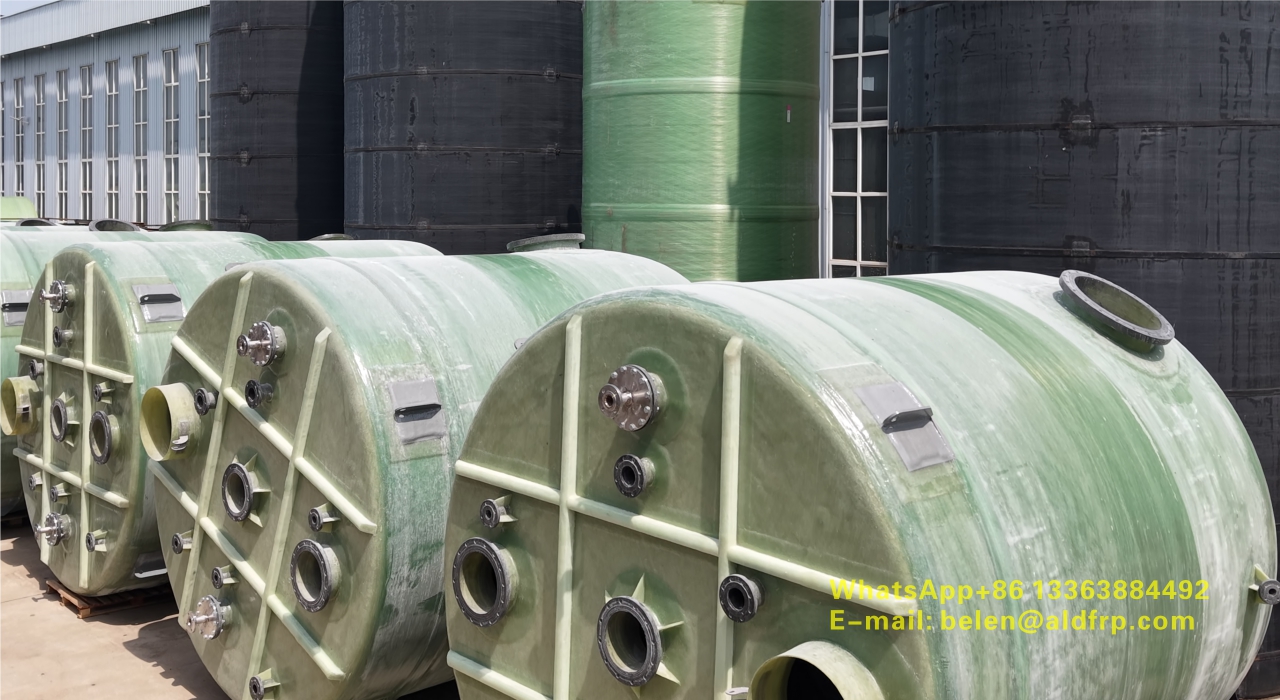
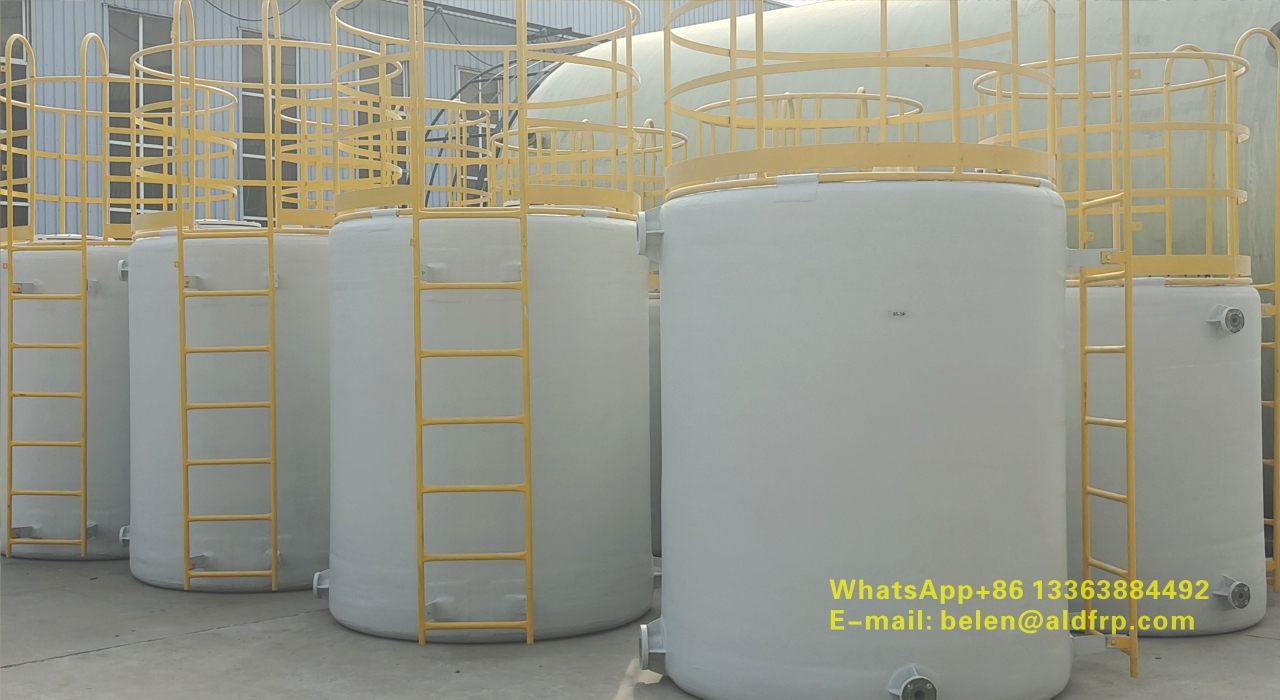
The tank is then removed from the mold and finished with additional components such as nozzles, flanges, ladders, and inspection ports.
A custom FRP tank can be manufactured in different configurations depending on the application.
Vertical tanks are the most common design. They are widely used in chemical plants, water treatment facilities, and industrial storage systems.
Because they occupy less floor space, vertical tanks are ideal for facilities with limited installation areas.
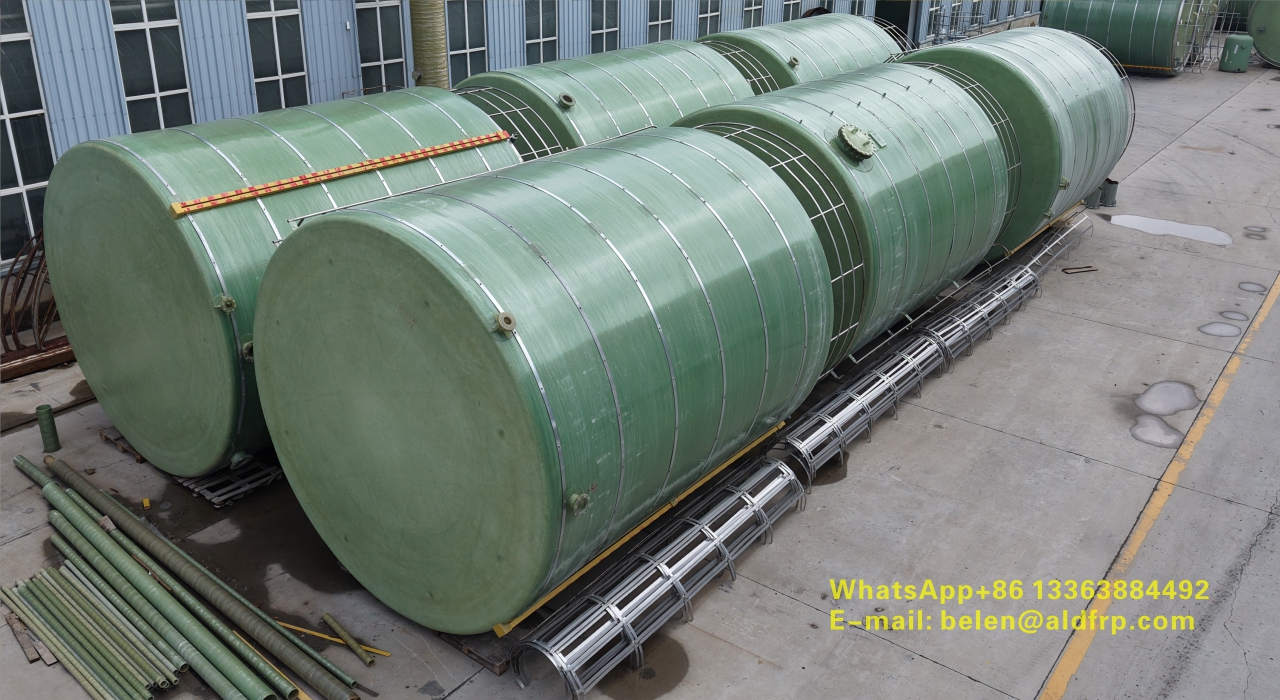
Horizontal tanks are typically installed on support frames or skid systems. These tanks are often used when height restrictions exist or when tanks must be transported.
Some projects require tanks to be installed below ground. Underground FRP tanks are specially reinforced to withstand soil pressure and environmental conditions.
For storing hazardous chemicals, double-wall FRP tanks may be used. These tanks include an additional outer layer that provides secondary containment in case of leaks.
Many industries rely on custom FRP tank solutions to meet their specific storage needs.
Chemical plants store various corrosive substances that require specialized tanks with strong chemical resistance.
FRP tanks are commonly used for storing water treatment chemicals, sludge, and wastewater.
Liquid fertilizers and chemical solutions used in agriculture often require corrosion-resistant storage systems.
Certain FRP tanks can be designed for hygienic applications, such as storing water or other food-grade liquids.
Before ordering a custom FRP tank, buyers should carefully consider several technical factors.
Determine the required storage volume based on operational needs.
Ensure that the resin system used in the tank is suitable for the stored chemicals.
The tank design must account for installation conditions such as wind load, seismic activity, and foundation structure.
Reliable manufacturers typically follow international standards and provide quality certifications for their products.
As industries continue to demand durable and corrosion-resistant equipment, the market for custom FRP tank solutions continues to grow.
Modern manufacturers are adopting advanced technologies such as automated filament winding systems and improved composite materials. These innovations help produce stronger tanks with better chemical resistance and longer service life.
At the same time, digital design tools allow engineers to create more precise and efficient tank structures.
A custom FRP tank offers a flexible and reliable storage solution for industries that require specialized tank designs. By tailoring the tank’s dimensions, materials, and structural features to match specific operating conditions, manufacturers can deliver storage systems that perform safely and efficiently for many years.
With advantages such as corrosion resistance, lightweight construction, and long service life, custom FRP tanks have become an important component in industries such as chemical processing, water treatment, fertilizer production, and many others.
For companies seeking durable and cost-effective liquid storage solutions, investing in a well-designed custom FRP tank is often the best long-term choice.