
A pultrusion production line setup refers to the complete installation and configuration process of equipment used to continuously manufacture FRP (Fiberglass Reinforced Plastic) profiles, rods, and structural composites.
A complete setup includes fiber feeding, resin impregnation, heated die curing, pulling, and cutting systems working together to ensure continuous production of high-strength composite materials.
Improper setup of a pultrusion production line often leads to serious production problems, including unstable output and poor product quality.
Common consequences of incorrect setup include:
Unstable curing temperature inside the die
Poor resin impregnation of fibers
Fiber misalignment and structural weakness
High scrap rate and material waste
Low production efficiency
A properly designed system ensures:
Stable continuous FRP production
Consistent mechanical strength
Lower production cost per unit
Higher automation efficiency
Long-term equipment stability
A complete pultrusion production line includes the following key systems:
Fiber creel system
Fiber tension control system
Resin mixing and impregnation system
Pre-forming system
Heated steel die system
Pulling system (caterpillar or hydraulic)
Cutting system
PLC automatic control system
Each system must be correctly aligned and calibrated to ensure stable composite forming.
Before selecting equipment, clearly define your production goals.
Key parameters include:
Product type (FRP profiles, rods, rebars, tubes)
Production capacity (kg/day or meters/day)
Resin system (polyester, vinyl ester, epoxy)
Fiber type (glass fiber, carbon fiber)
Level of automation required
This step determines the entire line design and investment cost.
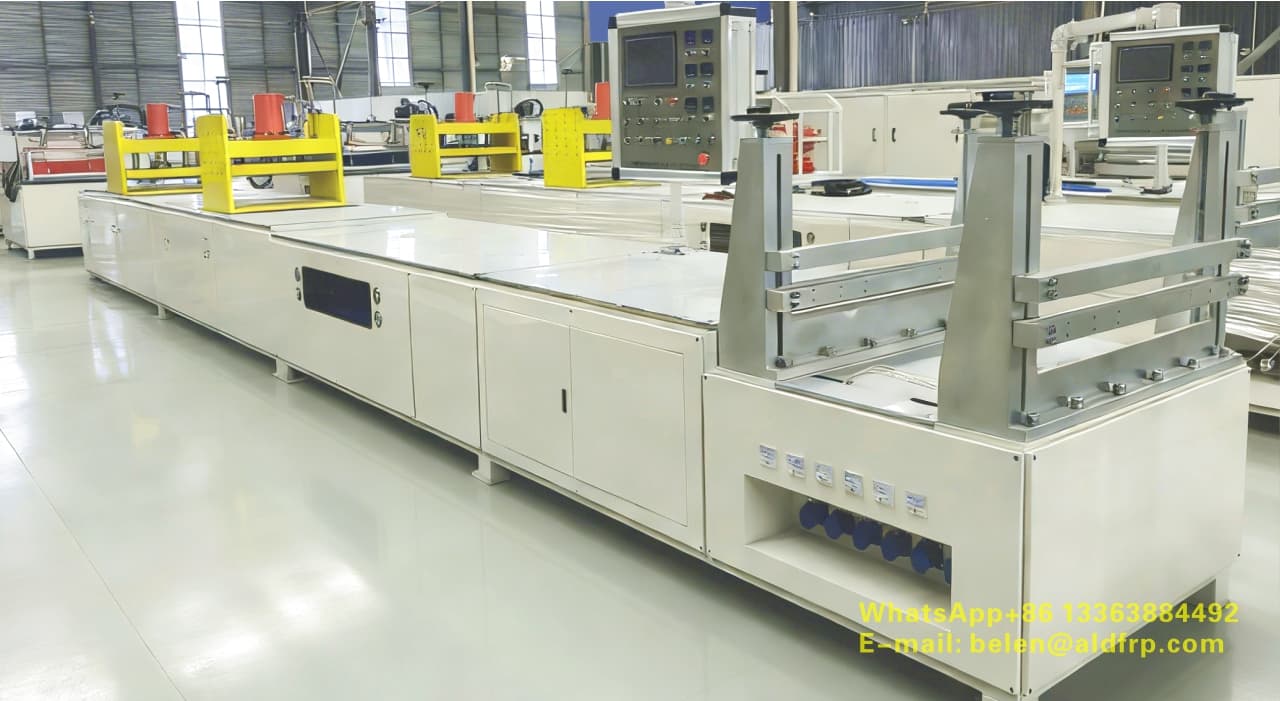
The core of the system is the pultrusion machine, supported by auxiliary systems.
A standard industrial line includes:
Fiber creel rack with tension control
Resin bath or injection system
Pre-forming unit
High-temperature steel die
Continuous pulling system
Automatic cutting machine
Key selection factors:
Production speed stability
Die compatibility
Maintenance accessibility
Automation level
Energy efficiency
A poor layout design is one of the most common reasons for low efficiency.
Recommended production flow:
Fiber Creel → Resin Impregnation → Pre-forming → Heated Die → Pulling → Cutting → Finished Storage
Important layout rules:
Maintain a straight-line production path
Reserve sufficient space for long FRP profiles
Separate raw materials and finished goods
Ensure proper ventilation for resin fumes
Provide safe operator working distance
Many production failures come from incorrect installation or calibration.
Caused by poor heating system design or incorrect zone calibration.
Caused by incorrect resin viscosity or improper fiber tension.
Caused by poor creel setup or uneven tension control.
Caused by incorrect synchronization between pulling and curing speed.
Caused by combined system instability (resin + temperature + speed mismatch)
The fiber creel system ensures continuous fiber supply.
Key requirements:
Stable structural frame
Balanced tension control system
Proper fiber guiding alignment
Incorrect tension leads to weak mechanical strength in final FRP products.
The resin system determines final composite quality.
Key control points:
Stable resin viscosity
Accurate catalyst mixing ratio
No air bubble formation
Consistent fiber wet-out
This system directly affects bonding strength and durability.
The heated die is the core of the pultrusion production line.
Functions:
Shapes the FRP profile
Controls curing reaction
Determines final mechanical strength
Key setup requirements:
Multi-zone temperature control
Precise alignment with pulling direction
Stable heating uniformity
Any temperature instability will directly affect product quality.
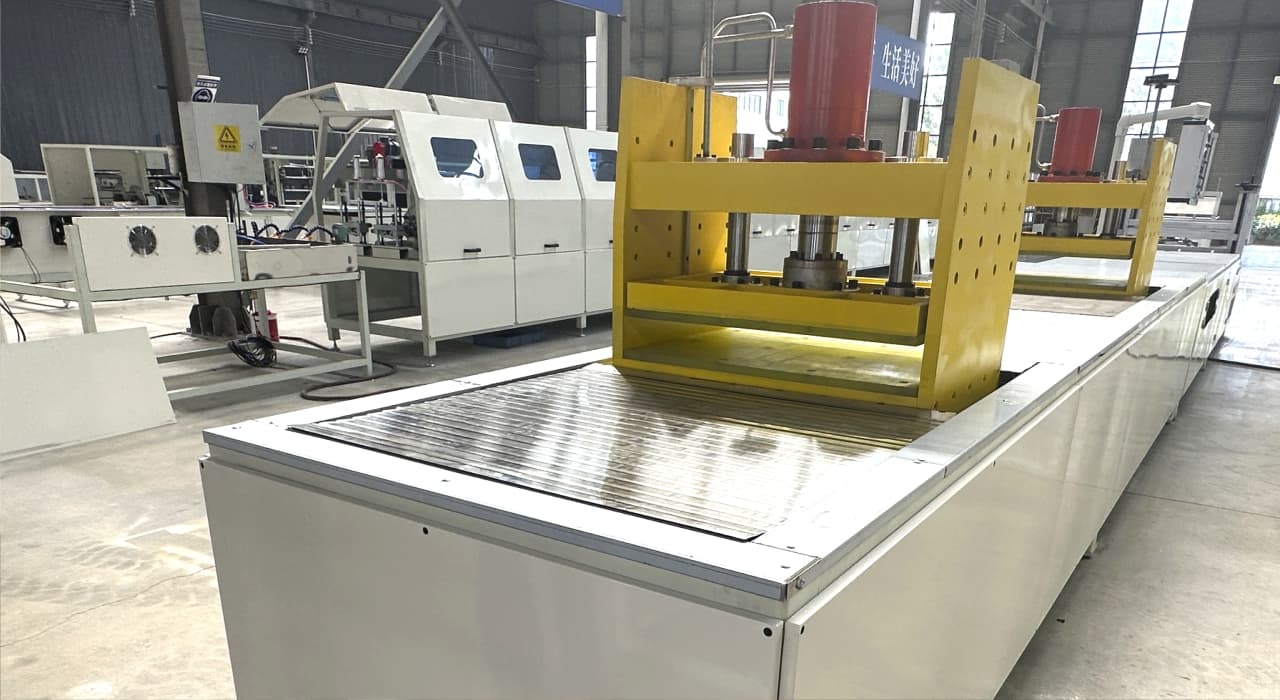
The pulling system controls production speed, while the cutting system ensures precision.
Key points:
Synchronize pulling speed with curing speed
Maintain stable hydraulic or caterpillar operation
Use accurate length measurement sensors
Ensure clean cutting without fiber damage
Modern pultrusion lines rely on automation systems.
Includes:
PLC controller
Touchscreen interface
Temperature sensors
Speed feedback system
Emergency stop protection
Automation improves stability and reduces labor dependency.
Before full production, system calibration is essential.
Checklist:
Fiber alignment inspection
Resin impregnation test
Temperature stability check
Pulling speed optimization
Product dimension measurement
Adjust until output becomes stable and repeatable.
Even the best equipment requires skilled operators.
Training includes:
Machine operation procedures
Safety protocols
Daily maintenance routines
Quality control standards
Continuous optimization improves efficiency and reduces scrap rate.
Key factors affecting production efficiency:
Pulling speed stability
Resin formulation quality
Heating system efficiency
Automation level
Operator skill level
Optimizing these factors directly reduces production cost.
Typically 2–8 weeks depending on equipment size and factory readiness.
The heated die system, because it controls curing and final product strength.
Yes, by changing dies and adjusting process parameters.
Yes, it ensures stable production and reduces labor cost.
We provide complete turnkey pultrusion production line solutions, including equipment design, manufacturing, installation guidance, and technical support.
Our systems are widely used in:
FRP profile manufacturing
Construction composite materials
Industrial fiberglass products
Structural reinforcement materials
We support global clients with customized production line configurations based on capacity and product requirements.
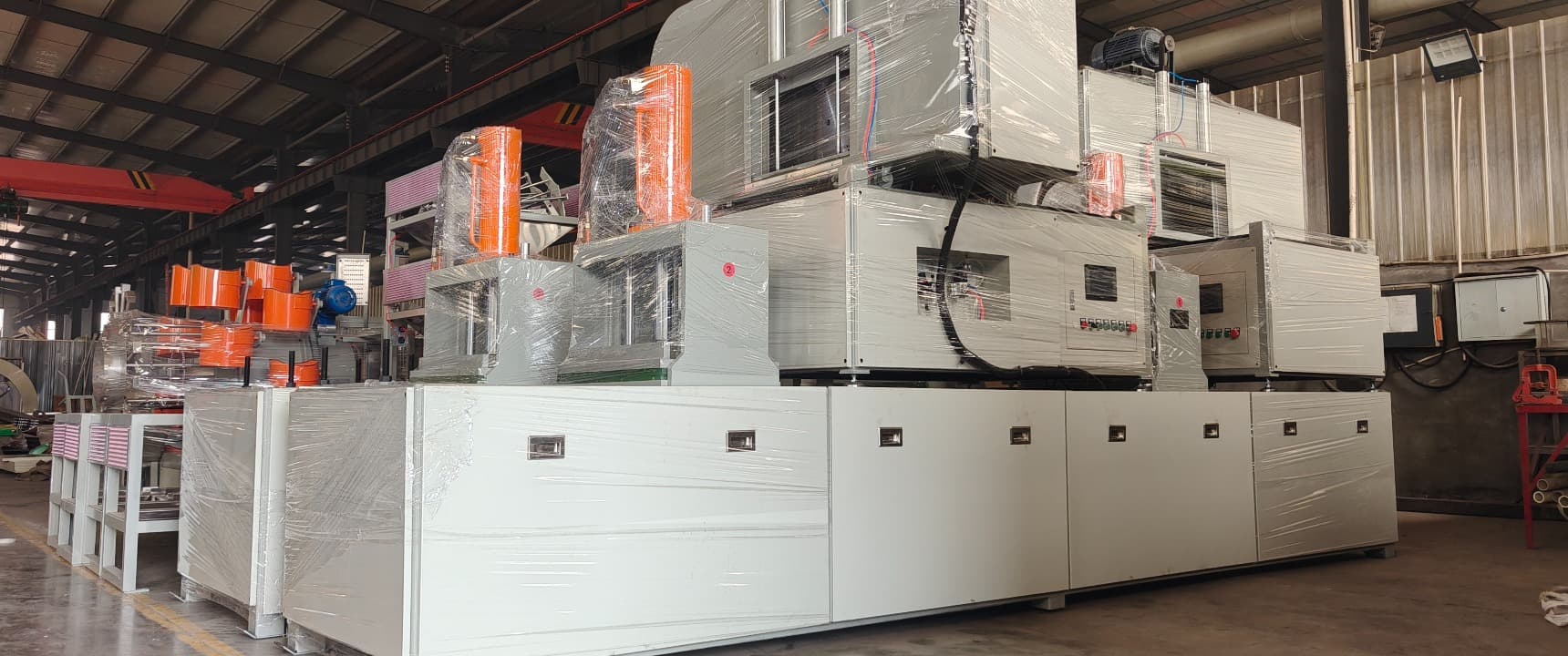
Setting up a pultrusion production line requires precise engineering, correct equipment selection, and professional calibration of each subsystem.
A well-designed system ensures stable FRP production, high mechanical strength, and long-term manufacturing efficiency.
Proper setup is the foundation of a successful composite manufacturing plant.