
In FRP rebar manufacturing, product quality is not defined by a single machine. It is determined by a fully integrated process control system.
Even with advanced equipment, unstable process parameters can still lead to:
Low tensile strength
Diameter deviation
Surface defects
Incomplete curing
Batch inconsistency
That is why modern FRP rebar production depends on three core systems:
Pultrusion process control
Curing process management
Quality control system (QC)
The pultrusion process is the core continuous manufacturing technology used for FRP rebar.
Unlike metal forming, pultrusion combines:
Fiber reinforcement + resin impregnation + thermal curing + continuous pulling
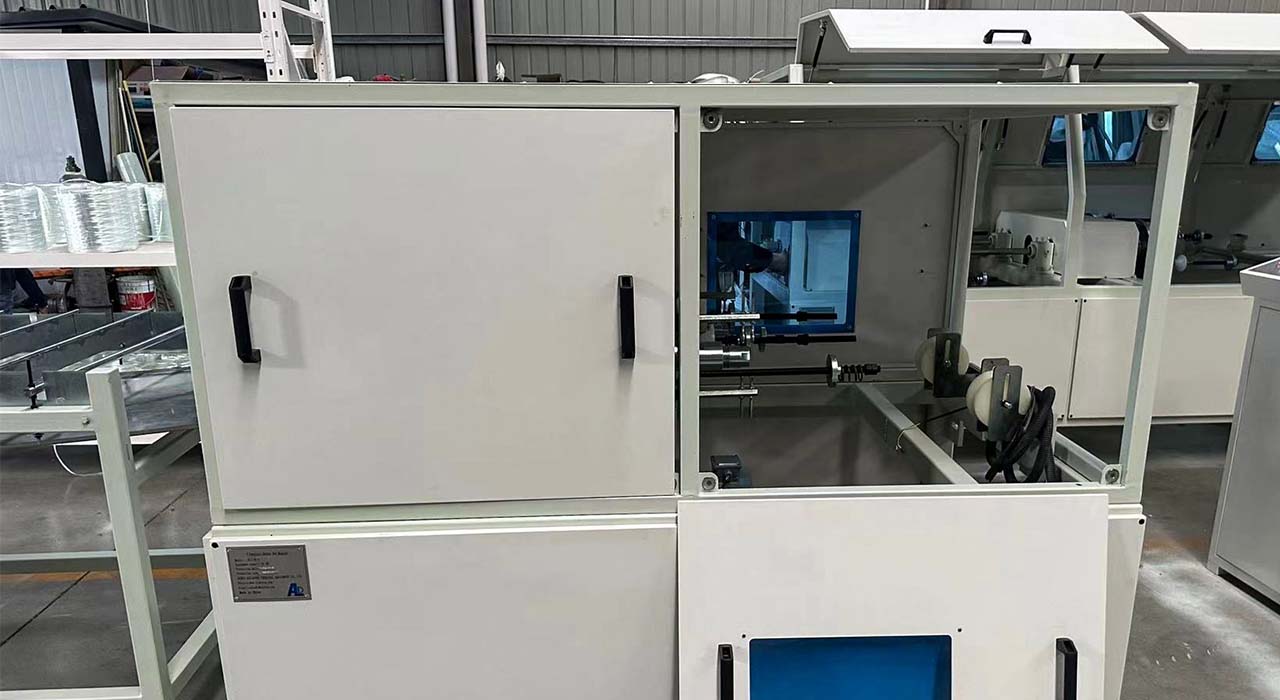
A standard FRP rebar pultrusion line includes:
Fiber feeding system
Resin impregnation unit
Fiber preforming system
Heated curing die
Pulling system
Cutting system
All stages must operate in synchronized balance.
Related equipment system: FRP Rebar Production Line Equipment System
Pultrusion directly determines:
Fiber alignment accuracy
Resin distribution uniformity
Curing completeness
Final mechanical strength
Even small deviations in temperature or pulling speed will impact structural performance.
Stable production depends on strict control of core engineering parameters:
| Parameter | Typical Range |
|---|---|
| Fiber content | 70–80% |
| Pulling speed | 0.5–2.0 m/min |
| Die temperature | 120–180°C |
| Resin viscosity | 200–800 cps |
These parameters determine whether the product meets industrial standards.
Fiber rovings must maintain stable tension during feeding.
Too low → fiber waviness → weak strength
Too high → fiber breakage → unstable production
Modern lines use automatic tension control systems to ensure consistency.
Resin impregnation determines composite bonding quality.
Key factors include:
Resin viscosity
Bath temperature
Fiber residence time
Poor impregnation leads to:
Air voids
Weak bonding
Reduced tensile strength
Related material system:
Fiberglass and Resin Materials in FRP Rebar Production
Pulling speed must match curing reaction rate.
Too fast → incomplete curing
Too slow → productivity loss and over-curing risk
Speed stability is directly linked to product consistency.
Curing is the chemical transformation stage where resin becomes a solid composite structure.
It determines:
Final strength
Heat resistance
Dimensional stability
Typical curing range:
120°C – 180°C
Low temperature → incomplete curing
High temperature → resin degradation
Stable temperature distribution ensures uniform product quality.
Curing is not just heating—it is a controlled chemical reaction.
It must be balanced with:
Pulling speed
Resin formulation
Die length
Mismatch leads to:
Cracking
Deformation
Weak bonding
The curing die is the core thermal control unit.
It affects:
Heat transfer efficiency
Surface finish quality
Dimensional accuracy
A modern FRP factory must implement a three-layer QC system:
Includes testing of:
Fiberglass strength
Resin viscosity
Additive compatibility
Real-time monitoring includes:
Pulling speed
Die temperature
Resin flow
Fiber tension
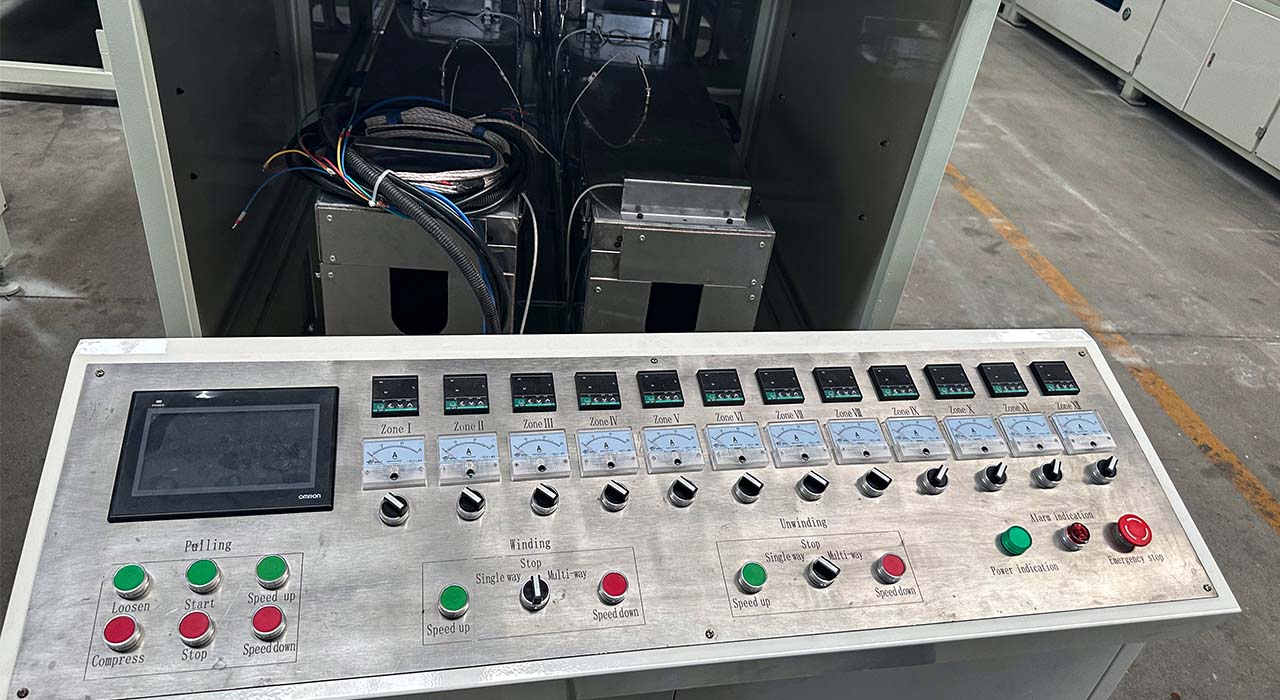
Most modern plants integrate PLC automation systems for control.
Standard tests include:
Tensile strength test
Bond strength test
Dimensional accuracy check
Alkali resistance test
Related process guide:
FRP Rebar Manufacturing Process Explained
Typical manufacturing issues include:
Resin bubbles
Fiber misalignment
Incomplete curing
Surface cracks
Diameter instability
Poor process control
Incorrect parameter settings
Low material quality
Equipment instability
Modern FRP production lines are increasingly automated.
PLC control system
HMI touchscreen interface
Sensor feedback loops
Alarm and monitoring system
Higher consistency
Lower labor dependency
Real-time quality control
Reduced defect rate
Experienced manufacturers follow these principles:
Avoid frequent changes in:
Temperature
Speed
Resin formulation
Ensures:
Accurate temperature control
Stable pulling force
Consistent output quality
Even in automated systems:
Operator skill still affects production stability.
In FRP rebar manufacturing:
Process stability = product competitiveness
Optimized systems deliver:
Higher tensile strength consistency
Lower defect rate
Better certification success
Improved customer trust
Stronger export competitiveness
FRP rebar production is a tightly controlled composite manufacturing system built on three pillars:
Pultrusion process control
Curing system stability
Quality control management
When these three systems are properly optimized, manufacturers can achieve:
Stable production
High mechanical performance
Consistent product quality
Long-term industrial reliability
In modern FRP rebar manufacturing, process optimization is not optional—it is the foundation of competitiveness in the global composite reinforcement industry.